Founded by Jimmy Glenn, a former boxer turned trainer, in 1971, Jimmy’s Corner has stood, defiantly unchanged, as Times Square has boomed around it.
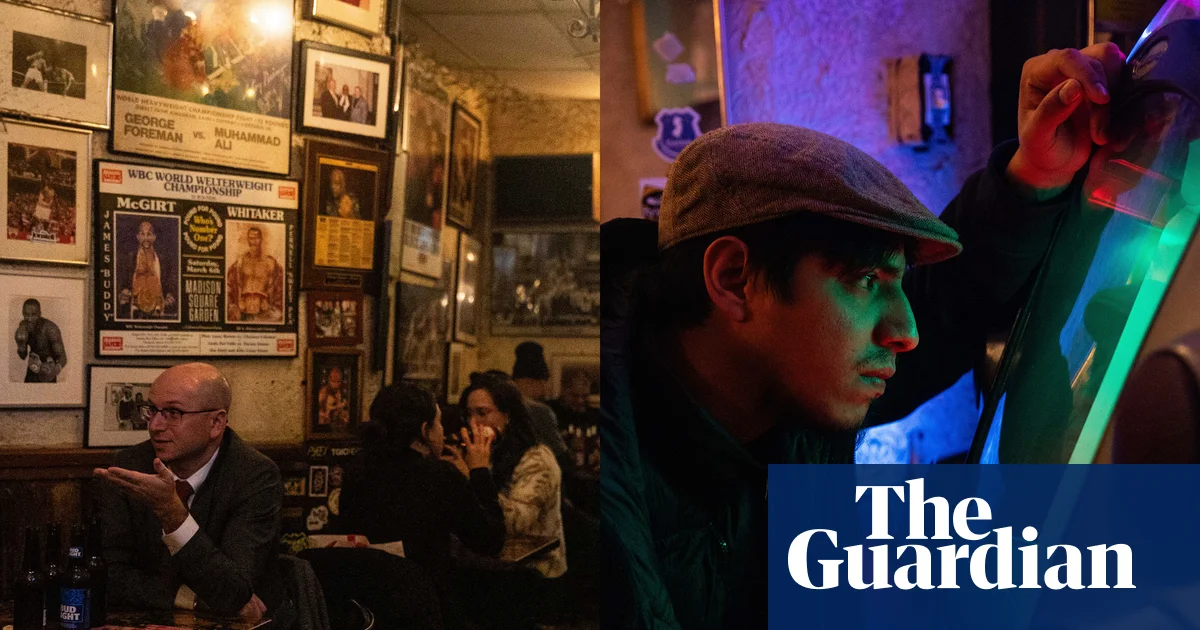
The neighborhood bar, a New York City institution which attracts locals and tourists alike, has had the same pictures on the walls for decades – some of the bar’s regulars have been coming almost as long – kept the same furniture, and maintained remarkably low pricing. In a perhaps unintentional nod to its history, there is also several years’ accumulation of dust in some areas.
It’s a beloved spot, a piece of New York history that has endured as Times Square transformed from a den of inequity into one of New York’s main tourist attractions. But Jimmy’s Corner may now have met its match, after the building’s landlord ordered its owner to shut down this famous watering hole.
“It felt like losing my parents again,” Adam Glenn, Jimmy Glenn’s son, who took over the bar in 2015, told the Guardian.
After being told he was being evicted, Glenn filed a last-ditch lawsuit against the Durst Organization, the giant New York developer which owns the building, alleging Durst took advantage of his father when re-negotiating the bar’s lease 10 years ago.
It has left people who drink in the bar on tenterhooks. Jimmy, who also worked as a boxing cutman, ran a gym, and was friendly with Muhammad Ali and Mike Tyson, died in 2020, aged 89, but Glenn has kept the bar has continued unchanged, even down to the prices: a pint of beer is $3, in a neighborhood where some places charge four times that.
In an area of Manhattan full of bars, most of which are bigger, brighter, and have more modern toilets than Jimmy’s, its close-knit atmosphere is just as important to its appeal.
“It’s a true dive bar in midtown. It’s nice and small and tight. And when you meet people, you have to talk to them. You can’t, like, wander off,” said Walter Trice, a Jimmy’s regular who was drinking a beer in a small area at the back of the bar on Thursday evening.
“There’s no frills here. They don’t talk about politics. It’s all straightforward. And there’s no wifi here, so your phone basically doesn’t work. Basically, you have to talk to each other.”
Bottom: Boxing photos and memorabilia.
Photograph: Julius Constantine Motal/The GuardianKarolina Collado, 31, was drinking what she described as “the coldest Corona in all of New York City” – something she attributes to the bar’s well-functioning fridges. She drinks in the bar most weeks, including to “pre-game” before playing softball.
“I like the bartenders here. They make you feel great, we have genuine conversations. And I’ve met a lot of people here who are awesome. They all have different personalities, and we all vibe out. It’s a nice experience,” she said.
Glenn said his father would be “incredibly hurt” by the potential closure. It’s painful for him, too, given Jimmy’s is also where Glenn spent key passages of his childhood.
“I’ve been working in this bar since I was old enough to push or move something. I remember being three years old, and it would take me 20 minutes to load a bucket of ice, but I would stand on the chair and load a bucket of ice and push it to the front,” he said.
Bottom: Trice always brings a coozy so he knows which beer is his.
Photograph: Julius Constantine Motal/The Guardian“I have so many of my memories here. That’s where we had our family time. We celebrated birthdays. We did Thanksgiving here, Christmas, New Year’s [Eve]. Most of the major family events were happening at the bar: one, because we loved it there, and two, because we couldn’t afford to take a break. We needed to work.”
When Jimmy Glenn opened the bar in 1971, Times Square was very different from the light-strewn, tourist-stricken place it is today. Back then, the area was known as a hub for prostitution, peep shows and general vice, and Jimmy Glenn and his bar served as a safe haven. Glenn said most nights his father would stand outside the bar, keeping an eye on the street.
“For a lot of our neighbors, and people who were young in the 70s and 80s and were in that neighborhood, a lot of them would say, ‘I didn’t feel safe coming home late at night if Jimmy wasn’t there,’” Glenn said.
“We’ve been guardians of this block. We have kept people safe.”
Glenn said his father was close to the Dursts for decades, but he believes he was “tricked” into agreeing to a lease provision where the Durst could evict Jimmy’s Corner when he died.
“I think my dad would be incredibly hurt and disappointed, because he would have expected better from them,” Glenn said, adding that his father saw the Dursts as “part of the family”.
“But I also think my dad would be very proud of me, because my parents didn’t raise me to be the kind of person who lays down just because someone is bigger than you, just because they have more money than you.”
A spokeswoman for Durst said: “For decades, we did everything we could to help keep the bar’s doors open, including providing extremely favorable rent. After Jimmy’s tragic death, we decided to sell the building, and we went above and beyond our lease obligations due to the personal relationship with Jimmy.”
The spokeswoman said Durst told Glenn over a year ago he would have to vacate the building, and offered him $250,000 to do so – Glenn disputes this, and says he was initially offered no money to leave.
For the Jimmy’s Corner patrons, it is unclear what will happen next. Glenn said he always knew the bar couldn’t last for ever, given the soaring value of property in Times Square. If he is forced to close, he plans to open a bar somewhere else, keeping true to Jimmy’s Corner authenticity and, regulars hope, pricing structure.
Bottom: Patrons squeeze past each other in the notoriously narrow front part of the bar.
Photograph: Julius Constantine Motal/The GuardianEven so, the loss of this last vestige of an older New York would be painful for anyone who has eagerly squeezed their way into Jimmy’s for a cheap drink and a vivid experience.
“I gotta to be honest, I’m going to be heartbroken,” said Nelson Martinez, 46. “I’ve been coming here for years, and for me this is a landmark. It’s very historic.”
“One thing I love about this place compared to a lot of other bars is that it’s a very friendly environment. As long as I’ve been coming here, no matter how much people drink, people socialize, you know. People come from all over the world.
“You have your regulars, and you have your tourists. But no matter who comes in this bar, this bar brings out the best in people.”