A few days before he took his last, mercifully peaceful, breath, my husband, Ian Reinecke, looked at me intently and asked, “Is there anything going on in the world I need to know about?”
“No, nothing,” I said as calmly as I could to the man with whom I had intensely discussed events in the world and at home for nearly 50 years.
I could not be sure he wasn’t fishing for an answer. All week the thrum of helicopters, accompanied by the scream of sirens, had filled the Bondi air. Sensitive people pick up the vibes, even when the details are opaque.
In his last year I could never be completely sure how much he was aware of. Some things he talked about seemed fanciful to me but turned out to be true. Right to the end his intuition about people and events astonished me.
But the antisemitic massacre at Bondi beach, just a few hundred metres away from where he drifted in and out of consciousness, was too much. “Please keep the TV off,” I said to his carers. “Don’t talk to him about what happened.”
He didn’t need to know that the place we had walked to several times a week, where he marvelled at nature’s beauty and laughed with amusing people, had been desecrated.
After a year of feeling powerless in the face of hideous global events, this violent assault seemed like the last straw.
At times during 2025 it felt to me that the world was losing its mind, that our private pain was echoed everywhere. We’d watch PBS News Hour most afternoons, a respite of sorts from the endless repeats of Antiques Roadshow that fill the dead air of hospital free-to-air TV.
But the distress of watching the dismantling of the America he had known and loved was palpable, the devastation of Gaza, the incomprehensible destruction of Ukraine, Sudan, the ascendancy of kleptocratic autocrats and endless climate disasters, was almost too much to bear.
The extraordinary world that came into existence with Victory in Europe Day, a month after Ian was born, was crumbling. It was a world that, for all its shortcomings, for 70 years had fostered unprecedented peace, prosperity and innovation, and had valued human rights and the rational rule of law and reason.
It was as if in 2025 the cosmos had dementia – memory disappeared, talk and action were disinhibited, the same mistakes were repeated over and over, as once-humiliated men and their powerful acolytes sought revenge on the good people of the world.
The axis of the globe shifted; nothing was quite as it had once seemed.
Dementia comes in many varieties; each patient is affected differently. It’s not as simple as losing your memory, forgetting names, struggling for words. For some people memory remains surprisingly robust but tasks like putting on a pair of shoes become impossibly complex. Some become disinhibited and angry, confused and aggressive, others withdrawn and ashamed, some lose mobility, others can’t stop walking, some manage to create new neural pathways, others are trapped in a world of perpetual childhood or bombarded with hallucinations.
When asked for the umpteenth times to do the memory test and draw a clock that says 10 past 11, some find a workaround from the humiliatingly impossible task of drawing a circle, writing the numbers in order, positioning hands. “I know you hate drawing the clock,” Ian’s insightful gerontologist said about a year ago, “but just one more time, for me, please.”
The tension in the room rose as he took the pen and looked at the piece of paper. He then with a smile drew a perfect Apple Watch: the numbers clear 11:10. “What is this silly game,” he seemed to say, “you want a clock, I’ll give you one.”
The brain, like human ingenuity, is almost infinite. There are almost always workarounds.
But in a world overrun by oligarchs, autocrats and charismatic crazies, workarounds seem harder to find than ever.
From the day the presidency changed in the US, the world entered a new order of absolutes. My way or the highway. Where an impossibly rich man could dance on a stage with a chainsaw, destruction and personal aggrandisement the aim.
The temptation is to give in to the wilful demolition of institutions. To ignore the deaths and mayhem, to think change is too hard, to retreat, to let the global chaos play out and reach its inevitable conclusion.
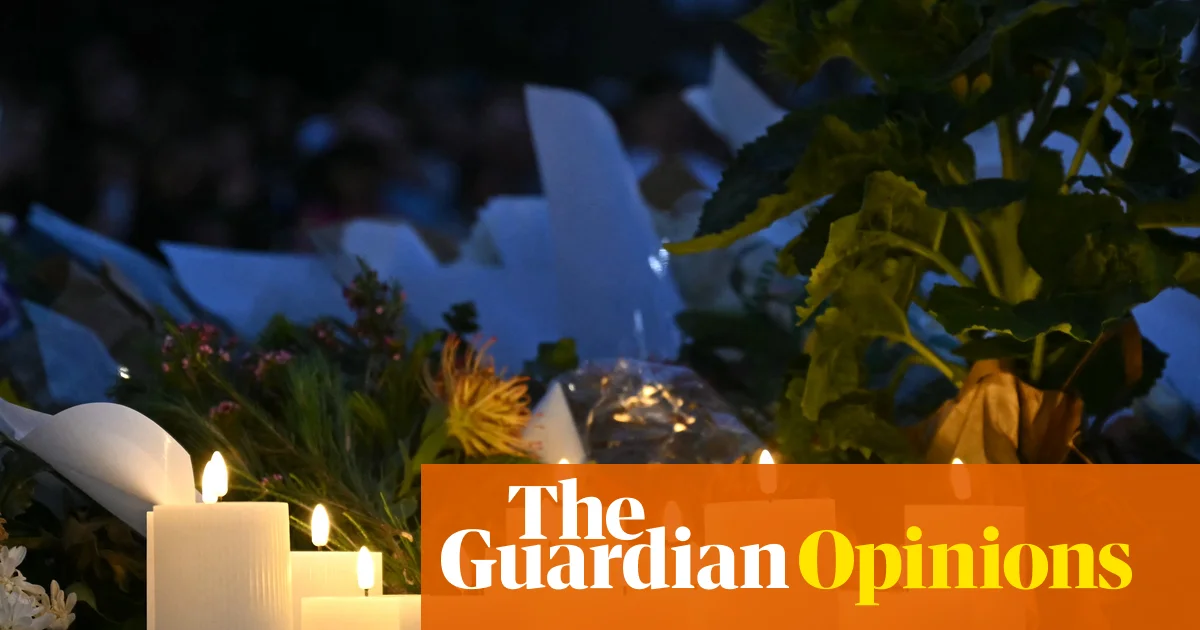
But as Robert Reich wrote here recently, opposition begins small and grows until it becomes unstoppable. It has been seen everywhere, from the millions who protested in the No Kings rallies in the US, to the resounding endorsement of progressive democratic governments in country after country, to the sea of flowers at Bondi Pavilion.
It doesn’t happen quickly but, as Ian McEwan demonstrates in his important novel What We Can Know, human beings have enormous capacity to muddle through even in the face of absurd human-made threats.
After a year of regular medical appointments, tweaking drugs and monitoring vital symptoms, Ian’s highly skilled neurologist said, “I don’t need to see you for another year. Don’t let anyone tell you that these diseases can’t be treated. They can’t be cured but can be treated.”
A year later the next appointment was also set for 12 months. He had several more good years.
There is a message in this.
The worst excesses of human nature cannot be eradicated, like a disease we cannot yet cure. But with civic determination and good government they can be treated and managed. It takes optimism, diligence and determination – not giving up.