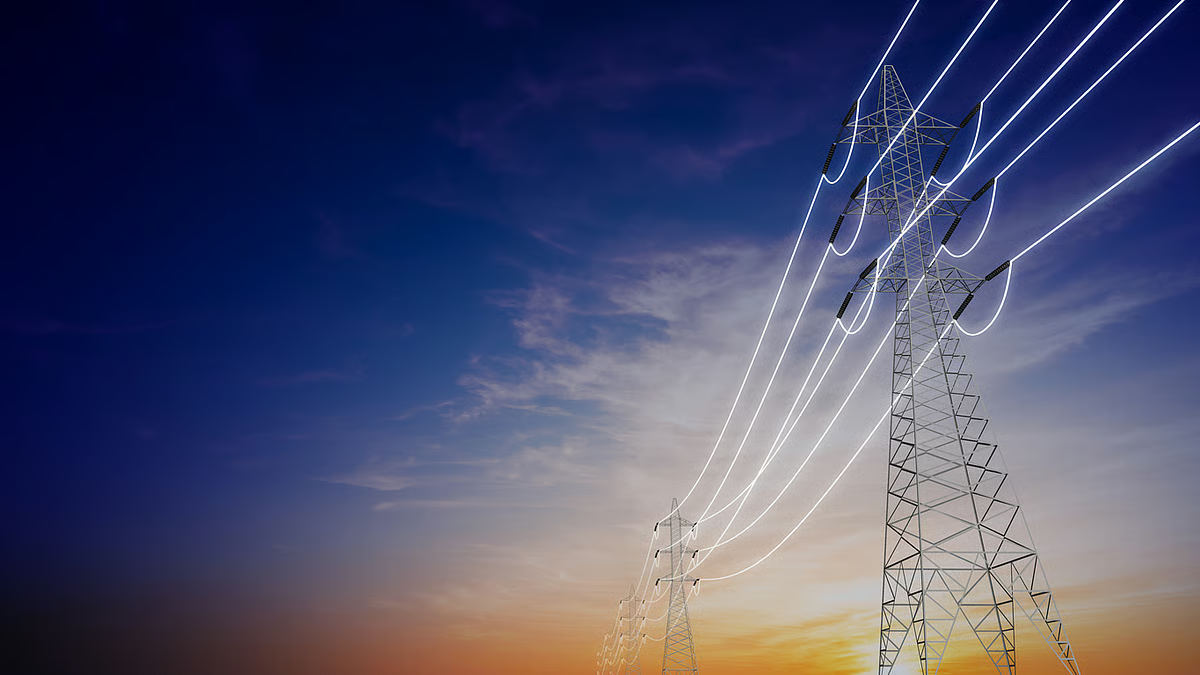
Phase 1 is nearly complete, with about 90-100 per cent of its transmission lines and substations commissioned across eight states. There was a delay in reaching its initial 2022 target due to land acquisition hurdles, right-of-way clearances, equipment supply constraints and financing challenges. Work for this phase is expected to finish very soon, while Phase 2 is underway.
Phase 1 covers Andhra Pradesh, Gujarat, Himachal Pradesh, Karnataka, Madhya Pradesh, Maharashtra, Rajasthan and Tamil Nadu, while Phase 2 expands to include Kerala and Uttar Pradesh and adding to Gujarat, Himachal Pradesh, Karnataka, Rajasthan and Tamil Nadu.
With renewable capacity additions accelerating, the next phase is being designed at a much larger scale. “Now, we are planning for around 150 GW of renewable energy for evacuation,” a senior government official told Down To Earth (DTE), adding that the expansion is “almost eight to ten times larger than both earlier corridors put together”.
According to the official, the new corridors will be implemented in stages. “We will do it in phases. It could be two phases or even three, given the large capacity. In phase 1, some 10 states are covered. In phase 2, some seven to eight states are covered. In phase 3 and phase 4, everything else will be covered, across India.”
The scale of Phases 3 and 4 implies a substantial budgetary requirement in the coming years, even as spending under earlier phases continues. Though the official did not put a number, the cost or expenditure could be 10 times higher than the previous phases.
According to a report in the newspaper Mint published on March 19, 2025, GEC-III was proposed in the Union budget for FY26, with an overall cost estimated at Rs 56,000 crore and the Centre covering 40 per cent of it.