
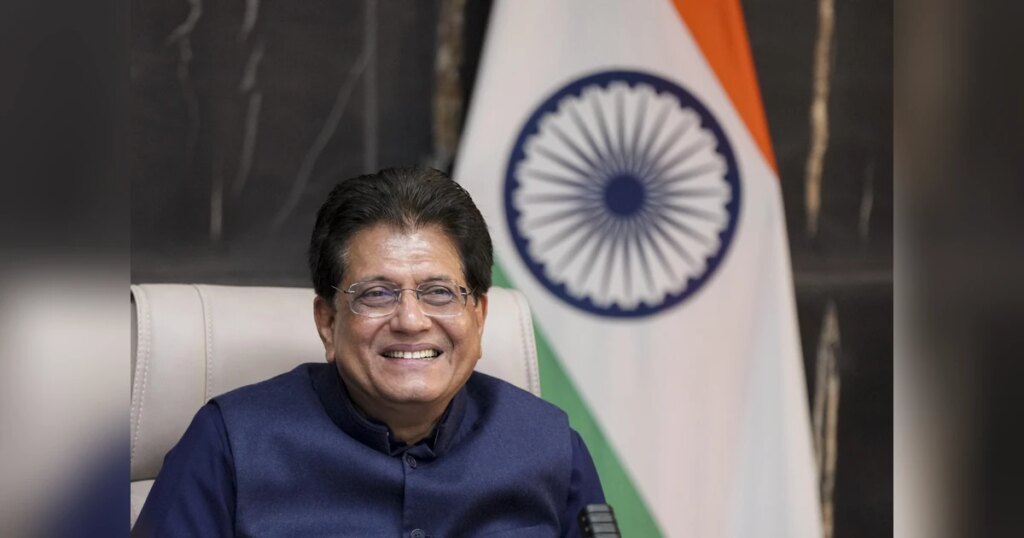
Ahead of the announcement of the conclusion of the long-awaited India–European Union Free Trade Agreement (FTA) talks, Commerce and Industry Minister Piyush Goyal on Sunday emphasised their “fruitful outcome”.
Why is the India–EU FTA significant at this stage?
The proposed FTA is one of the most complex trade negotiations India has undertaken and is nearing completion. The conclusion of the talks is expected to be announced at the India–EU Summit scheduled for January 27 in New Delhi. Senior EU leaders, including European Commission President Ursula von der Leyen and European Council President António Costa, are currently in India.
What did Piyush Goyal say about the negotiations?
“Pleased to agree that sustained and constructive engagement between us and our teams over the past year has brought us closer to a fruitful outcome,” Goyal said in a post on X, adding that the bloc remains a vital economic and strategic partner for India.
What is the EU’s assessment of the talks?
“A big pleasure to be in India. Our 10th in-person engagement with Minister @PiyushGoyal — and I’m confident to say we’re nearing the conclusion of our FTA negotiations. The culmination of an intense past year — likely my most frequent trade engagement — reflecting its importance,” the EU Commissioner for Trade and Economic Security, Maroš Šefčovič, said on X.
How long have India and the EU been negotiating the FTA?
Negotiations for the comprehensive trade pact began in 2007 but were paused in 2013. The talks were formally relaunched in 2022 after a prolonged hiatus.
What could the agreement deliver if finalised?
If formally concluded and later ratified by the European Parliament, the agreement could significantly deepen economic integration by reducing tariffs on a wide range of goods, easing market access for services, and promoting investment flows between India and the EU.
Why do economists see the timing as crucial?
Madhavi Arora, chief economist at Emkay Global Financial Services, said the impending FTA comes at a crucial juncture marked by global trade fragmentation, rising protectionism, US–India trade frictions and heightened uncertainty. The deal could act as an effective counter-cyclical buffer by improving India’s export participation in global value chains, expanding market access and supporting supply-chain diversification, she said.
How do trade experts view India–EU trade ties?
Ajay Srivastava, former trade ministry official and founder of Delhi-based think tank GTRI, said India–EU merchandise trade is best understood not as a contest for market share but as a production partnership. European machinery, components and precision inputs raise productivity in Indian factories, while Indian scale manufacturing delivers affordable, consumer-ready products to Europe, he said.
“Because both economies specialise in different segments, tariff elimination works as a cost-reduction tool rather than a displacement shock. An India–EU FTA would thus deliver classic trade gains — higher volumes, deeper integration and stronger industrial competitiveness on both sides — at a moment when such economically rational trade arrangements are becoming increasingly rare,” he said.