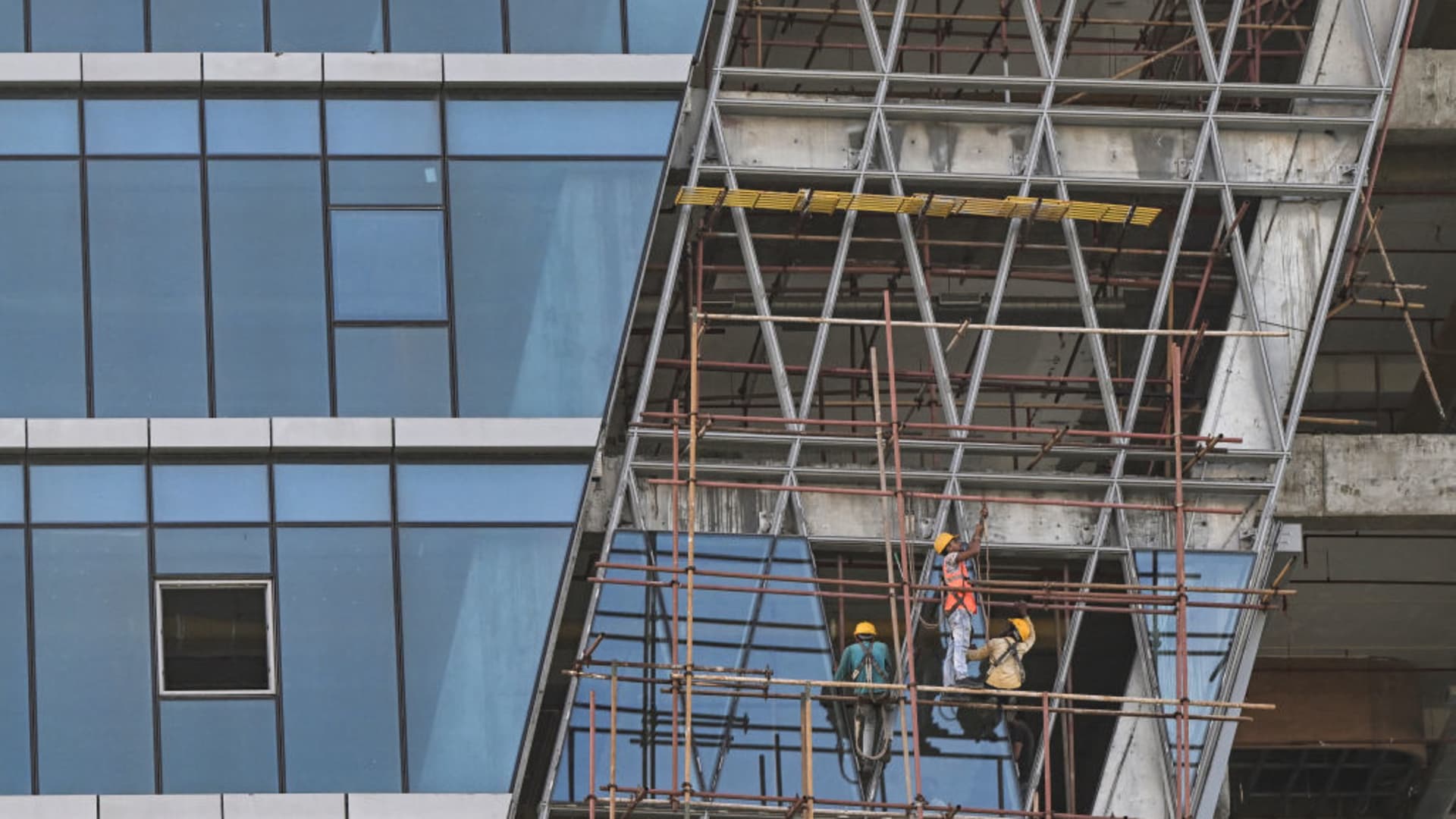
Construction laborers work on a high rise building in Kolkata on July 23, 2024.
Dibyangshu Sarkar | Afp | Getty Images
India’s economy grew at a faster pace than expected of 7.8% in the quarter ending December.
A Reuters poll of economists had pegged the October-December gross domestic product to grow at 7.2%.
The latest print comes after the government overhauled the framework for calculating economic output to improve accuracy.
In the previous quarter, India’s GDP growth rate was 8.2%, which has been revised to 8.4% under the new series. The GDP growth estimate for the financial year 2026 has also been raised to 7.6% from 7.4% earlier .
In January, India’s Ministry of Statistics & Programme Implementation (MoSPI) introduced changes to the GDP series, inflation and industrial production data to strengthen data quality, credibility and policy relevance, it said in a statement.
As part of the changes to the framework, the world’s fastest-growing economy will shift the gross domestic product base year to financial year 2023 from 2012.
In a report last year, the International Monetary Fund had raised concerns over the accuracy of the Indian government’s economic data and assigned it a “C grade” rating, its second-lowest rank.
The government data has limitations, such as the use of “an outdated base year (2011/12)” and the use of wholesale price indices and single deflation for calculating inflation, all of which can distort real economic measures, the IMF said in its report.
“The new GDP series will largely address the concerns of the IMF, and as a result, we expect that their assessment and rating of India’s national accounts data will change,” Saurabh Garg, secretary at MoSPI, said in an interview with local media on Thursday.
Domestic consumption, tariffs
During the December quarter, the Indian economy saw a selective uptick in domestic consumption of gold and automobiles due to the festive season. However, this was also the first full quarter when Indian exporters felt the brunt of the U.S.’ 50% tariffs.
Indian exports to the U.S. have been facing those tariffs since August last year, but the two countries have now agreed to an interim trade deal that reduced the tariffs to 18%.
However, the situation has been further complicated after the U.S. Supreme Court outlawed much of President Donald Trump’s tariff regime last Friday. Washington is now levying a global tariff rate of 10% and has threatened to raise it higher.
The economic survey released last month noted that India’s economic growth has not been hampered by the slowdown in exports to the U.S.
Textiles, marine products, gems and jewelry, auto components, and leather goods are the key exports from India, which have been affected due to U.S. tariffs. But according to the data shared by the Indian government, these products have found alternative markets.