In early reports confirmed by Indian scientists, a presented with sudden numbness, vomiting and rapidly progressing paralysis shortly after consuming a low-cost freshwater fish purchased from a village market. Within hours, the patient displayed symptoms consistent with tetrodotoxin exposure, highlighting a health threat that has remained almost entirely invisible in India’s riverine communities. The incident marks the country’s first scientifically verified case of pufferfish poisoning and has drawn renewed attention to this risk.
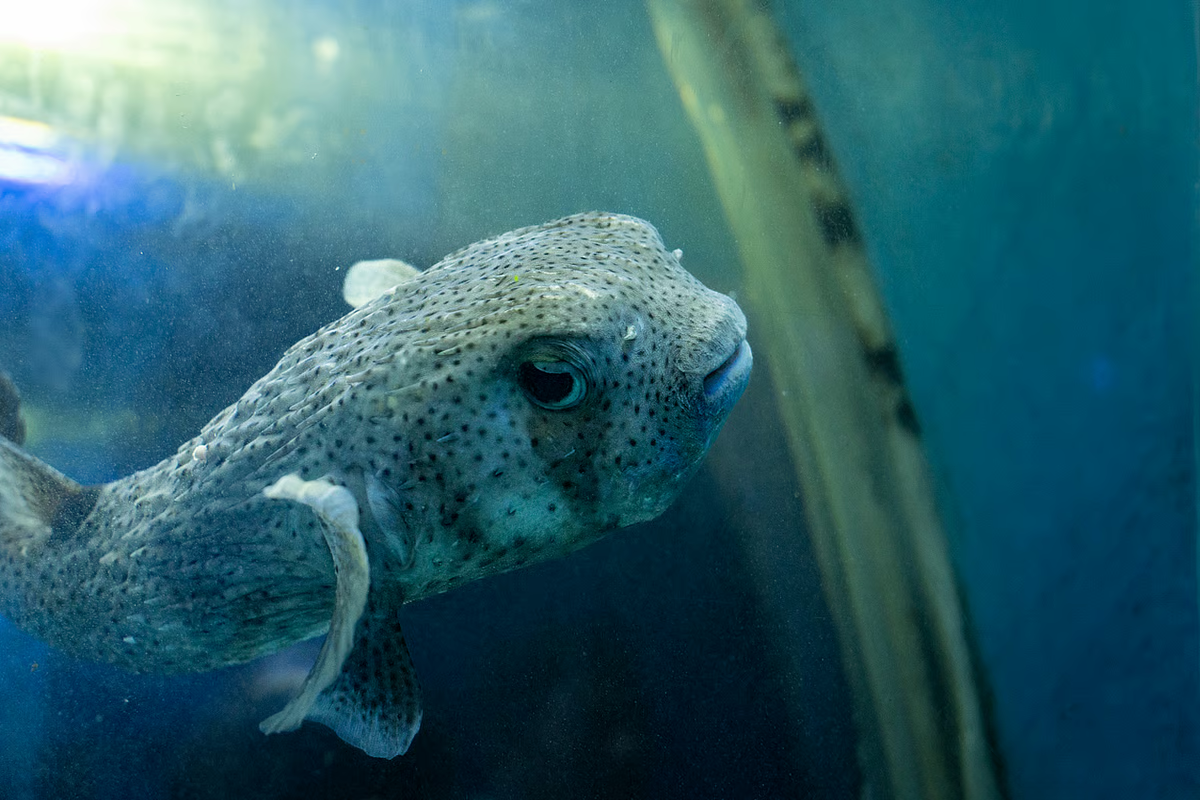
Pufferfish belong to the order Tetraodontiformes and are known locally by names such as toadfish, patkafish, balloonfish and fugu. Global catalogues list approximately 190–193 valid species. Indian waters currently support eight genera and 32 species of pufferfish. Their c to certain regions and river systems, primarily the Western Ghats and major basins such as the Ganga, Brahmaputra and Mahanadi.
Pufferfish are omnivorous and benthic in habitat. Freshwater pufferfish species reported from India are often endemic to specific geographical areas and serve as indicators of healthy river ecosystems. The dwarf pufferfish is classified as Vulnerable on the International Union for Conservation of Nature’s Red List due to declining populations caused by wastewater pollution and collection for the aquarium trade.
What makes these otherwise delicate fish so dangerous is tetrodotoxin (TTX), one of the most potent neurotoxins known in nature. TTX consists of an oxygenated 2,4-dioxaadamantane core and a guanidinium group. It is heat-stable, water-soluble, and a non-protein quinazoline derivative. TTX blocks sodium channels in nerve cells, disrupting electrical signalling and a cascade of symptoms including tingling, numbness, vomiting, falling blood pressure, rapid heart rate, muscular and respiratory failure.
Across Asia, pufferfish poisoning is widely documented, with in Bangladesh, Singapore and Hong Kong. In Japan, where pufferfish (fugu) is consumed as a delicacy, are permitted to prepare it. India, however, lacks comparable protective measures.