India’s infrastructure spending has crossed 3 per cent of gross domestic product, but floods, cyclones, landslides and extreme heat are increasingly damaging highways, ports, urban assets and hydropower projects, pushing insurance premiums higher and driving some regions closer to the threshold of uninsurability, according to a new report that flags growing financial risks for governments, insurers and investors.
The report, Climate Risks and Insurance for India’s Infrastructure, by Climate Trends, finds that infrastructure expansion is accelerating fastest in climate-vulnerable regions, even as insurers struggle to accurately price rising and increasingly predictable climate risks. All insurers surveyed said existing models are inadequate to capture evolving climate impacts, raising the likelihood of a widening gap between economic losses and insured coverage.
While most of India remains within the limits of insurability, insurers repeatedly flagged hydropower projects, national highways and urban infrastructure in flood- and landslide-prone areas as points of concern, with premium affordability already under strain.
The report finds that climate impacts in India are no longer sporadic but are rising steadily in both frequency and severity, with a sharp acceleration since the mid-2010s, as hydro-meteorological disasters, especially floods, come to dominate the risk landscape. Its analysis of Delhi shows that while urban areas expanded at about 1.3 per cent annually between 1986 and 2016, flood exposure grew much faster at around 2.46 per cent, a divergence expected to widen further, leading the report to conclude that as asset concentration increases and climate risks become more predictable, parts of the country could be pushed towards the threshold of uninsurability.
“As India seeks big investments at the World Economic Forum and plans double-digit (nominal) growth over the next five years, it would be remiss to not point out the risks to India’s infrastructure posed by climate impacts and extreme weather events,” said Aarti Khosla, founder and director of Climate Trends. “The country’s rising exposure for its essential assets could thus lead to mounting climate-induced losses, which would be a fiscal and financial burden”.
Infrastructure expansion in high-risk zones
Hydro-meteorological disasters dominated India’s climate impact calendar in 2025, with flooding, extreme rainfall, cyclones and landslides repeatedly hitting capital-intensive infrastructure, the report said. These risks were ranked high to very high for urban assets, highways, ports and hydropower projects.
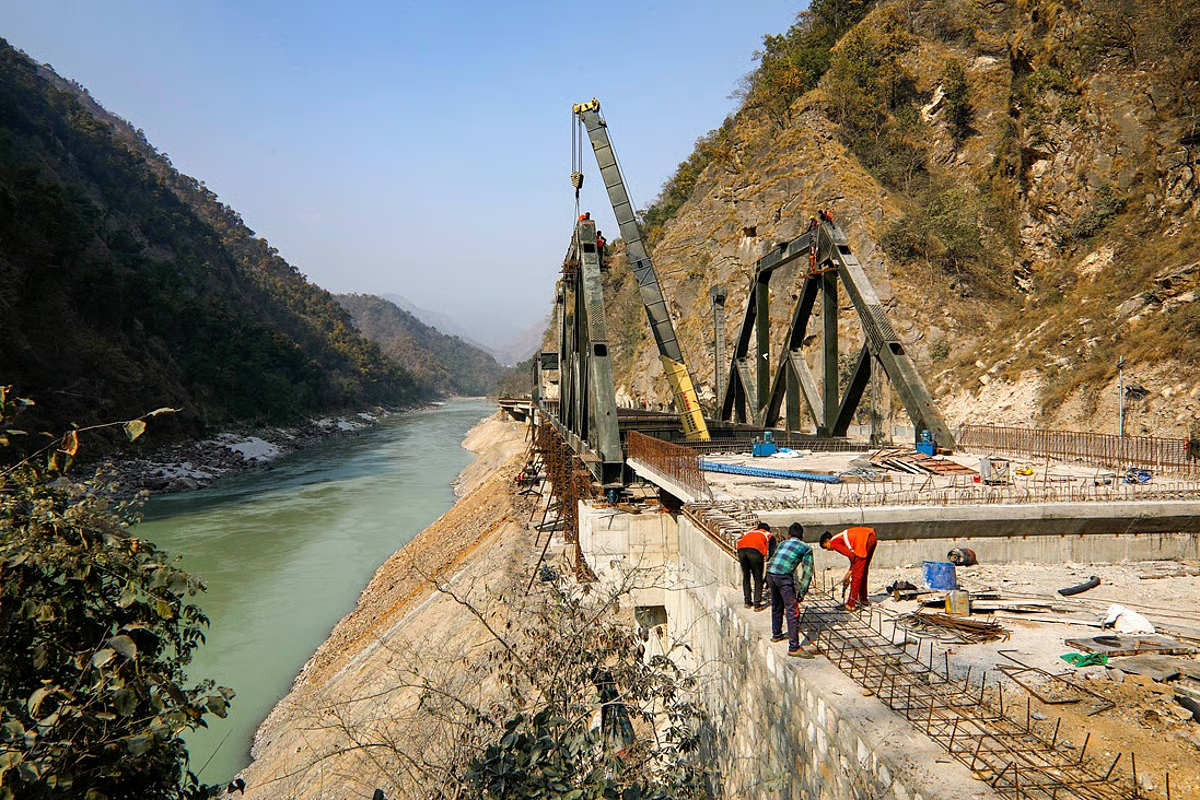
States such as Assam, Andhra Pradesh, Odisha, Uttarakhand, Himachal Pradesh, Sikkim, Ladakh and parts of the Northeast are among the most climate-vulnerable, even as large infrastructure investments are concentrated there. The total investment exposure in these regions is estimated at about Rs 2.95 trillion, spanning ports, tunnels, highways and major hydropower projects.
Premium pressure and modelling gaps
Interviews with insurers and reinsurers, including SBI General Insurance, Munich Re India, Swiss Re India and the General Insurance Corporation of India, show mounting stress in climate risk pricing.
Two-thirds of insurers reported rising premiums since 2015, while all respondents flagged affordability challenges for infrastructure projects, particularly hydropower assets located in flood- and landslide-prone terrain. Insurers warned that uncertainty around future climate impacts makes underwriting increasingly complex, potentially discouraging coverage or pushing risks back onto project developers and the state.
Regulatory challenge for IRDAI
The findings sharpen the challenge facing the Insurance Regulatory and Development Authority of India (IRDAI), which is simultaneously pushing insurers to deepen penetration, expand coverage and innovate around emerging risks such as climate change.
India’s non-life insurance penetration remains around 1 per cent, far below global levels, even as climate-linked losses rise. The report argues that without standardised frameworks for climate risk disclosure, modelling, underwriting, premium pricing and loss assessment, insurers may struggle to maintain solvency while keeping infrastructure insurance affordable.
Although insurers are rolling out parametric and climate-responsive products for floods, cyclones, heat and excess rainfall, coverage gaps persist for high-impact risks such as cloudbursts and landslides—perils that are increasingly relevant for infrastructure in Himalayan and coastal regions.
Fiscal implications for the finance ministry
For the finance ministry, the report raises concerns around rising contingent liabilities. As climate risks become more frequent and predictable, uninsured or under-insured losses are more likely to be absorbed through disaster relief, asset reconstruction, viability gap funding and public guarantees.
The report warns that continued infrastructure build-out in high-risk regions without embedding climate resilience at the design stage could elevate fiscal exposure, particularly given the involvement of public sector banks and state-owned insurers in large infrastructure projects.
Globally, insured property losses exceeded $140 billion in FY25, while India’s natural catastrophe losses in 2023 reached $12 billion, well above the previous decade’s average—highlighting the scale of potential spillovers into public finances.
Call for resilience-first planning
Khosla said climate resilience must be integrated into infrastructure planning from the outset rather than treated as a post-disaster fix. “Climate resilience must therefore be integrated into infrastructure planning from the very beginning to minimise the costs of post-disaster reconstruction,” she said, adding that long-term insurance viability would also require “advanced actuarial models and standardised frameworks for risk disclosure, premium pricing and loss assessment”.
Without regulatory alignment and fiscal planning around climate risk, the report cautions that rising uninsurability could increase project risk premiums, deter private capital and complicate India’s infrastructure-led growth strategy.