A large share of India’s PM2.5 pollution is not emitted directly but is chemically formed in the atmosphere from precursor gases, according to a new analysis by the Centre for Research on Energy and Clean Air (CREA).
Up to 42 per cent of India’s PM2.5 burden is secondary particulate matter, primarily ammonium sulphate formed from sulphur dioxide (SO2), the assessment has found.
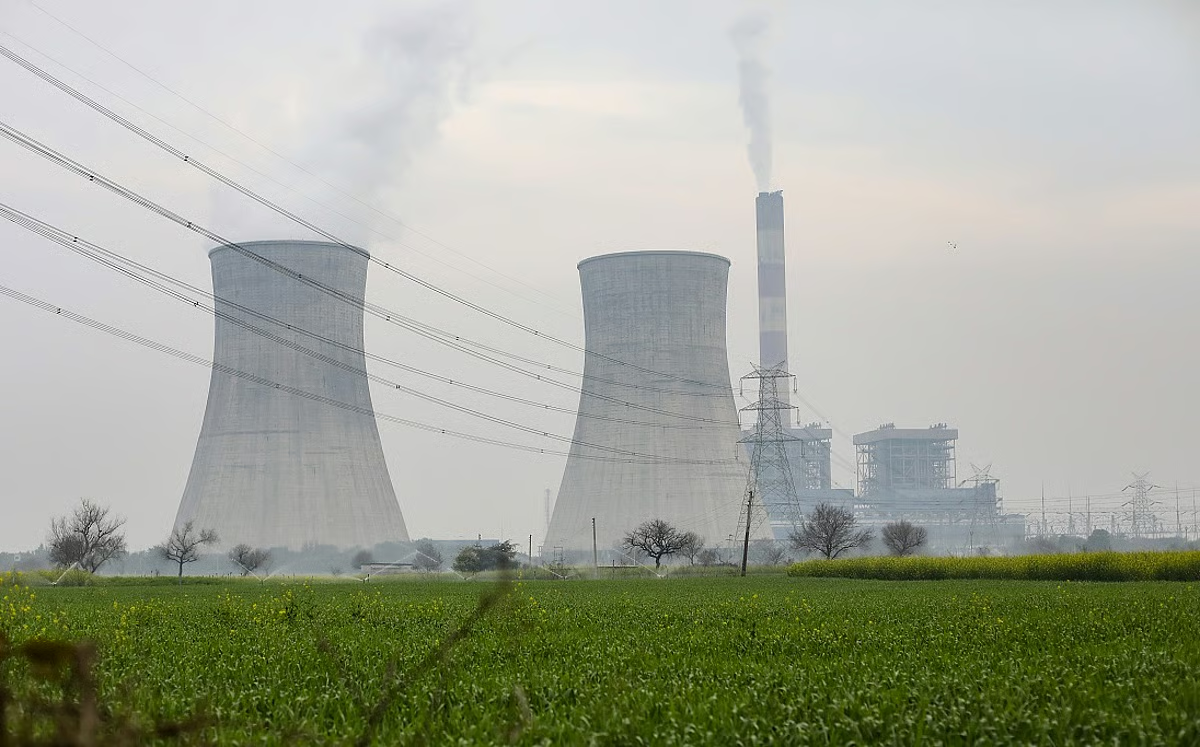
India is the largest SO2 emitter globally, with coal-fired power plants contributing at least 60 per cent of national SO2 emissions, reinforcing the central role of SO2 control in reducing PM2.5 pollution.
Despite this evidence, the current regulatory framework has exempted around 78 per cent of coal-fired power plants from installing flue gas desulphurisation (FGD) systems, significantly weakening SO2 control at the source, a statement from CREA noted.
The highest annual ammonium sulphate contribution was observed in Chhattisgarh (42 per cent), a coal-fired power plant–dominant state, followed closely by Odisha (41 per cent).
This, according to the statement, showed that reinstating mandatory FGD requirements across all coal-fired thermal power plants is critical to reducing secondary ammonium sulphate formation and PM2.5 under the National Clean Air Programme (NCAP).
Around one-third of Delhi’s annual PM2.5 is secondary ammonium sulphate. “During the city’s most polluted periods, post-monsoon and winter, ammonium sulphate dominates PM2.5, contributing 49 per cent and 41 per cent respectively, compared with just 21 per cent in summer and the monsoon.”
According to CREA, Delhi’s worst pollution episodes are driven largely by region-wide SO2 emissions and secondary formation, not only local primary sources.
Ammonium sulphate contributed between 17 per cent and 42 per cent of PM2.5 mass across Indian states, with most states clustering between 30 and 40 per cent annually. The assessment concluded this by using NASA’s MERRA-2 reanalysis data for 2024.
“This establishes secondary particulate matter as a core driver of India’s PM2.5 burden, rather than a marginal or seasonal concern,” the statement pointed out.
Aside from Chhattisgarh, several other states across India also recorded high contributions, indicating that secondary sulphate formation is widespread and national in scale, not limited to a few hotspots.
Seasonal contributions across Indian states show that ammonium sulphate remains a substantial component of PM2.5 year-round, peaking in winter (31-52 per cent of PM2.5 mass) and post-monsoon (27-53 per cent), and remaining significant even in summer (11-36 per cent) and monsoon season (4-26 per cent). These patterns demonstrate that secondary particulate matter dominates PM2.5 composition during India’s most polluted months.
The findings also highlight major gaps in current air quality strategies, which continue to prioritise PM10, road dust, and other visible pollution sources, while largely overlooking the role of precursor gases such as SO2, nitrogen dioxide and ammonia.
Without addressing secondary particulate matter, improvements in air quality are likely to remain limited and short-lived.
“As the NCAP is revised, India must focus not only on PM2.5 concentrations but also on what the pollution is made of. With secondary ammonium sulphate accounting for up to 42 per cent of PM2.5, largely driven by SO2 from coal-based power plants, precursor controls and composition monitoring are essential for air quality improvement,” said Manoj Kumar, India Analyst at CREA.