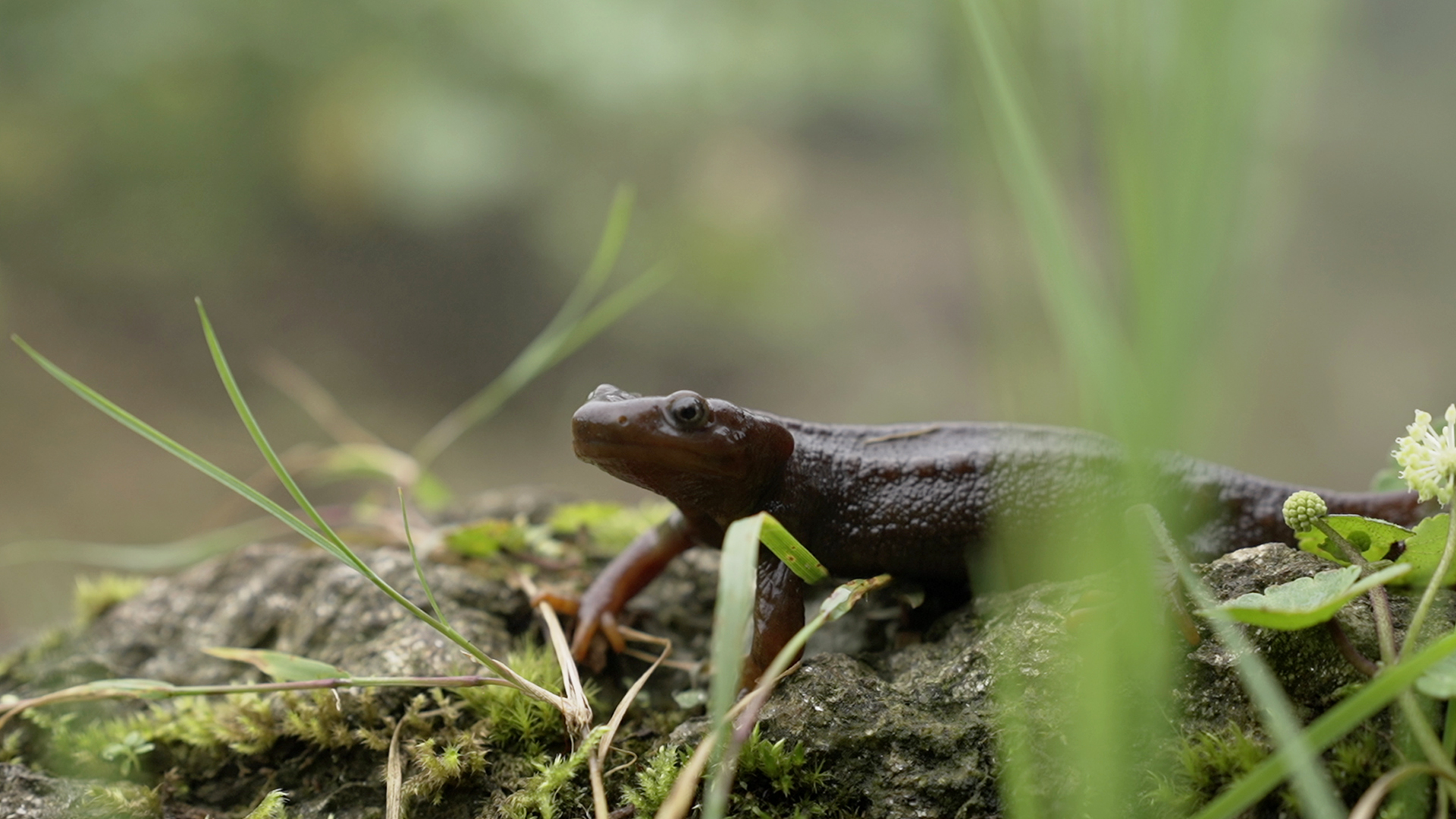
Every monsoon, in the hills of Darjeeling, the Himalayan salamander emerges from beneath the forest floor to breed. A delicate mating ritual ensues; for nearly 90 minutes, males and females circle one another in a slow dance before eggs are attached to semi-submerged vegetation. Without these wetlands and the vegetation the next generation will not survive.
But across the Darjeeling hills, their breeding sites are disappearing.
Small wetlands have been drained for housing and tourism. Wastewater and detergents seep into once-clear waters. Roads now cut across migration paths, and salamanders are crushed as they attempt to reach seasonal ponds or pokhris. Even Jorepokhri, declared India’s first salamander sanctuary in 1985, no longer harbours salamanders because cemented grounds and tourist infrastructure altered the habitat beyond recovery.
Today, only a small fraction of the species’ habitat lies within protected areas. Many remaining habitats fall on private land and tea estates.
The West Bengal Forest Department is now attempting to restore and maintain these shrinking salamander habitats. New sanctuaries have been proposed, degraded ponds are being revived, and invasive plants are being cleared from key breeding sites.
But populations remain fragmented and fragile and in Darjeeling, the survival of this ancient amphibian may depend on whether lessons from the past change approaches to the future.