
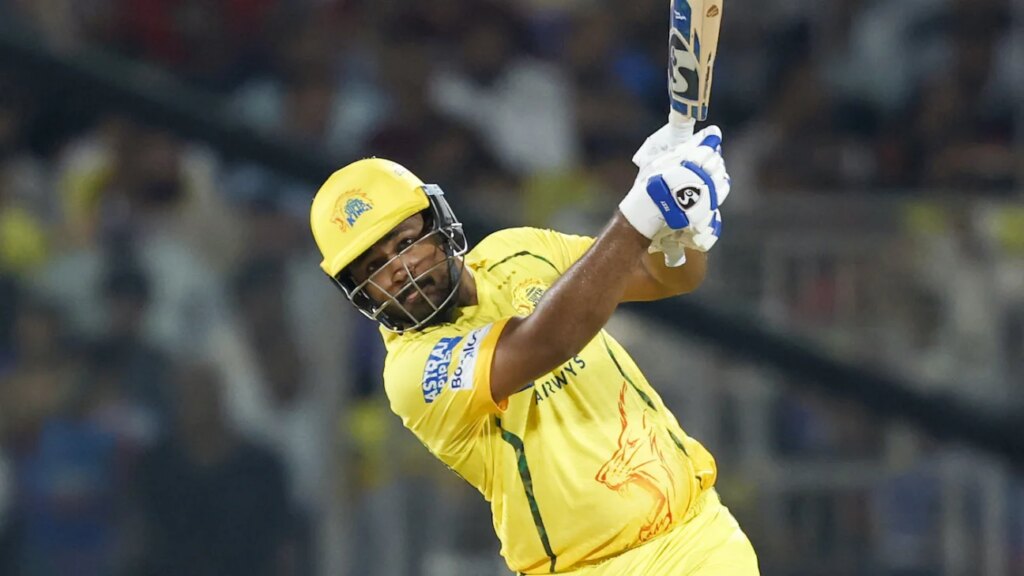
Chennai Super Kings 159 for 2 (Samson 87*, Kartik 41*) beat Delhi Capitals 155 for 7 (Rizvi 40, Noor 2-33, Hosein 1-19) by eight wickets
Both captains expected the pitch to be slow. The scoring pattern of the first four overs confirmed it. Fifteen dot balls. Six boundaries. Three singles and a wicket with the batter trying to force the pace. In conditions where the ball comes onto the bat, KL Rahul and Pathum Nissanka might have been able to hit the gap with the shots they played off good length balls. On this one, as much as they tried, they just found the fielder. Worse, they found themselves having to hold their shape for longer and even that didn’t always work.
With two right-handed openers, CSK had no hesitation in handing the ball to Hosein. When Nissanka fell though, DC sent Nitish Rana out in an effort to either hit Hosein out of the attack or prevent him from coming on. This is how much of a no-no matching a left-arm spinner with a left-handed batter is. But CSK bucked tradition. They gave Akeal a third over. He provided Rahul’s wicket and in the end Rana got to face only one ball from Akeal. A dot ball. DC came out of the powerplay 37 for 2. Akeal finished with figures of 4-0-19-1, which is exceptional considering he bowled only one over outside the field restrictions.
Axar Patel has 33 runs this season. Twenty-six of those came in one innings. And his strike rate is 97. It is a massive drop. The DC captain was one of the bright spots last season, their fourth-highest scorer with 263 at a very healthy strike rate of 157. He was in the middle when his team needed to rebuild and his wicket – the third that CSK took in a space of 19 balls between overs 8 and 11 – had an impact on the total they put up.
One part of this plan was premeditation – the movement across his stumps – the other was instinct. Rizvi consciously tried to keep his shot options open, and not just target leg side. Kamboj from around the wicket in this IPL until this match: 63 runs, 8.57 economy rate, eight wickets. In this game: 34 runs in 12 balls, five sixes. Meanwhile, Jamie Overton, one of CSK’s best bowlers, bowled only one over and spent time off the field as well.
Being in the form of his life is one thing, but to go out there knowing he is his team’s best hope for runs and managing risk accordingly is something else. Samson has always had aura. Now he has the output. For the first three games this season, he made 22 runs at an average of 7.33 and a strike rate of 116. The next seven, he’s made 380 at an average of 95 and strike rate of 172.
The six he hit first ball against Axar highlighted that the pitch was no longer a problem. A little bit of rain while the match was going on had freshened it up, making the ball come onto the bat better. Even so, DC had threats. Lungi Ngidi returning from a head injury aced his match-up against Ruturaj Gaikwad, dismissing him for a third time in 17 balls for just 10 runs in T20 cricket.
Samson held fire initially. He was 22 off 22 at the eighth over. Ten balls later, he was on fifty. Eventually, he was even entertaining thoughts of a hundred. A highlight of his game was the way he took down spin – 12 off 10 against Axar with one six and 25 off 9 against Kuldeep Yadav with three sixes and a four. CSK won a 12 vs 11 game – because they didn’t even need the impact player – with 15 balls remaining and got a net run-rate boost that could be vital as the season nears the playoffs.