
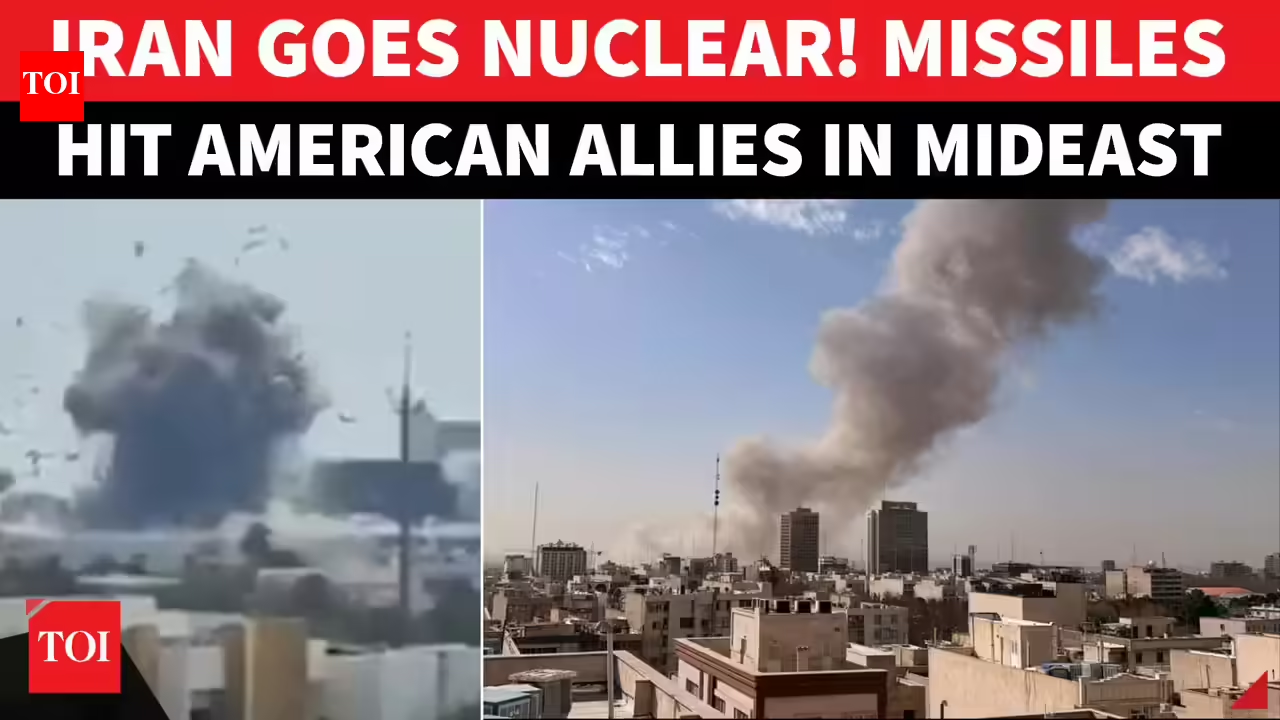
Inside the escalating Iran–US–Israel conflict shaking the region. The Middle East didn’t wake up to an ordinary morning.People checked their phones and saw alerts about explosions. Videos of air defence systems flashing across the night sky began circulating online. Flights suddenly changed routes. And almost instantly, one question started dominating conversations everywhere:
Why is Iran attacking now?
The short answer is retaliation.But the real story didn’t begin today. What we’re seeing is the result of years of tension, suspicion and unfinished conflicts finally spilling into the open.The moment things escalatedThe latest crisis traces back to coordinated military strikes carried out by the United States and Israel inside Iran on February 28, 2026. Early reports suggested that strategic locations connected to defence and security operations were targeted.For Washington and Tel Aviv, the strikes were framed as preventive – an attempt to deal with security threats before they grew bigger.Iran saw it very differently.Tehran described the operation as a direct attack on its sovereignty. Iranian media reported damage and casualties, though independent details remain limited.And that changed everything.For years, hostility between Iran, Israel and the United States existed mostly in the background — cyberattacks, intelligence operations, proxy conflicts in places like Syria and Iraq. Serious, yes. But indirect.Striking Iranian territory crossed a line Iran had warned about repeatedly.So retaliation came quickly.
Why missiles hit multiple countries
Soon after the strikes, Iran launched ballistic missiles and drones across several parts of the Middle East. Explosions and interceptions were reported in countries including the United Arab Emirates, Qatar, Bahrain, Kuwait and Jordan.At first, many people were confused.Why target countries that weren’t openly involved in the original attack?The answer lies in military alliances.Several Gulf nations host American military bases that play key roles in surveillance, logistics and regional defence coordination. From Iran’s perspective, these bases form part of the wider system supporting US and Israeli military power.So Iran’s message appeared broader than simple revenge.It wasn’t only about Israel. It was about signalling that any attack on Iran would trigger consequences across the region.And suddenly, a geopolitical conflict felt very real for civilians who had nothing to do with the original confrontation.
Gulf countries stuck in the middle
For Gulf states, this situation is deeply uncomfortable.Many of them have spent years trying to balance relationships – maintaining strong security ties with the United States while cautiously improving diplomatic relations with Iran.But geography doesn’t allow easy neutrality.American forces are already present across the region. Once Iran decided to retaliate against that wider network, these countries inevitably became part of the crisis.They didn’t start the conflict. Yet now they’re dealing with heightened security alerts, nervous residents and uncertain airspace.It’s a familiar Middle East reality: proximity means no one stays untouched for long.
A rivalry that never really ended
Today’s escalation might feel sudden, but it has been years in the making.Iran and Israel have been locked in what analysts often describe as a shadow war. It has played out through covert operations, cyberattacks, targeted killings and proxy battles across neighbouring countries.Israel sees Iran’s missile programme and nuclear ambitions as a major threat to its security. Iran, meanwhile, accuses Israel and the United States of trying to weaken its influence and destabilise its government.Most confrontations stayed below the threshold of open war.That restraint now appears to be slipping.The nuclear question still hangs over everythingHovering behind the crisis is Iran’s nuclear programme.Diplomatic negotiations earlier this year struggled to make progress. Talks stalled over uranium enrichment limits, inspections and sanctions relief. Trust was already fragile.Israel has long argued that diplomacy alone cannot stop Iran from developing nuclear weapons capability. Iran insists its nuclear programme is peaceful and civilian.But suspicion runs deep on all sides.When negotiations fail, military decisions often follow. The latest strikes – and Iran’s response, reflect that shift.
Why Iran felt it had to respond
Iran’s retaliation isn’t just about military strategy. It also carries political messaging.At home, leaders need to show strength after a foreign attack. Not responding could be seen as weakness.Strategically, retaliation is meant to restore deterrence – essentially sending the signal that attacks on Iran will always be answered.And by spreading its response across several countries, Iran complicates the situation for its opponents. There isn’t just one battlefield anymore. The crisis becomes regional.But that also makes things more dangerous.Every missile increases the risk of miscalculation. One mistake could draw more countries into the conflict very quickly.
The world watches nervously
International reactions have been cautious but clearly worried.World leaders have urged restraint. Airlines began rerouting flights almost immediately. Energy markets reacted sharply, aware that instability in the Middle East can affect oil supplies and global trade within hours.Even countries far from the region are paying attention.What happens in the Middle East rarely stays there.
Why this moment feels more serious
The region has seen many crises before. But analysts say this one feels different because of who is directly involved.Iran.Israel.The United States.All three possess advanced militaries and powerful alliances. Direct confrontation between them carries risks far beyond earlier proxy conflicts.In the past, tensions played out indirectly through allied groups.Now, military actions are happening openly between states.And that raises the stakes dramatically.
What happens next?
Right now, nobody is certain.Iran says it acted in retaliation. Israel has moved its forces to high alert. The United States is reinforcing defensive positions while publicly calling for calm.Behind closed doors, diplomatic efforts are almost certainly underway. Ironically, negotiations often begin when situations look closest to spiralling out of control.The next few days will be critical. The crisis could stabilise – or expand.
The bigger picture
So why did Iran attack the Middle East today?Because, from Tehran’s perspective, it was responding to direct strikes by the United States and Israel and trying to re-establish deterrence.But the bigger story goes beyond one day’s events.Long-standing rivalries, nuclear tensions, regional alliances and global power politics are colliding at the same time. And when those forces meet, conflicts rarely remain contained.They spread – across borders, economies and ordinary lives.For now, the region remains tense, waiting to see whether this was a limited exchange… or the start of a much larger confrontation.