
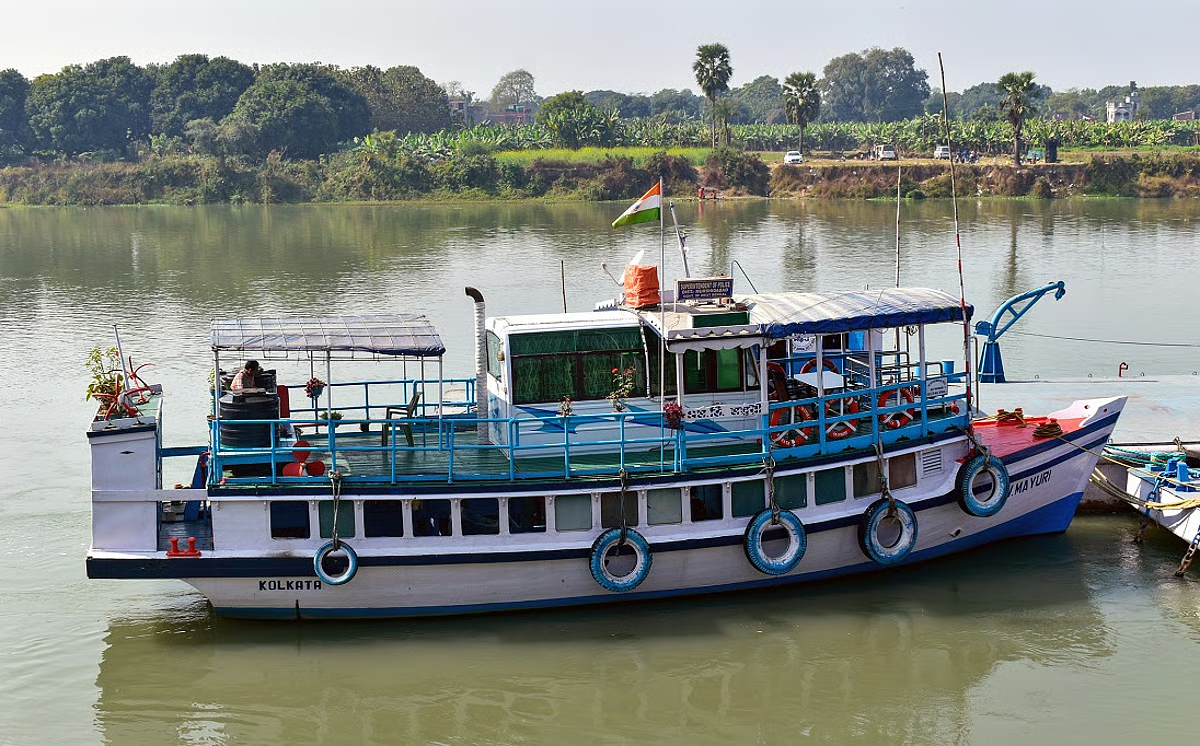
The Union Budget 2026-27 once again places inland waterways and coastal shipping at the centre of India’s long-term logistics strategy. Although 111 National Waterways have been declared, only 29 were operational as of May 2025. Despite this gap, the government has announced plans to develop 20 new waterway corridors over the next five years, and policy instruments such as the Coastal Cargo Promotion Scheme aiming to raise the share of coastal shipping and inland waterways in the country’s freight mix from 6 per cent to 12 per cent by 2047, the intent to shift freight away from roads and railways is clearly articulated.
At present, however, inland waterways account for only about 3.5 per cent of India’s trade, indicating that the pace of utilisation has not yet matched the scale of policy announcements. This gap underscores the importance of addressing operational and capacity-related challenges alongside network expansion.
Inland waterways differ from other transport infrastructure in that they are hydrologically dynamic systems. Ensuring year-round navigability requires regular dredging, channel maintenance, bank protection, and navigation aids. As the network expands, these maintenance requirements increase correspondingly.
In this context, the allocation of Rs 267 crore for maintaining existing waterways in 2025-26, which continues into the current budget cycle, appears limited when distributed across multiple operational stretches. Several notified waterways continue to experience shallow drafts, seasonal variability, and interruptions to navigation, factors that affect the reliability of cargo movement.
The Budget also proposes the development of ship repair ecosystems in Varanasi and Patna, aligned with the expansion of National Waterway-1, and continues incentives under the coastal cargo promotion framework. These measures are aligned with long-term logistics objectives, though their effectiveness will depend on sustained vessel movement and predictable cargo volumes, both of which are closely linked to navigability and maintenance.
On the maritime manufacturing side, the Budget has earmarked Rs 10,000 crore for container manufacturing, while India’s current container manufacturing capacity remains at around 30,000 units annually. In contrast, China which is the world’s largest player in the container manufacturing industry produces nearly 50 lakh (5 million) containers each year. While expanding domestic capacity is therefore essential, this allocation also draws attention to deeper structural constraints within India’s shipbuilding and maritime manufacturing ecosystem.
Available studies suggest that labour productivity in India’s shipbuilding sector is significantly lower than that of leading shipbuilding nations, resulting in a cost disadvantage of approximately 20-25 per cent. With a 0.05 per cent share, India currently ranks 20th rank in the world. Addressing this gap will require more than capital incentives, particularly sustained investments in skills and technology.
These issues were noted by the Parliamentary Standing Committee on the Status of Ship Building, Ship Repair and Ship Breaking Industries, which presented its report in 2024. The Committee highlighted limited investment in ship design, innovation, and research and development, and recommended a stronger focus on skill development and building a domestic R&D base to improve competitiveness.
Recent budget allocations indicate that this area may need further attention. Research and development for inland waterways has received an allocation of Rs 0.71 crore, while funding under “Assistance to Ship Building, Research and Development” has seen variations—from Rs 365 crore in the Budget Estimates for 2025-26, revised to Rs 195 crore, and subsequently set at Rs 340 crore for 2026-27. Greater stability in such allocations could support longer-term planning and implementation.
Overall, India’s waterways strategy remains directionally aligned with broader logistics and sustainability goals. Going forward, a closer alignment between network expansion, maintenance funding, skill development, and research capacity would help improve utilisation and reliability. Strengthening these foundations will be important if inland waterways and coastal shipping are to gradually approach the targeted share of freight by 2047.
Inland waterways function within complex river systems, and their long-term viability depends on consistent upkeep, skilled manpower, and informed planning. Continued attention to these aspects in future budgets could enhance the effectiveness of the sector’s ongoing expansion.