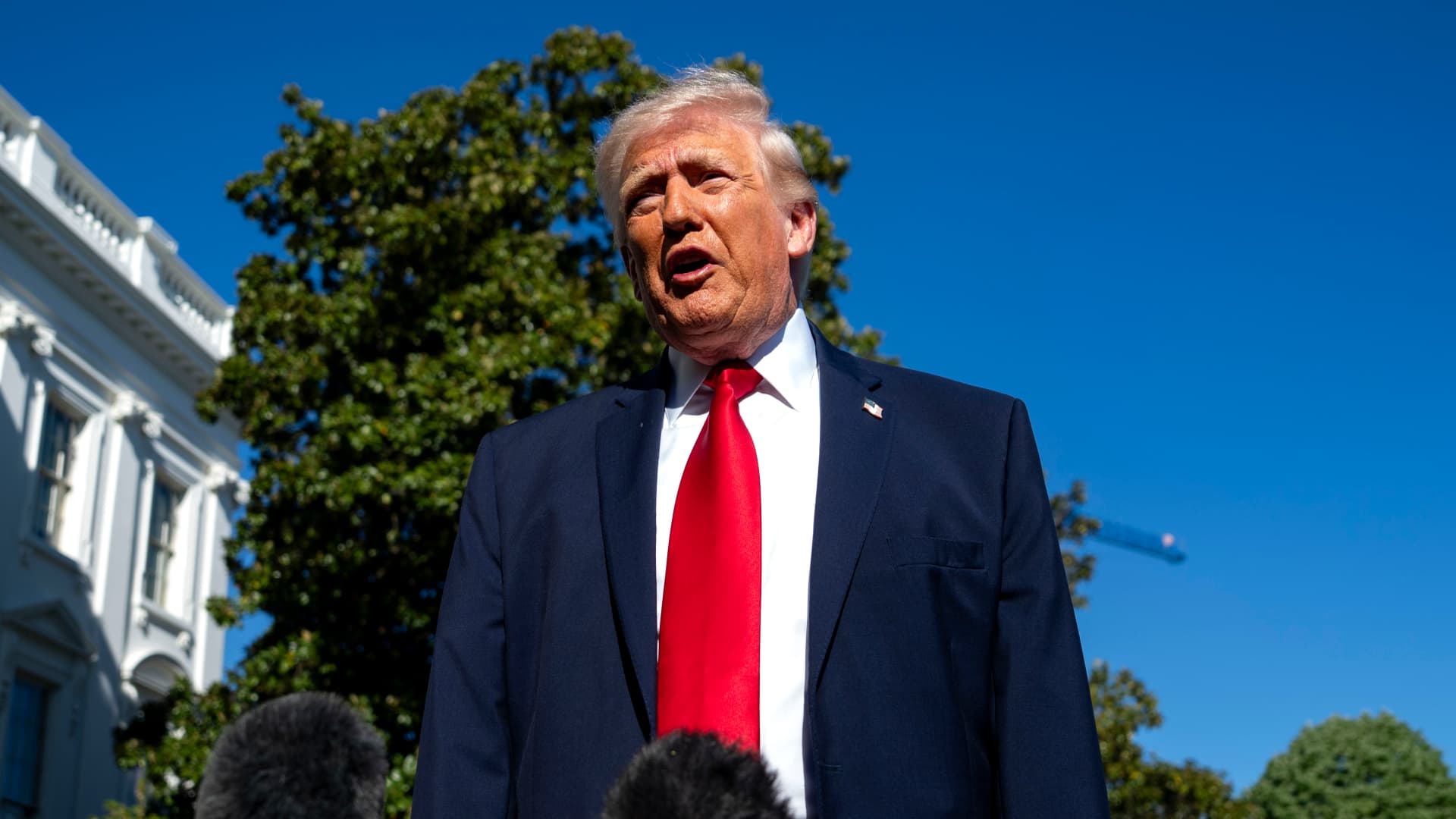
At the World Economic Forum earlier this year, NATO Secretary General Mark Rutte suggested that the European powers’ strategic decision to increase defence spending was a direct response to pressure from the Trump administration. An effect that will only be fully beneficial if these funds are used to purchase genuinely European military hardware.
Rutte’s remarks represented an unexpected defence of Trump from an official who is usually cautious in his assessments of U.S. politics. They encapsulate a growing narrative in European capitals: Trump’s abrasive diplomacy and transactional approach have jolted Europe into taking its own security more seriously. But beneath the surface of diplomatic praise, a deeper question looms. Has Trump’s presidency created a genuine opening for European autonomy in defence, or merely highlighted the widening gap between rhetoric and the reality of European military capabilities?
Indeed, Trump’s narrative during the forum was consistent with his transactional style. While his speech included criticism of European energy policy and alliance cohesion, it underscored his belief that Europeans should bear more of the defence burden, although various fact checks have noted that the US president has exaggerated historical contributions.
Yet the spending numbers themselves tell a story of European catch-up. Defence budgets in Europe have climbed sharply over recent years, with EU member states collectively boosting defence outlays by more than 60 % to reach around €380 billion in 2025. While this increase is driven by multiple factors (most notably Russia’s war in Ukraine) the pressure from Washington’s executive branch has become a salient part of political discourse in capitals from Warsaw to Paris.
Capability gaps and fragmented procurement
At the recent Munich Security Conference, Commission President Ursula von der Leyen declared that it is time to bring Europe’s mutual defence clause “to life”, stating “you change or die.” Such striking political rhetoric is designed to push EU countries to accept these new geopolitical realities and really begin scaling up. Although some countries have been lagging behind (Spain and France, for example, spent just 1.28% and 2% of their GDP respectively on defence spending in 2024, while Poland came out as NATO’s biggest defence spender as a proportion of GDP at 4.12%), NATO’s 5% commitment agreed at the NATO summit in the Hague in 2025 outlines a real change in response to Washington’s bellicose geopolitical stance.
How significant this budgetary shift may be, it must now translate into concrete action. Europe needs to consolidate, intensify and accelerate the development of fully European defence systems that shield it from strategic dependency. However, several countries continue to procure American weapons off the shelf, arguing that this is the quickest solution. A likely unrealistic vision, as U.S. industrial capacity is primarily geared toward meeting the Pentagon’s needs, driven by rapidly expanding defence budgets, and now by the need to replenish the massive consumption of munitions in the Persian Gulf, where more than 850 Tomahawks are believed to have been fired, while the Department of Defense had already recently ordered 1,000.
By contrast, genuine progress towards European strategic autonomy requires far greater alignment between industrial policy and procurement decisions, particularly among Europe’s most urgent defence requirements.
Deep Precision Strike: industrial solutions lacking political momentum
Long-range capabilities, which is among Europe’s most urgent defence requirements, offer a telling illustration of the structural inconsistencies that continue to undermine collective action. European manufacturers have demonstrated that they possess the necessary expertise. While the French MdCN cruise missile (1000 km+) was used successfully in combat, the UK-France SCALP/Storm Shadow (roughly 500 km range) has been combat-proven in Ukraine and between Pakistan and India in 2025, prompting new orders from the latter. Industry has even anticipated its successor, notably through the Franco-Italian-British “Stratus” project, combining the latest stealth and high-supersonic technologies to overwhelm next-generation air-defence systems. Other European countries are also proposing high-performance solutions that have yet to be battle-tested, notably Germany’s Taurus cruise missile. This reflects a broader reality: European firms possess technological know-how, but production volumes and integration frameworks remain uneven.
In this context, stockpiles of high-end, long-range strike systems remain far too limited to sustain a potential high-intensity confrontation with Russia within the next three to four years. Supply remains fragmented and procurement volumes insufficient to meet the scale of the challenge. In theory, Europeans have organised themselves through the ELSA framework to identify and back the “best athletes” in each capability category. In practice, a recent letter of intent suggests progress is confined to drone-style saturation munitions. On the most sophisticated segment, ie. long-range, high-penetration missiles, momentum is lacking. Even the recent German-British announcement in this area merely kicks off a project whose outcome will not be operational until the second half of the 2030s.
The result is a continuation of dispersed national procurement strategies, including purchases from the United States, such as Poland’s acquisition of the JASSM-ER. This despite Warsaw having signalled interest in summer 2025 in the MBDA-made NCM and in a soon-available ground-launched variant, the LCM. This system could have been considered the “best athlete” in the Tomahawk-like category within ELSA, but France has apparently not taken a public stance in favour of this solution, despite President Macron’s obvious interest in the subject during his New Year’s address to the armed forces last January. This inability to converge at scale contrasts sharply with U.S. industrial output and highlights why many European armies continue to look outward for key capabilities.
Over-reliance on non-European technologies for IAMD
The same structural weakness affects integrated air and missile defence (IAMD). The European Sky Shield Initiative has relied heavily on non-European systems for key layers of its architecture, including U.S. Patriot and Israeli Arrow-3 components. These choices expose Europe to supply-chain vulnerability in wartime conditions, when U.S. or Israeli production would logically prioritise national requirements. A gradual awareness of this risk is emerging, illustrated by Denmark’s decision to favour the Franco-Italian SAMP/T NG over Patriot, signalling that sovereign European solutions can compete when political will aligns with industrial capability.
This all has political resonance. In Germany, Chancellor Friedrich Merz explicitly warned of a growing rift with the United States at the 2026 Munich Security Conference, emphasising that Washington’s unilateral actions have deepened transatlantic divisions even as cooperation remains essential. Merz’s comments reflect concerns that European autonomy cannot be achieved simply through higher expenditure and that it requires coherent industrial and strategic alignment within the EU and NATO frameworks themselves.
Trump and a strategic dilemma
Taken together, these dynamics reveal a strategic paradox. The Trump presidency has accelerated European defence spending and sharpened the debate on autonomy. Nonetheless, Europe faces a dilemma. If the current U.S. posture is to become a catalyst, Europeans must move from fragmented national choices to consolidated industrial strategy. But the U.S. nuclear umbrella and integrated NATO planning remain essential to European security architecture. Rutte reiterated that despite European spending increases, he could not envision a European defence framework that excluded NATO and its American leadership. The reality is that for European strategic autonomy to be more than a slogan, defence spending must translate into indigenous capability development. Only then will Trump’s calls for Europe to take charge of its own defence lead to a genuine sovereign defence posture.