JPMorgan Chase and Bank of America are stepping up to bolster President Donald Trump’s new “Trump Accounts” initiative, announcing plans to match the U.S. government’s $1,000 seed contribution for their U.S. employees’ eligible children. This move underscores growing corporate support for the program aimed at jumpstarting long-term savings for American kids.
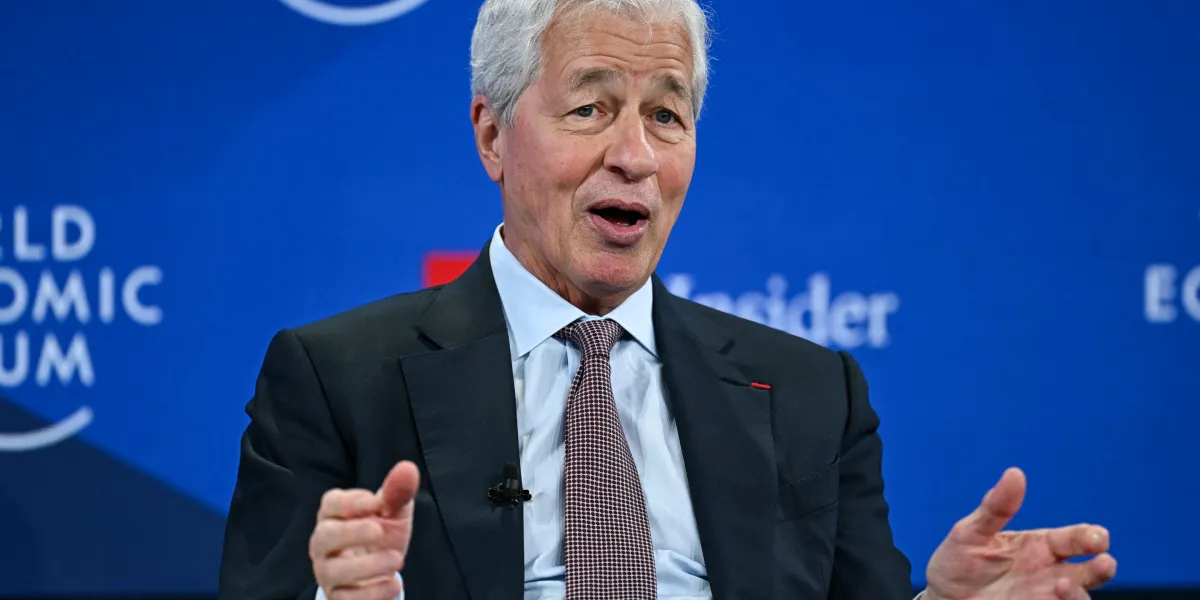
The matching pledges for Trump Accounts come amid escalating tensions between the Trump administration, on the one hand, and JPMorgan CEO Jamie Dimon and Bank of America CEO Brian Moynihan, on the other. Trump sued JPMorgan and Dimon for $5 billion on Jan. 22, alleging the bank had closed his personal and business accounts post-Jan. 6, 2021, due to unsubstantiated, “woke beliefs” and political discrimination—a claim JPMorgan flatly denies. Separately, Moynihan was barred from official events at the 2026 World Economic Forum in Davos following clashes with organizers over his public criticisms of administration policies on climate risk and credit card caps. But Trump Accounts have seen some surprising buy-in from philanthropic billionaires, too.
Trump Accounts explained
Trump Accounts, enacted through the One Big Beautiful Bill Act, are tax-deferred investment accounts for children under 18. The government automatically seeds $1,000 into accounts for newborns from Jan. 1, 2025 to Dec. 31, 2028 invested in low-cost U.S. stock market index funds that mirror broad market performance. Treasury estimates suggest these could grow to $1.9 million by age 28 through compounding interest, providing a nest egg inaccessible until age 18 except for qualified rollovers.
Michael and Susan Dell, the billionaire founders of Dell Technologies, emerged as early and major backers of Trump Accounts, announcing on Giving Tuesday with a landmark $6.25 billion pledge. The gift targets 25 million American children under age 10 living in ZIP codes with median household incomes of $150,000 or less—those ineligible for the federal $1,000 newborn seed—depositing $250 per qualifying child into their accounts starting July 4.
Critics, however, view Trump Accounts as misleading or elitist.
“While we support direct investments in families, the Trump Accounts being hailed by the White House are a policy solution that doesn’t meet most families’ needs,” said Amy Matsui, vice president of income security and child care at the National Women’s Law Center. “As currently structured, these accounts will just become another tax shelter for the wealthiest, while the overwhelming majority of American families, who are struggling to cover basic costs like food, childcare, and housing, will be hard-pressed to find the extra money that could turn the seed money into a meaningful investment.”
How to open a ‘Trump account’
Parents opt in during tax filing via IRS Form 4547, triggering Treasury activation at approved financial institutions. Any U.S. child under 18 qualifies, but only pilot-era newborns get the federal $1,000 automatically; others start empty. Individuals can contribute up to $5,000 annually, with employers, nonprofits, states, or rollovers from other Trump Accounts adding more—tracking basis for future taxes is key. An online portal at trumpaccounts.gov launches mid-2026 for easier management.
Banks’ matching pledge
JPMorgan Chase will match the government’s $1,000 for employees’ children born in the pilot window.
“JPMorganChase has demonstrated a long-term commitment to the financial health and well-being of all of our employees and their families around the world, including more than 190,000 here in the United States,” CEO Jamie Dimon said in a statement. “By matching this contribution, we’re making it easier for them to start saving early, invest wisely, and plan for their family’s financial future.”
Bank of America echoed this in an internal memo, matching for its 165,000 U.S. workers and enabling pre-tax payroll deductions. Both banks join BlackRock, BNY Mellon, Robinhood, SoFi, Charles Schwab, and others in amplifying the seed.
Broader implications
This corporate backing of Trump Accounts signals a pro-family and pro-business push amid Trump’s economic agenda, potentially doubling starter funds for hundreds of thousands of bank employees’ kids.
For families, it could mean accelerated wealth-building via market exposure without early withdrawals, though taxes apply on distributions at the child’s rate. Critics may question market risks, but backers tout it as innovative equity-building, contrasting 529 plans by eyeing retirement or homeownership. As implementation ramps up, it could inspire wider philanthropy, like Dell’s $6.25 billion pledge.
For this story, Fortune journalists used generative AI as a research tool. An editor verified the accuracy of the information before publishing.