The D.H.S. is the third-largest federal department, with more than a dozen agencies and some two hundred and sixty thousand employees. Past Secretaries, from Republican and Democratic Administrations, used to complain that immigration enforcement tended to overshadow, and undermine, all of the department’s other work, which includes cybersecurity, disaster relief, and the Secret Service. “Immigration is overheated and over-politicized,” Jeh Johnson, who served under President Barack Obama, once told me. “It has overwhelmed D.H.S.” With Trump in the White House, given both his obsession with the issue and his expectation of total fealty, it was virtually impossible to create a veneer of gravitas and impartiality at the department. Noem seemed almost gleeful about dashing whatever pretense may have remained after Trump’s first term. In her inaugural address to department staff, she walked out to a country song called “Hot Mama,” with the chorus, “You turn me on, let’s turn it up, and turn this room into a sauna.”
Even before Noem took over the department, there were rumors that she and Lewandowski were having an affair, something both of them have denied. But Noem’s leadership was inextricably tied to Lewandowski. He reportedly signed documents as Noem’s “chief advisor,” despite not being a member of the department or the Administration. Technically, he was “a special government employee,” a status reserved for private citizens who can consult with the federal government for no more than a hundred and thirty days a year. Department officials nevertheless described Lewandowski as a ubiquitous presence. He travelled in a private cabin with Noem on a seventy-million-dollar 737 MAX jet that the department leased and is seeking to purchase. (This was nearly double the cost of each of six other commercial planes that Noem had the department buy to carry out deportation flights.) At one point, according to the Wall Street Journal, Lewandowski fired a Coast Guard pilot who forgot to fetch Noem’s blanket from an aircraft. And he often avoided swiping into department buildings to stay under the service limit as a special government employee.
Much of Lewandowski’s influence appeared to be about consolidating power and control. Last summer, Noem created a policy requiring her to personally sign off on any department expenditure that was more than a hundred thousand dollars. Almost immediately, the agencies’ work ground to a halt. The policy coincided with hurricane season, and relief efforts in states such as Missouri, North Carolina, and California were delayed, angering the public and, in many cases, their Republican representatives. “People are hurting in western North Carolina from the most significant storm they’ve ever experienced,” Thom Tillis, the Republican North Carolina senator, told Noem at a recent hearing. “It begs the question: why?” Kevin Kiley, a California Republican, citing a two-and-a-half-million-dollar grant that has languished since June, told her, “My constituents are not being well served by your department.”
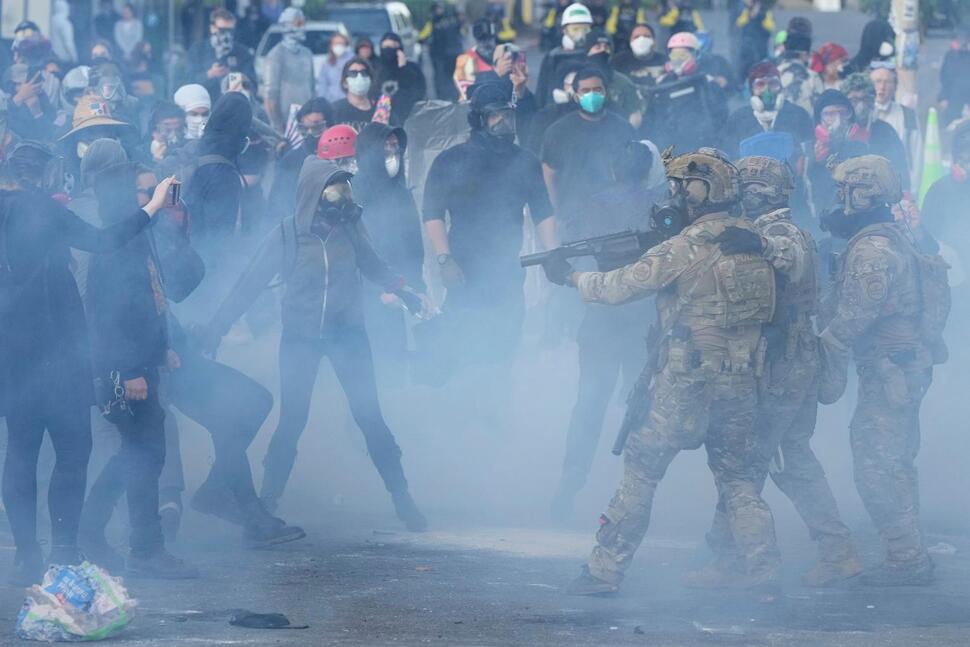
In Noem’s defense, Homeland Security’s marginalization of the Federal Emergency Management Agency was a goal shared across the Administration, which has sought to systematically redirect federal resources to immigration enforcement. Yet for all of Noem’s public bluster about immigration—the speeches baselessly villainizing immigrants as violent criminals, the routine threats and insults—she still managed to alienate potential allies inside the government. Noem and Lewandowski elevated Greg Bovino, the now disgraced Border Patrol commander, over more seasoned agency hands to carry out violent arrest operations in American cities. She also found herself at frequent odds with Tom Homan, Trump’s so-called border czar. When Homan appeared on television, Noem reportedly demanded to know how he got booked instead of her.
Noem’s insistence on filming arrest operations was both disgraceful and counterproductive. In some instances, according to reporting by CBS News, she had agents arrest protesters so that they would appear in cuffs on social-media spots, only to release them afterward without charges. One of the ironies of her obsession with cameras was that videos of abuses perpetrated by ICE and Border Patrol started to go viral. When Trump demanded answers, Noem blamed others, including those who’d cautioned against the very policies she pursued.
The beginning of the end for Noem was the killing of Renee Good and Alex Pretti, two American citizens, in Minneapolis. Both of them clearly posed no imminent threats to federal agents. But Noem didn’t hesitate to call them “domestic terrorists” anyway. When pressed by journalists and lawmakers, she doubled down. This was a lie but also a bad political bet, because although Trump’s chief adviser, Stephen Miller, had said the same thing, she quickly became the face of both the department’s aggression and its mendacity.