
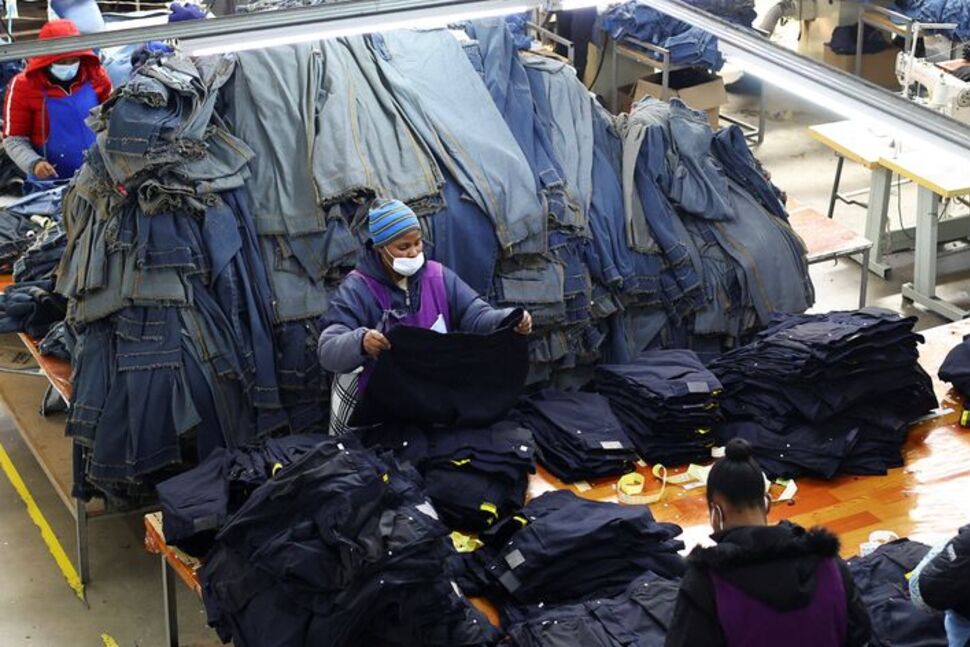
Feb 5 (Reuters) – Since she was laid off in October, after Lesotho lost tariff-free access to its vital U.S. garments market, Matokelo Masenkane has got up early each morning to queue at the textile factory gates in search of casual work.
“It is even more painful taking the already little food from the house to eat while you queue, when you could have … shared it with your kids,” the 36-year-old mother of three said.
Lesotho, which has benefited from a longstanding preferential trade deal with the U.S., was at risk of losing this protection when the agreement – the African Growth and Opportunity Act – expired in September.
U.S. President Donald Trump on Tuesday signed an extension of AGOA, first enacted in 2000, through to December 31, 2026.
The extension ended months of uncertainty over the programme, amid punishing tariffs imposed on countries across the world by Trump on “liberation day,” on April 2.
The expiry of AGOA, introduced to provide duty-free access to the U.S. market for eligible Sub-Saharan African countries covering more than 1,800 products, had put hundreds of thousands of African jobs at risk.
For Lesotho, Africa’s most U.S.-dependent exporter, it was a relief, though it merely kicked the uncertainty down the road.
“I’m optimistic that we will get something long term,” Lesotho’s Trade Minister Mokhethi Shelile told Reuters in an interview at his office. “The one-year extension … is not a conducive timeline for our businesses.”
The textile industry is Lesotho’s leading export sector. Textile exports to the U.S. under AGOA have made up about a tenth of the country’s around $2 billion gross domestic product.
In April, Lesotho initially got hit with Trump’s highest 50% tariff, but it was later reduced to 15% – still tough for a country dependent on U.S. consumers buying its clothes.
U.S. goods and services trade with Lesotho totalled $276 million in 2024.
“We have to start working now to have the U.S. provide us with a framework of a proper trade policy for Africa,” Shelile said.
(Writing by Tim Cocks. Editing by Jane Merriman)
Copyright 2026 Thomson Reuters.