
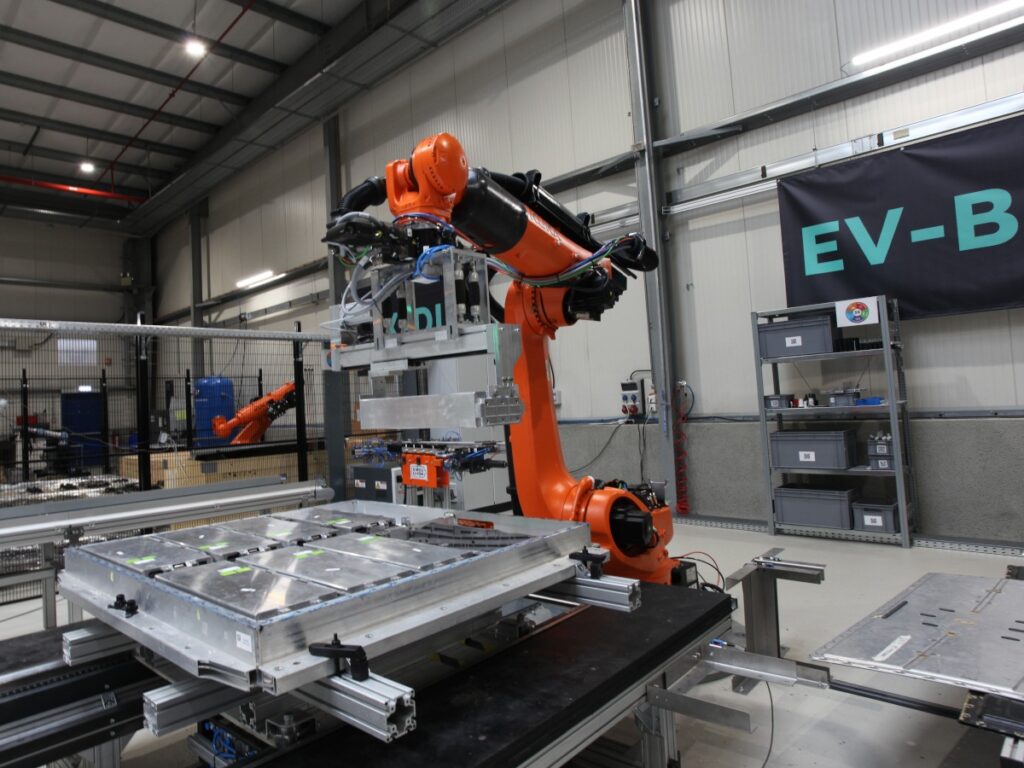
A Series A funding round provided €14m of the total.
A Luxembourg-founded robotics company will use new total funding of €20m to scale its automated disassembly of electric vehicles for preservation and recycling of valuable materials such as lithium batteries.
R3 Robotics, formerly Circu Li-ion, aims to expand its facility in Karlsruhe, Germany – which harvests high value components during disassembly of electric vehicle systems – to “enable fully automated disassembly across entire vehicle systems”, it said.
The majority of the new funding, €14m, was raised in a Series A round co-led by HG Ventures and Suma Capital with participation from others. The remaining €6m came from European grants.
The company said it wants to address the challenges of dealing with modern society’s increasing volumes of end-of-life electric system components, while improving efficiency and maximising the recovery and recycling of crucial materials in line with EU policies.
“The bottleneck isn’t recycling technology; it’s clean feedstock, meaning getting complex electrified systems safely and cost-effectively dismantled at an industrial scale,” said Antoine Welter, CEO and co-founder of R3 Robotics.
“We’re building a dismantling platform that turns end-of-life systems into a strategic source of critical materials and reusable components for advanced industrial economies.”
The company said its dismantling process combines computer vision, AI and specialised robotic tooling to automate the disassembly of lithium-ion battery packs, e-motors, power electronics, and other high-value electrified components.
“R3 Robotics is addressing a critical industrial bottleneck in the supply of strategic raw materials,” said John Glushik of HG Ventures.
The system also minimises human exposure to high-voltage hazards and while delivering the cost structure and reliability needed for industrial-scale operations, according to R3.
Natalia Ruiz of Suma Capital said: “This capability is critical to unlocking materials and components at scale.”
R3 will also use the funding for hiring, scaling alongside European partners and preparing for entry into the US market later in 2026. The company was founded in 2021 by Welter and Xavier Kohll.
Don’t miss out on the knowledge you need to succeed. Sign up for the Daily Brief, Silicon Republic’s digest of need-to-know sci-tech news.