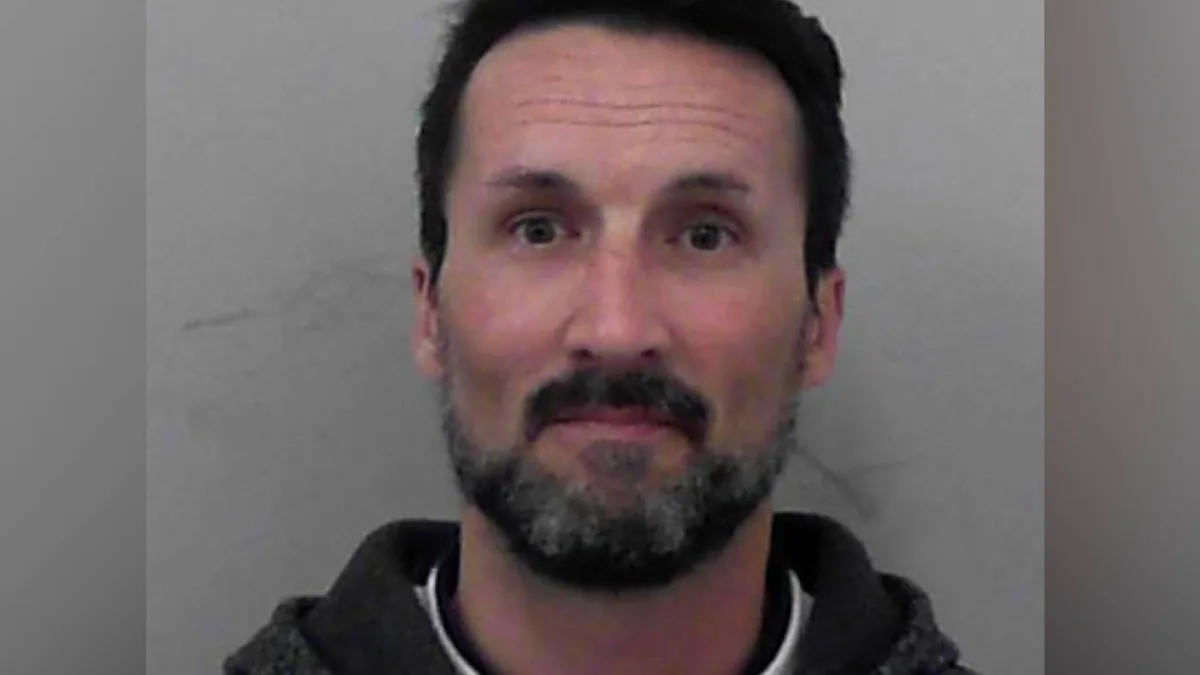
A notorious fraudster has been ordered to repay his victim £125,000.
Mark Acklom convinced former partner Carolyn Woods, who he met in Gloucestershire, that he was an MI6 agent and a property developer in order to defraud her of her life savings in 2012.
He pleaded guilty to fraud worth £300,000 in 2019 but Ms Woods has always maintained the amount she lost was closer to £850,000. Bristol Crown Court was told on Friday that Acklom had benefited £710,000 from his crimes.
“Carolyn Woods was drawn into his realm of fantasy and deceit from which she was unable to escape. He deprived her of that money as well as her dignity and psychological wellbeing,” said Judge Martin Picton.
Acklom has previously been convicted of fraud in other countries and was at one stage on the UK National Crime Agency’s most wanted list.
He has been ordered to pay back all that he still has available from defrauding Ms Woods.
The confiscation order, issued under the Proceeds of Crime Act (POCA), means Acklom must repay the value of the order within three months, or face an additional two years jail time should he return to the UK.
He is understood to currently be living in Spain, where he has a separate confiscation order relating to a previous fraud conviction.
Carolyn Woods has not received any of her money back from Mark Acklom [BBC]
In his closing comments, the judge said that he had the “gravest doubts,” as to whether anything will be paid, but said that it should be “a comfort to Ms Woods” that Mr Acklom “is effectively unable to return to this country because of the consequences he would face”.
Acklom could also be ordered to repay more money if he is found to have assets in the future.
After the final hearing, Carolyn Woods told the BBC that she was “relieved” that this “had drawn a line under it,” but she repeated her criticisms of the criminal justice system, which she said was “not fit for purpose.”
She said that “at every step of the way something has gone wrong.”
Efforts to recover money from Mark Acklom using POCA have been under way since he pleaded guilty to defrauding Ms Woods in 2019.
Several hearings have been held at Bristol Crown Court since then, but the case has been beset with delays.
At one stage, Mark Acklom tried to get Judge Martin Picton to stand down from handling the case after alleging it was being conducted unfairly, which the judge refused to do.
Acklom also claimed he had not been given enough access to documents in order to mount a proper defence.
The prosecution branded his claims “childish”.

Criminologist Dr Amber Phillips said proceeds of crime investigations are complex [BBC]
Acklom has appeared at most hearings via video link but was not required to speak before the confiscation order was made.
He had earlier applied to adjourn the final hearing because of what he said was his wife’s ill health, but the application was refused.
Andrew Kerrigan, specialist prosecutor for the Crown Prosecution Service, described Acklom as “a calculating persistent fraudster”.
“We continue to pursue the proceeds of crime robustly and identify his available assets. We are determined to disrupt and deter fraudsters like Acklom,” he added.
Dr Amber Phillips, Senior Criminology Lecturer at the University of the West of England in Bristol, has studied the Proceeds of Crime Act which she said is “much maligned”.
She said: “It’s had a lot of critique over the years, but given the scale and the ambition of what it’s trying to do, I think it’s had some pretty good results.
“Offering victims a means of getting some money back post-fraud is obviously a fantastic option.”
‘Complicated business’
The Home Office said £47.2 million was paid in compensation to victims after being recovered through confiscation orders in the financial year ending March 2025 – up by 165% from the previous financial year.
Amounts paid back vary from year to year, often depending on whether large sums are recovered in individual cases.
But Dr Phillips accepts cases can take a long time.
She said: “Financial investigation is a complicated business.
“There’s a multitude of ways that offenders can conceal their assets, especially if they’re hiring professional enablers to help them.
“So these investigations have to be done thoroughly and carefully, and unfortunately that does take time.”