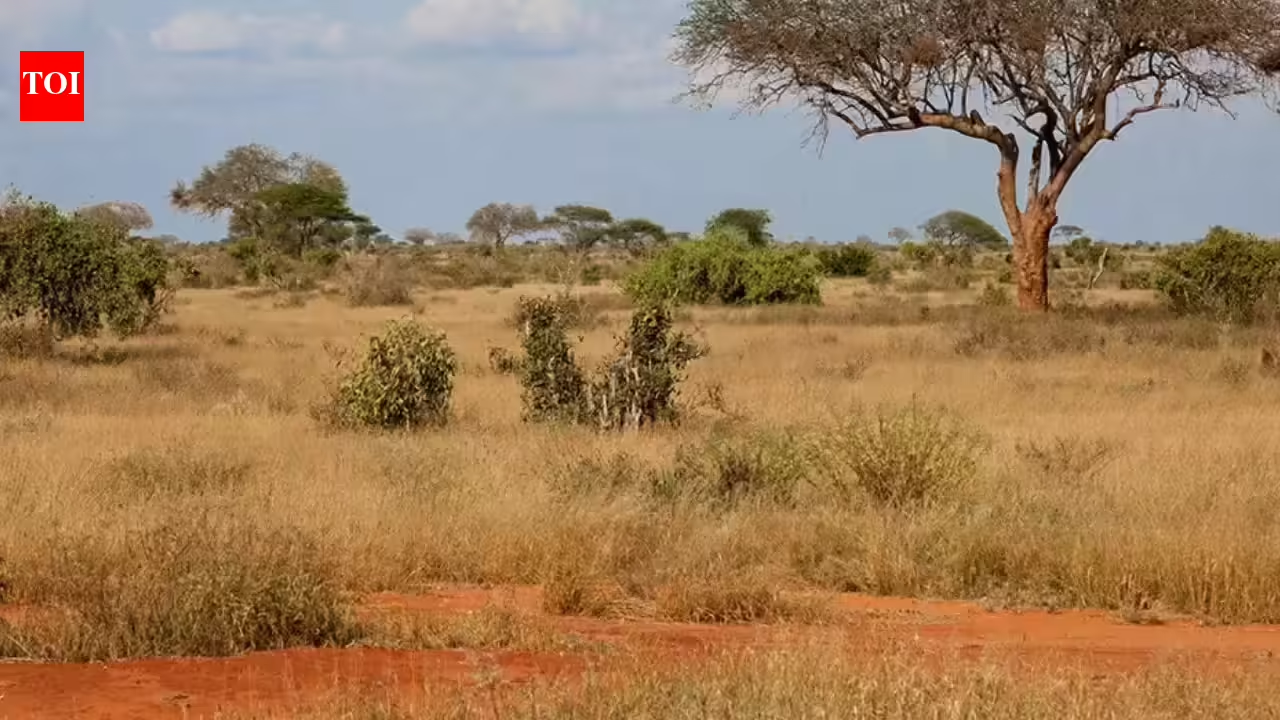
For decades, large stretches of western India’s open landscapes were widely described as degraded forests shaped by centuries of human activity. But new research by Ashish Nerlekar of Michigan State University challenges that assumption. By analysing Indian poems, folk songs and sacred texts written as early as the 13th century, the study shows that many of these savannas and grasslands are ancient, natural ecosystems. The findings question long-standing conservation practices, particularly tree-planting efforts that may be altering landscapes that were never forests.The research combined ecology with history and archaeology, examining medieval Marathi and Sanskrit texts rooted in everyday life and religious practice across western India. Rather than describing dense forests, these writings consistently depict open terrain, thorny trees and grass-rich landscapes used for grazing—features that closely match present-day savannas.Many of the sources are not digitised and have rarely been examined by scientists, making them an overlooked archive of environmental information.
Study shows western India’s savannas were never ruined forests
The study was published in People and Nature, a peer-reviewed journal of the British Ecological Society. Instead of relying only on modern ecological surveys, the researchers turned to historical Indian literature to understand how landscapes were described in the past.They analysed Sanskrit, Marathi and early vernacular texts, including poems, courtly writings, travel accounts, and regional chronicles. Many of these works contain detailed descriptions of seasons, plants, grazing lands, and daily life. From these sources, the team identified references to 44 wild plant species. Nearly two thirds of them are typical of savanna and grassland ecosystems, not forests.“The take-home for me is how little things have changed,” Nerlekar said. “It’s remarkable that descriptions written hundreds of years ago so closely match what we see today.”During the 20th century, large grassland areas in India were officially labelled “wastelands”. They were often treated as deforested regions that needed trees. This idea shaped conservation and climate policies and encouraged widespread tree-planting efforts.The historical texts tell a different story. They show that these savannas were already widespread at least 750 years ago, long before modern deforestation. This means they are not failed forests. They are ecosystems shaped over long periods by climate, fire, and grazing.Other scientific evidence supports this view. Fossil pollen records from the region show grasses dominating the landscape for thousands of years. Remains of grass-eating animals also point to the long presence of open ecosystems.Taken together, the findings suggest that western India’s savannas are ancient and stable landscapes, not the result of recent human damage. Recognising this history matters, because treating grasslands as forests can harm the very ecosystems conservation efforts are meant to protect.
Implications for conservation
Misclassifying savannas as degraded forests can have serious consequences. Tree planting in natural grasslands can reduce native biodiversity, disrupt soil systems and threaten species adapted to open environments. India’s savannas support more than 200 endemic plant species and provide livelihoods for millions of people.“These areas are frequently misunderstood,” Nerlekar said. “If we manage them as damaged forests, we risk losing ecosystems that have existed for centuries.”The researchers argue that recognising the true ecological history of savannas is essential for designing conservation and climate policies that protect, rather than erase, some of India’s oldest landscapes.