
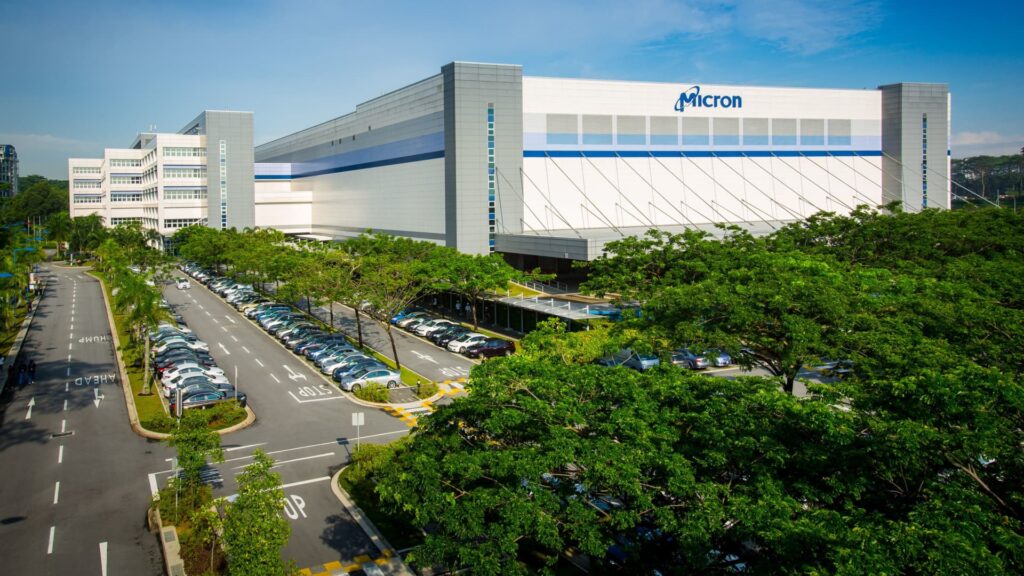
A general view of Micron Technology’s building in Singapore, June 23, 2020.
Micron Gcm Studio | Reuters
Micron Technology on Tuesday committed approximately $24 billion to expand its wafer manufacturing operations in Singapore, as the American memory chipmaker moves to expand production amid global shortages.
In a press release, Micron said the investment would add 700,000 square feet of cleanroom space —highly-controlled manufacturing areas designed to prevent contamination — at an existing NAND manufacturing complex.
Production of NAND, a type of memory chip widely used in personal computers, servers and smartphones, is expected to start in the second half of 2028.
Demand for NAND technology has been skyrocketing in recent months, driven by the rapid expansion of artificial intelligence and data-centric applications.
In response to the shortage, Micron and its memory competitors, including Samsung Electronics and SK Hynix, have been increasing output.
Micron operates manufacturing facilities in Singapore as part of its broader Asian production network, which also includes sites in China, Taiwan, Japan, and Malaysia.
The company is also building a $7 billion advanced packaging plant in Singapore to produce high-bandwidth memory, a type of dynamic random-access memory, or DRAM, used in AI applications.
The pivot by Micron and other memory makers to prioritize high-bandwidth memory production has contributed to shortages of other types of memory chips. These shortfalls are expected to last through late 2027, according to some estimates.
Micron said its high-bandwidth memory facility, also located in the same Singapore manufacturing complex, is on track to contribute meaningfully to its HBM supply in 2027.
“As HBM becomes a part of Micron’s Singapore manufacturing footprint, the company expects opportunities for synergies between NAND and DRAM production,” the company said in its release.
Micron added that it plans to manage the pace of capacity expansion at the new facility based on market demand.
The newly announced NAND expansion is set to generate about 1,600 jobs in fab engineering and operations, incorporating AI, robotics, and smart manufacturing. That follows the creation of about 1,400 new positions tied to the high-bandwidth memory plant.
“Micron’s latest expansion will strengthen our semiconductor ecosystem and further anchor Singapore as a critical node in the global semiconductor supply chain,” said Jermaine Loy, managing director of Singapore’s Economic Development Board, which encourages local semiconductor manufacturing through various incentives and policies.
Shares of Micron rose over 3% in overnight trading on Robinhood following the announcement.