- The draft Pesticides Management Bill seeks to replace the 1968 law and modernise pesticide regulation in India.
- India’s pesticide industry has grown into a multi-billion-rupee sector, even as concerns over health, environmental and food safety have intensified.
- Experts criticise the draft for weakening precautionary safeguards, centralising power, diluting accountability, and prioritising ease of doing business over public interest.
The Ministry of Agriculture and Farmers’ Welfare (MoA&FW) has released a draft Pesticides Management Bill to replace the Insecticides Act, 1968 and the Insecticides Rules, 1971, with the stated aim of modernising pesticide regulation. However, experts say the proposed law does not adequately address long-standing concerns related to health, safety and environmental protection.
India’s pesticide sector has grown since the production of pesticides began in 1952. By 2023, production had reached about 258,000 metric tonnes, and the industry was valued at around ₹500 billion.
As the industry has expanded, so have concerns about its impact. Data from the All India Network Project on Pesticide Residues under the Indian Council of Agricultural Research (ICAR) shows that between 2018 and 2023, pesticide residues were detected in 28% of food samples analysed. India has also witnessed severe health disasters linked to pesticide exposure, like one in Kerala, where endosulfan use led to a crisis often compared to the Bhopal gas tragedy.
At the same time, India loses an estimated 20-30% of its potential crop production to pests, weeds, and diseases, highlighting the complex challenge of balancing crop protection with safety.
Experts argue that the existing law is no longer adequate to address current realities, such as farmer safety, environmental contamination, and food residues.
Efforts to replace the Insecticides Act began in 2008 under the United Progressive Alliance (UPA) government, when it introduced the Pesticides Management Bill. The National Democratic Alliance (NDA) government revised the draft in 2017 and invited public comments. A revised version, titled the Pesticide Management Bill, was introduced in the Rajya Sabha in March 2020. The bill was referred to the parliamentary standing committee on agriculture, which submitted its report in December 2021. Now, the union government has released a fresh draft on January 7, 2026 and sought comments by February 4.
G.V. Ramanjaneyulu of the Centre for Sustainable Agriculture (CSA), a Telangana-based independent research organisation, said the delay reflects a deeper problem in policymaking. “The knowledge base in the 1960s was very different from what we have in 2025. Yet our laws are not being updated based on current understanding.”
New regulatory structure
The draft bill proposes establishing a Central Pesticides Board, headed by an Additional Secretary-level official with experience in agriculture, chemicals, health, or the environment. The board will advise the Centre and the states, recommend pesticides for approval, and guide standards for manufacturing, pest control, recalls, disposal, laboratory testing, worker safety, and advertising.
The draft also proposes a Registration Committee, which will decide on pesticide approvals, set registration conditions, review safety and efficacy, cancel registrations if needed, and maintain a digital national pesticide register. The draft imposes a three-year cooling-off period on the chairperson and members of the Central Pesticides Board and the Registration Committee after they leave office. During this period, they cannot join the pesticide industry or related sectors in managerial roles or accept appointments to company boards.
A.D. Dileep Kumar, CEO of Pesticide Action Network (PAN) India, said the draft encourages biopesticides and traditional knowledge-based formulations, proposes standard medical protocols for cases of poisoning, and mandates research into safer alternatives and agroecological practices.
However, he also said that the overall framework of the board and registration committee largely mirrors the old law in structure, while diluting safeguards.
Ease of doing business over precaution
The draft bill aims to “…ensure supply of quality pesticides for farmers and to decriminalise petty offences, thereby promoting ease of living as well as ease of doing business.” Critics, however, argue that its provisions tilt strongly towards promoting business rather than strengthening precautionary regulation.
A key example is the pesticide registration process. The bill mandates that the Registration Committee must approve or reject an application within 12 months, with a possible 6-month extension. If no decision is taken within 18 months for “generic pesticides”, registration is deemed to have been automatically granted.
Ramanjaneyulu said the approach reflects misplaced priorities. “We first need to accept that pesticides are harmful and pose serious health risks. The objective should be to minimise their use. Regulation must focus on controlling pesticides, not promoting the industry. But the bill reads as if its primary purpose is to facilitate business,” he said.
Signals from within the government also suggest a push towards higher pesticide use. A 2023 report of the Standing Committee on Chemicals and Fertilisers expressed regret that India’s pesticide consumption is only 0.5 kg per hectare, compared to 17 kilograms per hectare in some other countries, despite India being the second largest agricultural producer.
Ramanjaneyulu challenged this narrative. He said national averages conceal deep inequalities. “Nearly 20-30% of farms use three to four times more pesticides than the average, while 50-60% of farms do not use pesticides at all. The issue is not low overall consumption, but excessive use by a smaller section,” he said.
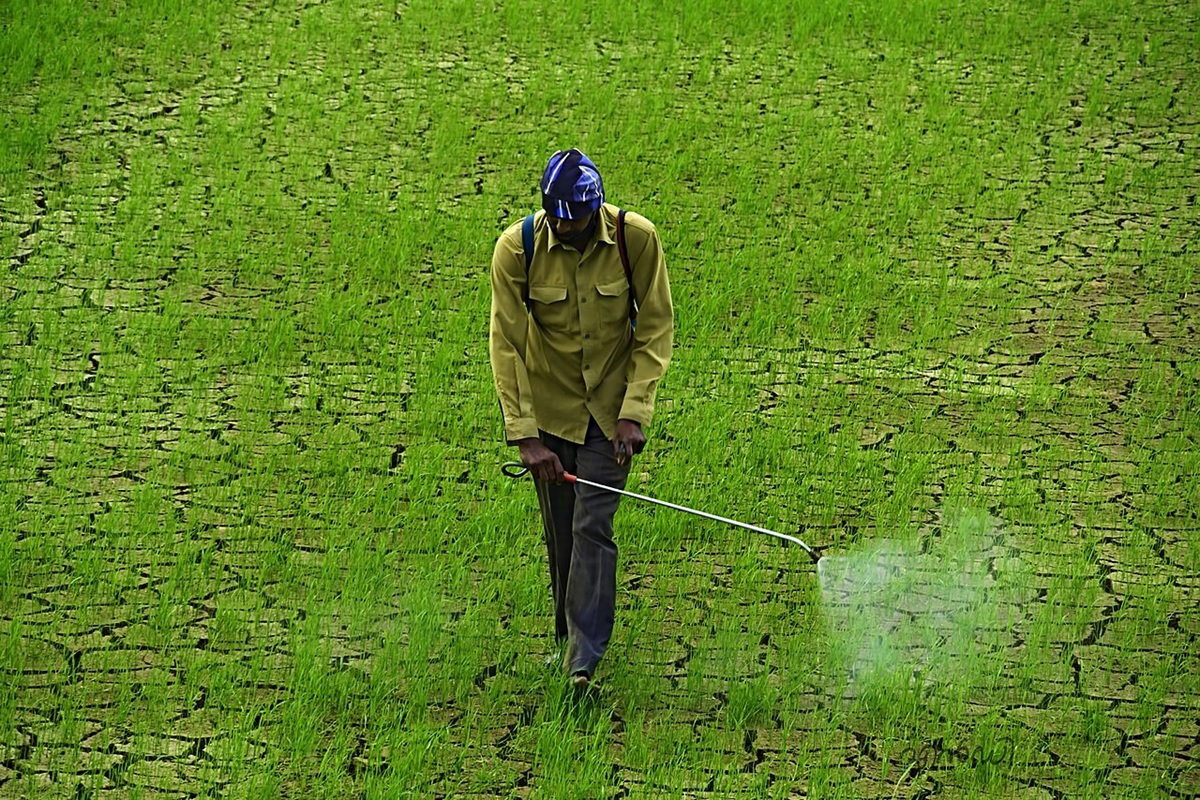
“We are still using chemicals that many countries have already phased out,” he said. Another major concern, he added, is India’s labour-intensive farming system. “In developed countries, pesticides are applied mostly through machines. In India, people spray them manually, and animals graze in the fields. This makes chemical exposure far more dangerous for humans and livestock.”
The bill also grants legal protection to government officials and regulatory bodies. It states that no prosecution or legal proceedings shall lie against the government, its officers, the Central Pesticides Board, the Registration Committee or their sub-committees for actions taken in good faith.
Kumar from PAN warned that this provision could weaken accountability. “It effectively shields officials and committees from responsibility for regulatory failures. This can open the door to corruption and undermine the regulatory process,” he said. Instead, he argued, regulation should rely on transparent scientific protocols rather than legal immunity.
The draft bill proposes penalties of up to three years’ imprisonment and fines ranging from ₹10 lakh to ₹40 lakh (₹1-4 million) for manufacturing or importing unregistered pesticides. Repeat offences attract higher fines.
However, several violations can be settled through “compounding,” under which offenders can pay a prescribed penalty instead of facing prosecution. Once an offence is compounded, no further legal action can be taken for that violation. While repeat offenders face higher penalties and third-time offenders are excluded from compounding, critics argue that the provision weakens deterrence.
“In the draft bill, compounding of offences is being permitted even in cases where criminal provisions should actually exist,” said Kavitha Kuruganti, founder of ASHA-Kisan Swaraj, a volunteer-driven network of farmers.

Limited power to the states
The draft bill gives state governments a limited scope to regulate harmful pesticides. While it allows the centre or a state to temporarily prohibit the sale, distribution, or use of a pesticide for up to one year on safety grounds, the final authority remains with the registration committee. The committee must complete its review within one year, with an additional 180 days if the data are insufficient. The prohibition remains in force only until the committee delivers its decision, which is required to be made public.
Critics argue that this structure weakens cooperative federalism. Public policy campaigner Narasimha Reddy Donthi said the bill is overly centralised and ignores the role of states in public health and agriculture. “Pesticide regulation requires national standards, but implementation and control must remain with states,” he said.
K.V. Biju, national coordinator of the Rashtriya Kisan Mahasangh, echoed similar concerns. He said agriculture and health are primarily state subjects, yet states lack the power to ban pesticides. “This shows the law is designed primarily for corporate convenience. Many states want to ban dangerous pesticides, but they are prevented from doing so. Ideally, pesticides should be reviewed every ten years,” he said.
Biju pointed to several instances where state governments attempted to impose restrictions but failed. In May 2025, Punjab banned 11 insecticides on basmati crops for 60 days starting August 1, citing export risks linked to residue levels. However, the Punjab and Haryana high court stayed the ban in August 2025 following petitions by industry associations.
If the government is genuinely concerned about public health, it should first review pesticides that are already banned in other countries but still permitted in India, instead of merely introducing a new bill, he said, adding, “We have been working on this issue since 2012 and have personally filed two cases in the Supreme Court. However, neither the court nor the union government has given due importance to these cases. We are deeply disappointed with the review process.” To prevent pesticides that are banned abroad from obtaining registration in India, applicants should be mandatorily required, at the time of registration, to disclose whether the pesticide is banned or restricted in any other country, he added.

Critical gaps remain overlooked
Public policy campaigner Narasimha Reddy Donthi, who submitted his response to the draft, said the draft bill fails to address several emerging and long-standing risks. One major omission, he noted, is the absence of regulation of digital platforms. “E-commerce and online pesticide sales are now widespread, yet the bill does not recognise or regulate digital, international or other notified markets,” he said.
Donthi also pointed to serious gaps in the regulation of so-called “ordinary use pesticides.” While the bill defines such products as pesticides intended for use only in households, offices and similar premises, it contains no substantive provisions to regulate their sale or use. “Ordinary use of pesticides causes more deaths in India than agricultural misuse, yet they remain completely unregulated under this Bill,” he said.
The bill, he added, defines poisoning largely in terms of occupational exposure, excluding accidental household exposure, food contamination and environmental poisoning. This narrow definition weakens hospital reporting, limits criminal liability, and prevents the creation of a national poisoning registry, which is essential for public health monitoring.
The draft also remains silent on personal safety measures for farmers and workers handling pesticides. While the Insecticides Act, 1968, recognised user safety, and the Insecticides Rules, 1971, provided detailed guidelines on personal protective equipment, the new bill contains no comparable provisions. “Removing these safeguards ignores the realities of how pesticides are actually used in the field,” Kumar said.
Experts say India needs a pesticide law rooted in present scientific understanding, public health protection and environmental precaution. While the draft bill introduces some progressive elements, critics argue that its core philosophy still favours industry, convenience over safety.
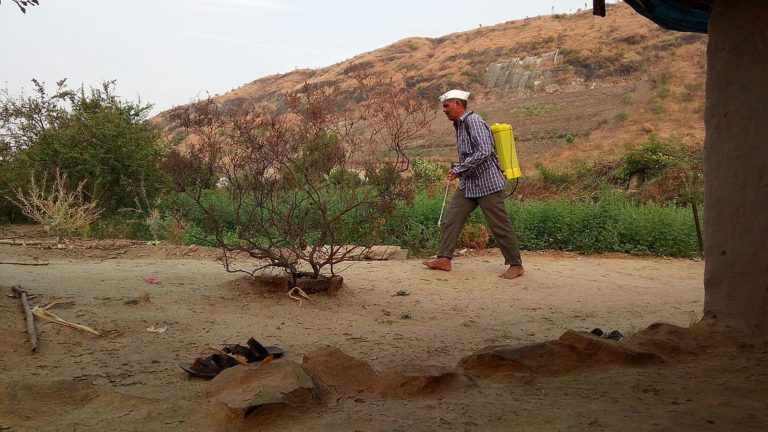
Banner image: India’s pesticide sector has expanded steadily since production began in 1952. Image by Pradnyaalimakar via Wikimedia Commons (CC BY-SA 4.0).