Ministers and senior MPs have warned that the UK’s agreements with Donald Trump are “built on sand” after the Guardian established that the deal to avoid drug tariffs has no underlying text beyond limited headline terms.
The “milestone” US-UK deal announced this month on pharmaceuticals, which will mean the NHS pays more for medicines in exchange for a promise of zero tariffs on the industry, still lacks a legal footing beyond top lines contained in two government press releases.
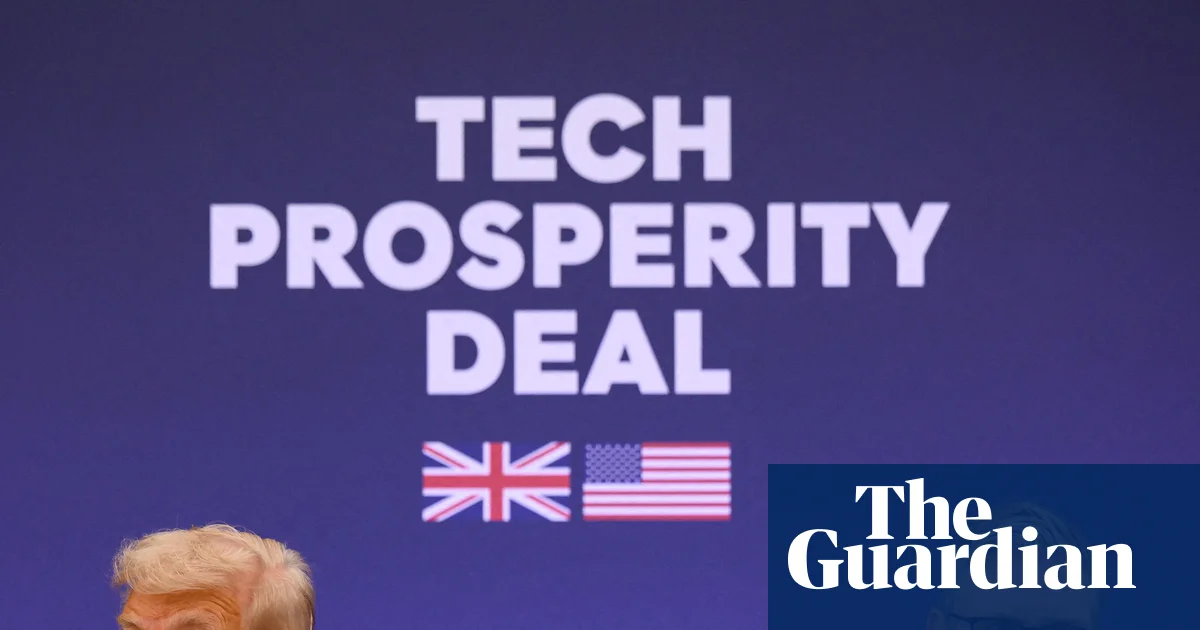
Concerns over the basis of the agreement have been heightened by Washington’s decision to suspend the £31bn “tech prosperity deal”, which had been hailed as “a generational step-change in our relationship with the US”. The deal was paused after the US claimed a lack of progress from the UK in lowering trade barriers in other areas.
It has also emerged that concessions to British farmers made in the first tariff deal with Trump, that were hailed as “historic” by Keir Starmer in May, have yet to be signed off by the US despite a looming January deadline.
The health department said that negotiators were now thrashing out the detailed agreement on the pharmaceutical deal. Asked to provide the headline terms, the department shared its press release hailing the “landmark UK-US pharmaceuticals deal” and a link to the equivalent US government announcement of an “agreement in principle” on pharmaceutical pricing.
Critics have noted that the two releases describe the deal in sharply different terms. The British release hails the UK as “the only country in the world to secure a zero per cent tariff on pharmaceuticals to the US” while the American one largely focuses on how the NHS will have to pay 25% more for new medicines.
David Henig, a trade expert, said: “There is a serious risk that the UK government has made commitments to raise drug prices in return for nothing more than a verbal promise from President Trump around zero tariffs, when we know he has form for not honouring his word.
“The role of private companies in possibly working with the US administration to coerce the UK government by threatening to withdraw investments is also a big worry. None of this is normal in international trade policy and the government needs to explain both this deal and how such things will be avoided in the future.”
Ordinarily, negotiators would sign a provisional legal text, which would then go through detailed checks on both sides, but none exists yet with the US on pharmaceuticals.
Ministers privately told the Guardian there were concerns that the government’s agreements with the US were flimsy and unreliable.
One said there was a concern that the UK’s series of agreements with the Trump administration were “built on sand”. Another said this instability was the “new normal now in our relationship across the pond” with “additional layers of volatility and unpredictability in the system”.
Layla Moran, who chairs the health select committee, said: “The only thing more surprising than Trump’s tween-level temper tantrums is the UK government’s naive belief that his administration is a good faith actor. The NHS is too precious to be gambled with and the concern now is whether the deal that could already cost the UK taxpayer billions could end up costing a lot more if it collapses in chaos.”
Liam Byrne, who chairs the business and trade select committee, said ministers had to focus on getting the tech prosperity deal “back on track”.
Government figures downplayed the chances of the US reneging on the pharma deal, which took weeks longer to finalise than expected. One source said the US pharmaceutical industry had been pushing for the agreement as they wanted certainty on imports and drug prices, while by comparison the tech prosperity deal “was always quite abstract”.
Officials admit that, more broadly, volatility is part and parcel of dealing with the Trump administration. But they note that through the deals it has signed, the UK has secured concrete outcomes for businesses.
“The fact we have 25% steel tariffs, and that’s better than the rest of the world, is not flimsy. The same thing with our auto rate,” one official said. “We are in a more competitive position than other major economies.”
Issues have emerged in the implementation of the landmark US-UK tariff deal agreed last May, however, with quotas on beef exports that were due to kick in next month still not formally approved.
Tom Bradshaw, the president of the National Farmers’ Union, said: “Our understanding is that the US has not yet signed off the 13,000 reciprocal tariff rate quota. With the US already having access to our beef market for non-hormone treated beef, we are pushing to make sure UK beef producers can access the reciprocal quota from 1 January as agreed.
“This is particularly important as we know there is still great pressure from other sectors of the economy to reopen US negotiations, and that our government is looking at what more can be done with the US. We urge the government to keep pushing to get the reciprocal quota over the line before the end of the year to ensure it can’t continue to be used as a bargaining chip.”
Apart from introducing a 10% tariff on most British exports – lower than the rate paid by other countries – the deal was to “remove tariffs on British steel and aluminium, reducing them to zero”. This aspect of the agreement has not materialised, with tariffs on British steel remaining at 25%, although other countries pay a rate of 50%.
One industry leader said the discussions on steel tariffs “were not going anywhere” but that they considered this week’s bump in the road to be a matter of the “US blustering because of frustration with the UK not moving fast enough in other areas”.
The US informed the UK it was pausing the tech prosperity deal over wider trade disagreements last week before Peter Kyle, the trade secretary, held meetings with senior US officials in Washington, including commerce secretary Howard Lutnick.
Several officials said those meetings were “very positive”. The two sides have agreed to resume negotiations in January.