
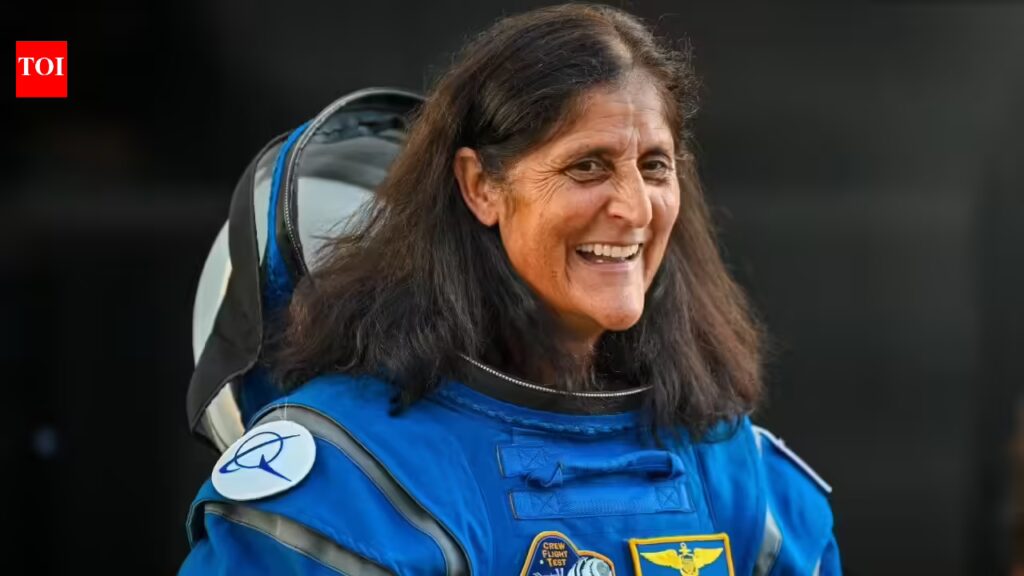
Sunita Williams’ retirement from NASA in December 2025 wrapped up almost three decades of distinguished service to one of the most demanding scientific institutions in the world. Recognised for her leadership aboard the International Space Station, long-duration missions, and calm decision-making under pressure, Williams retired not as a celebrity but rather as a United States federal employee. This distinction is important because it dictates how her salary, pension, and post-retirement benefits are calculated.Unlike private-sector astronauts or commercial spacefarers, her retirement package falls under FERS, like others from NASA’s civilian workforce. Her pension is determined by her high-3 average pay and total years of service, thus compensating her fairly for decades of dedication.
Sunita Williams’s salary during her final years at NASA
NASA does not publish individual employee salaries, but astronauts are paid under the US government’s General Schedule pay system. Senior astronauts with extensive mission experience, such as Sunita Williams, are typically classified at the GS-15 level. At this rank, annual basic pay generally falls in the range of roughly USD 125,000 to USD 160,000, depending on step level and years of service as per Federalpay.org.This basic salary, rather than allowances or mission-specific compensation, is what NASA uses for retirement calculations. Williams’s final years of earnings therefore, play a direct role in determining her pension, particularly through what is known as the “high-3” salary average.
How Sunita Williams’s NASA pension is calculated
Sunita Williams retired under the Federal Employees Retirement System, commonly known as FERS. This is the standard retirement system for most NASA employees hired after 1984. Under FERS, retirement income is not based on job title or astronaut status, but on years of federal service and salary history.The pension, officially called an annuity, is calculated using the average of an employee’s highest three consecutive years of basic pay. This figure is multiplied by a percentage for each year of credited service. For retirees aged 62 or older with at least 20 years of service, the multiplier is slightly higher than the standard rate.With approximately 27 years of federal service, Williams’s pension will represent a substantial portion of her high-3 salary. However, NASA and the Office of Personnel Management do not publicly disclose exact pension amounts for individuals, meaning her final monthly figure remains private.
When Sunita Williams start receiving her pension
According to NASA’s official retirement guidance, federal annuity benefits kick in on the first day of the month following retirement. Sunita Williams retired in December 2025, which means her pension must have started growing from January 2026.The first actual payment is usually made several weeks later, after retirement paperwork is processed by the NASA Shared Services Center and the Office of Personnel Management. Any delays in processing do not lessen the total pension owed, as payments are retroactively adjusted.
Additional payments at the time of retirement
After retirement, NASA workers are also entitled to a lump-sum payment for their unused vacation time. The payment is one-time and is in addition to the pension. The benefit is payable separately from the pension and is based on the last pay rate of the employee.If applicable, other separation-related payments are processed separately and do not impact pension eligibility or timing.
Health insurance and long-term benefits after NASA
One of the most significant benefits available to Sunita Williams after retirement is continued access to federal health insurance. Under standard federal rules, eligible retirees may continue participating in the Federal Employees Health Benefits programme, provided they meet service and enrolment requirements.This allows retired astronauts and NASA employees to maintain government-backed healthcare coverage into retirement, an important safeguard given the long-term health considerations associated with spaceflight careers.In addition to her pension, Sunita Williams also has access to the Thrift Savings Plan, a government-run retirement savings scheme similar to a private-sector pension fund. Contributions made during her career, along with government matching, remain accessible after retirement according to federal withdrawal rules. Because FERS is integrated with Social Security, Williams will also receive Social Security retirement benefits based on her lifetime earnings once she reaches eligibility age. Together, the pension, Thrift Savings Plan, and Social Security form a three-pillar retirement structure used across NASA’s civilian workforce.
Life after NASA as a retired astronaut
Retirement from NASA is not the end of professional engagement for astronauts, as in the case of Sunita Williams. Although the person is not a full-time employee, there is often the possibility of being invited to be a part of various activities, such as being a member of the advisory group, as well as educational activities. This is usually separate from the pension plans.The post-NASA life of Williams is thus likely to combine a secure retirement with ongoing influence in science and space-related activities.