Actor Natasha Lyonne may not come from the tech world, but her production company is emerging as a trailblazer in bringing AI content to the big screen—and she has thoughts about the tech’s increasing influence.
Lyonne, who is most well-known for an on-screen roles in Netflix’s “Russian Doll” and “Orange is the New Black,” is also a writer, director, and the cofounder of Asteria Film Co., an artist-led animation and film studio that aims to provide high-quality and copyright friendly generative AI for marquee content.
Other AI video-generation models like OpenAI’s Sora 2 and Google’s Veo 3 have run into controversy for scraping the web and sometimes clashing with copyright rules. Asteria, which Lyonne co-founded in 2022, is taking a different approach.
Asteria partnered with Moonvalley AI, which makes AI tools for filmmakers, to create Marey, named after cinematographer Étienne-Jules Marey. The tool helps generate AI video that can be used for movies and TV, but only draws on open-license content or material it has explicit permission to use.
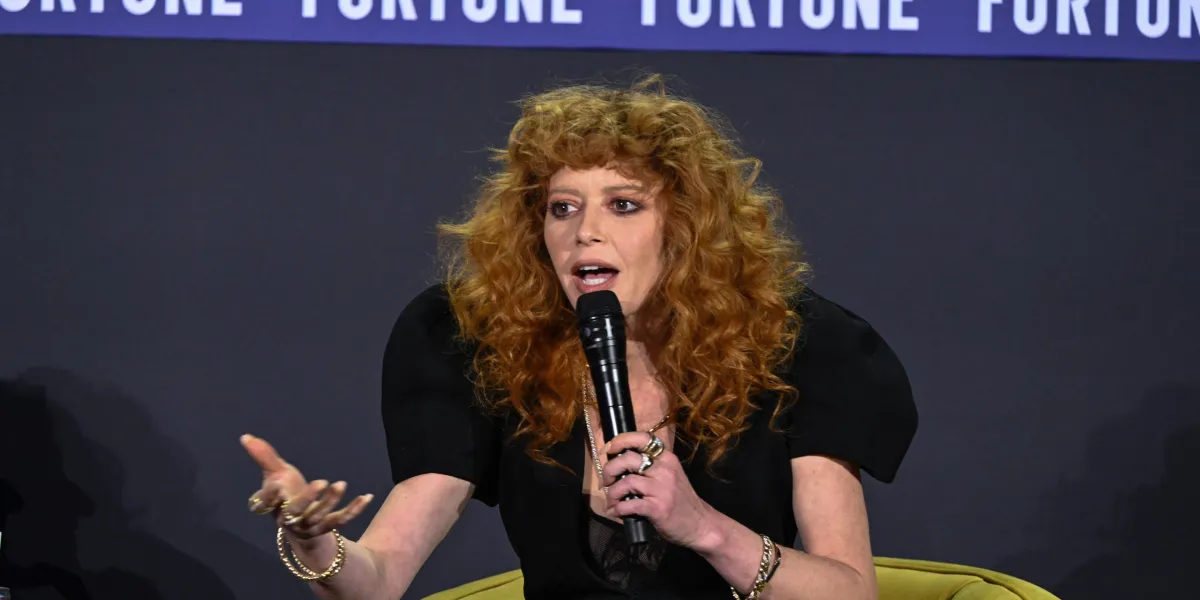
Being careful about the inputs for Asteria’s AI video generation is important, Lyonne said at the Fortune Brainstorm AI conference in San Francisco last week. As AI use increases, both tech and Hollywood need to respect the work of the cast, as well as the crew and the writers behind the scenes.
“I don’t think it’s super kosher copacetic to just kind of rob freely under the auspices of acceleration or China,” she said.
While she hasn’t yet used AI to help make a TV show or movie, Lyonne said Asteria has used it in other small ways to develop renderings and other details.
“It’s a pretty revolutionary act that we actually do have that model and that’s you know the basis for everything that we work on,” said Lyonne.
Marey is available to the public for a credits-based subscription starting at $14.99 per month.
While her production company aims to lead the AI charge in Hollywood, Lyonne said it’s important to remember the human aspect of tech. With so many countless possibilities for AI’s uses, she noted it can at least be used to make human lives better, and not purely for “cutting costs.”
“We need human beings in AI so that the tools don’t run us,” she said.