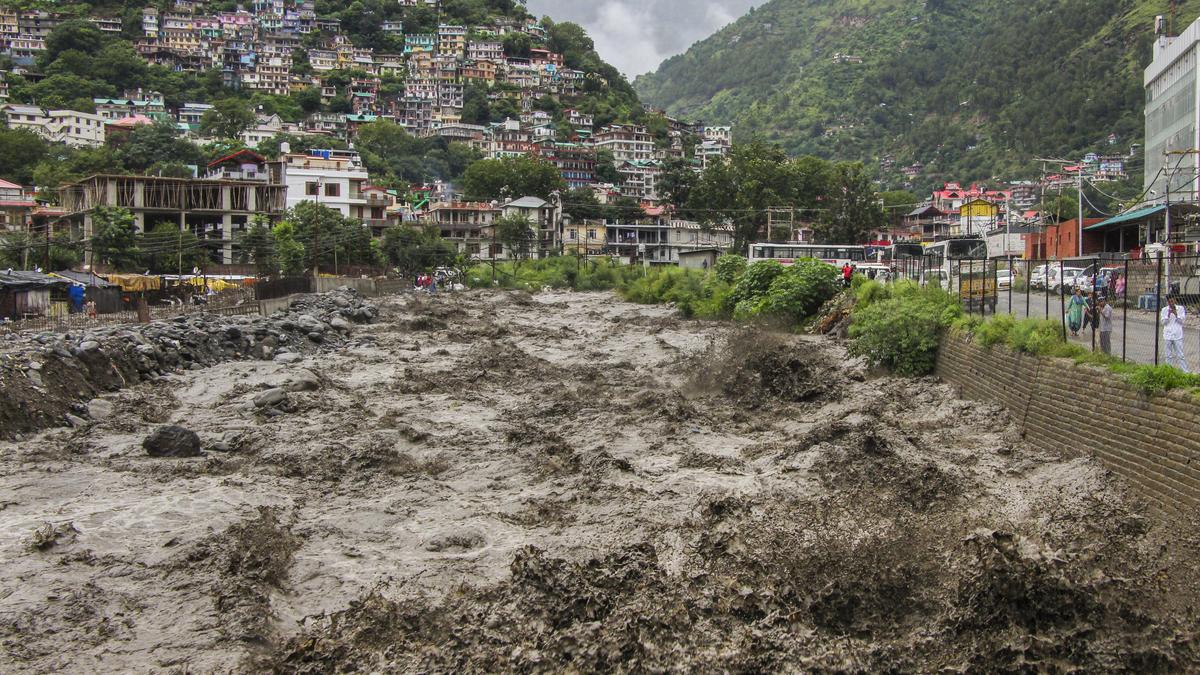
In 2025, Himachal Pradesh received 46% excess rainfall between June 1 and September 6; this year alone, the State has suffered economic losses of over ₹4,000 crore and has reported 366 deaths.
| Photo Credit: PTI
The hill State of Himachal Pradesh is experiencing increasingly erratic weather patterns and a surge in climate-induced disasters, resulting in significant economic damage and high human casualties.
The Himachal Pradesh Human Development Report 2025, released recently by the State government, said that as Himachal continues to grapple with shifting weather patterns and an increasing number of natural disasters, the economic losses have been high, and the human toll substantial. The government departments have estimated a loss of ₹46,000 crore in natural disasters in the last four years. Around 1,700 lives have been lost in the last five monsoons, and thousands of homes and roads have been destroyed, it said.

In 2025, Himachal Pradesh received 46% excess rainfall between June 1 and September 6; this year alone, the State has suffered economic losses of over ₹4,000 crore and has reported 366 deaths.
The onset of monsoon has become unpredictable, with delayed starts, early rainfall deficits, and abrupt heavy downpours. Seasons are changing, with earlier and warmer springs affecting agricultural calendars and plant flowering cycles, shorter and milder winters, and a rise in summer temperatures, with lower-lying regions reaching up to 40°C. Heatwaves, once uncommon in hilly areas, are now occurring in Himachal’s valleys, with a surprising trend of more winter heatwave days than summer ones, the report said.
The report indicated that average annual temperatures have risen by 1.5°C since 1901, and the State is also seeing an increase in days with extremely heavy rainfall (over 100 mm), with the period between June 1 and September 6, 2025, recording 46% excess rainfall. Glaciers are retreating at rates exceeding 50 metres per year and the creation of new glacial lakes has increased the risk of Glacial Lake Outburst Floods. Water stress is intensifying, with two-thirds of traditional springs drying up, forcing some villages to depopulate.
Expressing concerns surrounding climate variability in the ecologically fragile Himalayas, the report added that while Himachal has, over the years, made significant progress in health, education, and poverty reduction, climate change threatens to forestall progress.

Environmentalists and scientists are worried about the impacts of climate change in the ecologically fragile hill State and believe that governments would need to come up with climate-resilient policies to address the situation.
Horticulture scientist and former joint director with the University of Horticulture and Forestry, Nauni in Solan, S.P. Bhardwaj said, “These signs of climate change are not good. Reduced snow cover or rainfall, a rise in temperature will have a ripple effect. For instance, lesser snow would adversely impact apple cultivation by diminishing crucial low temperatures and chilling hours essential for crop cycles. Rising temperatures will increase pest and weed infestations, ultimately reducing productivity. Growers will face economic strain from replacing existing varieties with climate-adapted alternatives, fundamentally altering Himachal’s signature apple industry.”

Former principal scientist at Himachal Pradesh Council for Science Technology-Environment, S. S. Randhawa, said: “Himachal’s snowfall is declining in peak winter and shifting to late winter or early summer, threatening river discharge and water security. Shimla has been witnessing the effects of rising temperatures with negligible snow in recent winters. This alarming trend endangers hydropower, water sources, agriculture, forests, livestock, and infrastructure, demanding immediate attention from all stakeholders.”
“It is important for governments to adopt climate-resilient policies at micro and local level to effectively tackle the challenges emerging from natural disasters and climate change,” he said.
Published – January 03, 2026 02:26 am IST