
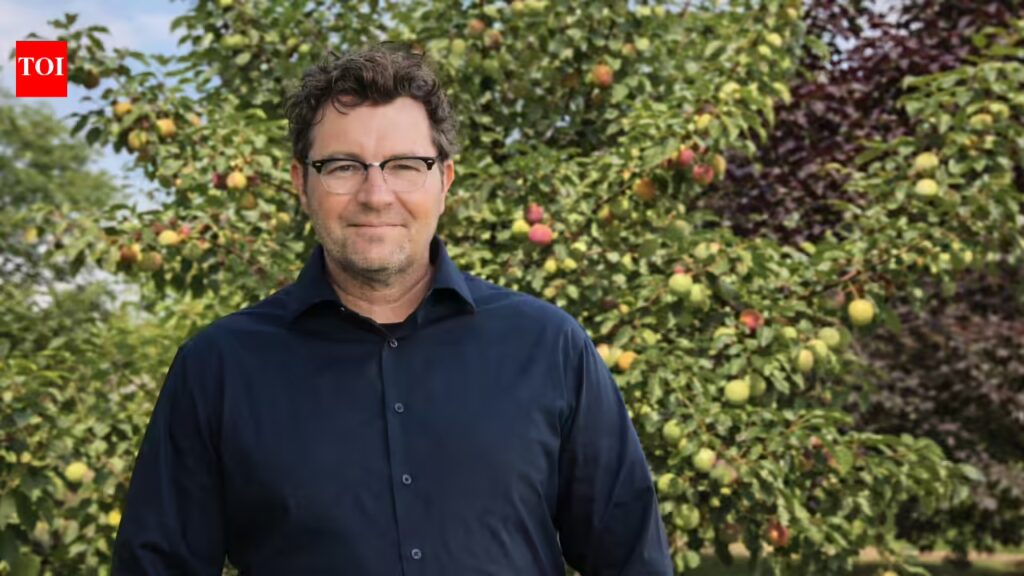
At first glance, it looks like something generated by AI or photoshopped for social media: a single tree bursting into dozens of differently coloured blossoms and, months later, yielding an improbable mix of peaches, plums, cherries, apricots, and more. But the so-called “Tree of 40 Fruit” is entirely real. It is the result of a long-running project by Sam Van Aken, an American professor who fused art, botany, and conservation into one living organism. Built patiently over years, the tree has become a viral symbol of how science, tradition, and creativity can reshape how we think about nature.
American professor behind the Tree of 40 Fruits
The project was conceived and executed by Sam Van Aken, a professor of art at Syracuse University. Trained as a sculptor, Van Aken’s work departs from traditional static materials and instead treats living systems as artistic media. His projects are designed to evolve over time, shaped by growth, seasonal change, and human care.Van Aken’s broader practice focuses on making complex ecological issues visible to the public. Rather than relying on data or abstraction, he creates works that invite direct engagement. The Tree of 40 Fruit reflects this philosophy, functioning simultaneously as a sculpture, an orchard, and an educational tool that encourages people to rethink how food, art, and conservation intersect.
How one tree can produce 40 different fruits
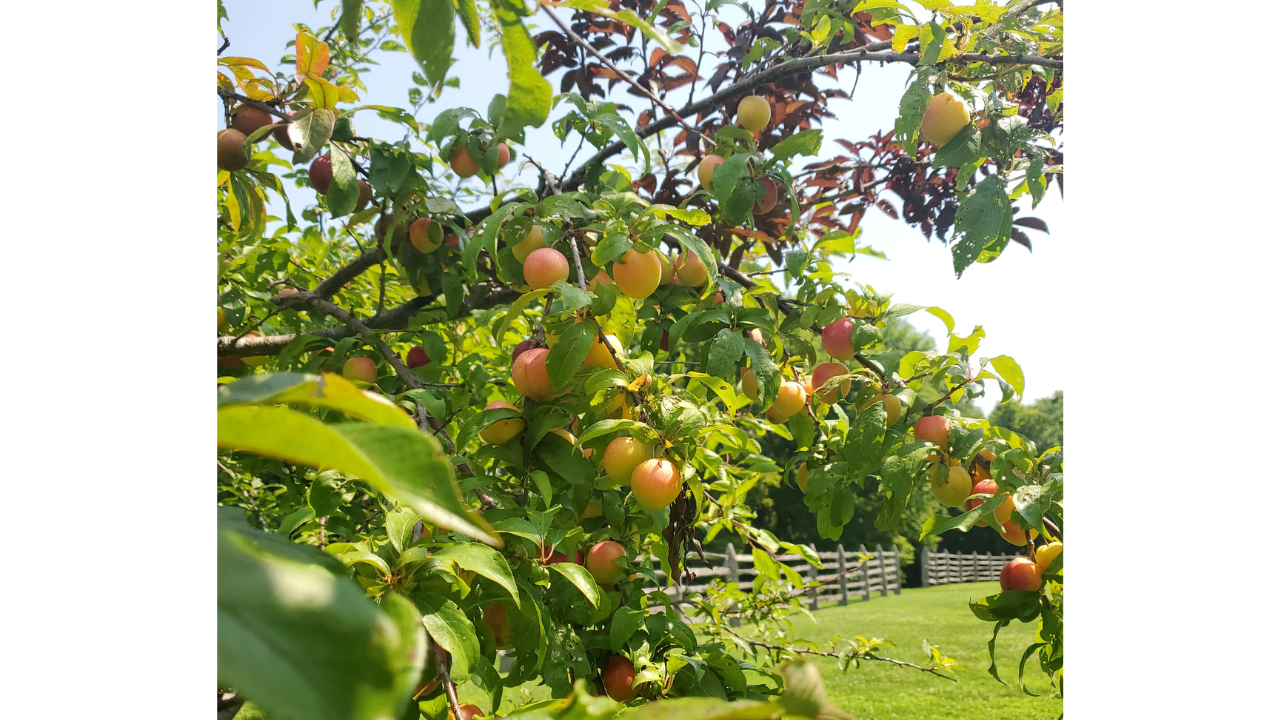
The tree’s seemingly impossible diversity is achieved through grafting, a horticultural technique that has been used for thousands of years. Van Aken employs a precise method known as chip grafting, in which a bud from one fruit variety is inserted into the branch of a host tree. Over time, the tissues fuse, allowing the grafted branch to grow and bear fruit.Crucially, all the fruits on the Tree of 40 Fruit belong to the same genus, Prunus, which includes stone fruits such as peaches, plums, cherries, apricots, almonds, and nectarines. Because these species are closely related, their vascular systems are compatible. This biological constraint explains both why the project works and why such trees cannot combine unrelated fruits like apples and oranges.

When the tree truly came into being
The project began in 2008, but a Tree of 40 Fruit is not completed in a single season. Each tree takes roughly five to seven years of careful grafting, pruning, and monitoring before all varieties are stable and fruiting. The first fully realised tree, bearing all forty types of fruit, emerged around 2013–2014, once the final grafts matured and produced reliably. Completion, in this case, is biological rather than symbolic—it occurs only when every grafted variety survives and fruits consistently.
Born from a disappearing orchard
The idea for the Tree of 40 Fruit emerged after Van Aken acquired a collection of stone-fruit trees from a closing agricultural research orchard in New York State. Many of these varieties were heirloom cultivars that had fallen out of commercial favour and were at risk of disappearing altogether. Instead of preserving them individually, Van Aken chose to combine them, creating a living structure capable of sustaining dozens of rare fruits on a single tree.Beyond its visual appeal, the Tree of 40 Fruit serves as a form of living conservation. Modern industrial agriculture prioritises uniformity and efficiency, often at the cost of genetic diversity. By contrast, Van Aken’s trees preserve dozens of cultivars in public spaces, keeping them alive, fruiting, and visible. Unlike seed banks, which store potential life, these trees actively demonstrate biodiversity in action.The project continues to resurface online as it feels impossible while remaining firmly grounded in real science. It challenges assumptions about what trees can do, then reveals that the answer lies not in genetic engineering but in traditional agricultural knowledge. That combination of visual wonder, scientific explanation, and environmental relevance has turned the Tree of 40 Fruit into one of the internet’s most enduring examples of how nature, when carefully guided, can still surprise us.