
The President of India has approved a new rural employment and livelihood law. The Viksit Bharat—Guarantee for Rozgar and Ajeevika Mission (Gramin) (VB–G RAM G) Bill, 2025, was passed by the Parliament on December 18 and approved by the President on December 21, bringing it into effect and ending the Mahatma Gandhi National Rural Employment Guarantee Act (MGNREGA), that provides for rural employment and has been in force since 2005.
The new act guarantees 125 days of work to adult members of rural households who volunteer to take on unskilled manual labour. The erstwhile MGNREGA guaranteed at least 100 days of wages.
Employment generation, under the scheme, is integrated with infrastructure development through four priority verticals: water security through water-related works; core rural infrastructure; livelihood-related infrastructure; and special works to mitigate extreme weather events.
The Act also introduces a temporary pause period on the employment scheme, of up to 60 days in a financial year, to ensure enough people are available to work on farms during peak sowing and harvesting seasons.
It also requires states to share the financial costs of the employment scheme. Most states will have to contribute 40% of the total cost, while northeastern states will contribute 10%. The central government will determine state-wise normative allocations for each financial year, and any expenditure incurred beyond these allocations will be borne by the respective state government.
Critics argue that the way the scheme is designed can disempower workers. The decision-making authority remains with the central government, which can also decide when are where the scheme will be implemented, while the implementation responsibilities themselves are transferred to the state governments.
The bill was introduced in the Lok Sabha on December 16, followed by intensive debate, during which several opposition parties opposed the legislation. The main opposition party, Congress, which has played a crucial role in shaping the MGNREGA, criticised the new law stating that the Act was tabled without any consultation. Section 37 of the Act explicitly repeals MGNREGA. States such as Kerala and Tamil Nadu have also expressed their concerns.
Several international economists and experts have written to the Indian government in support of MGNREGA, warning that the shift to the new scheme, which devolves responsibility to the states without sufficient financial support, threatens the gains achieved so far under the current rural employment programme. The collective letter, compiled by the Levy Economics Institute, a public policy think tank, is signed by Olivier De Schutter, UN Special Rapporteur on Extreme Poverty and Human Rights, Thomas Piketty of the Paris School of Economics and others.
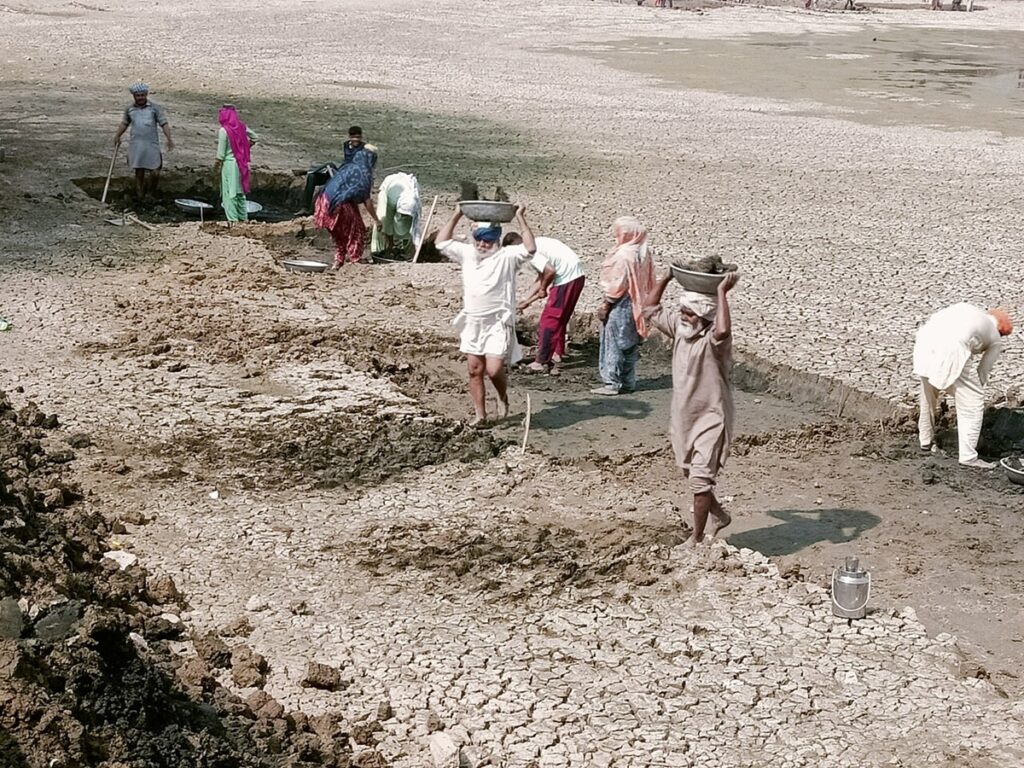
Banner image: Workers desilt a village pond in Asir village, Sirsa district, Haryana, under MGNREGA, now replaced by the VB–G RAM G Act, 2025. Image by Mulkh Singh via Wikimedia Commons (CC BY-SA 4.0).