
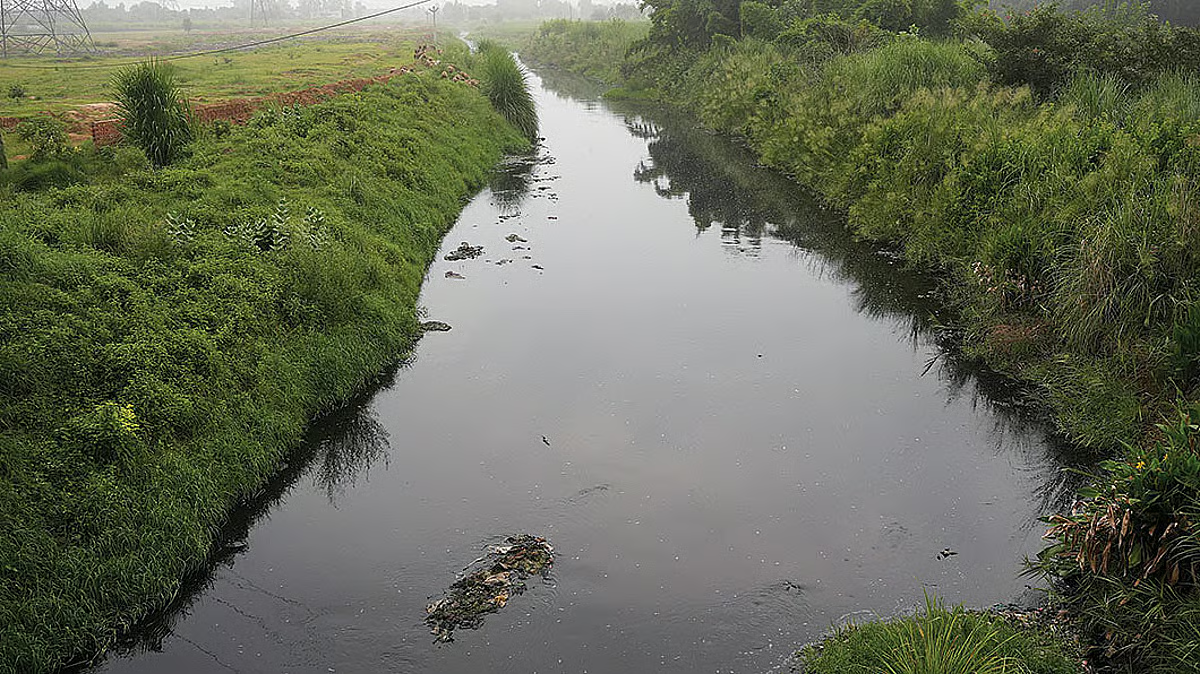
Petitioners referred to a 1906 publication Gonda: A Gazetteer, which described the Suav (then referred to as Suwawan) as a significant tributary of the Rapti River. The Gazetteer noted that while several seasonal channels joined the Rapti, the only tributaries of significance were the Burhi Rapti on its northern bank and the Suav on its southern bank. “The Gazetteer says that the River Suav becomes a river of considerable proportion before its joining in river Rapti near Rasoolabad in Utaraula pargana,” the petition stated.
The Suav River plays a vital role in controlling and mitigating floods generated by the Rapti River during the monsoon. It fills dozens of wetlands, lakes and ponds along its roughly 120 kilometre course before joining the Rapti, itself a tributary of the Ganges. Petitioners argued that its conservation and restoration are crucial for regional environmental stability.
The plea described how Balrampur, formerly part of Gonda district, once had four rivers — the Rapti, Suav, Kuana and Besuhi. With the formulation and implementation of forest and agricultural development policies, reclamation of land for agriculture, settlement expansion and encroachments in the catchment and floodplain areas, the Suav gradually came to be treated as a drain.
“Further encroachment is being made by construction of sewage treatment plant (STP) and community centre, which may lead to serious environmental degradation and stoppage of such construction may be ordered,” the order stated.
The petitioner has further alleged that the government is now reinforcing this transformation by constructing the STP and a community hall on the riverbed, and by filling adjoining drains.
The plea stated that such construction must be halted as it poses serious environmental risks and threatens the lives and safety of residents of Balrampur and Bhagwatiganj. It also cites judicial precedents — including the case relating to dumping waste into the Nala Rani River in Rajasthan — where courts have intervened to stop environmentally harmful construction activities.
“This dam has withstood severe floods on several occasions and has saved Balrampur city from submergence multiple times. Now, that very stream (nala) is being converted into a drainage system (sewer) by the government, and two other drains are being filled in to construct a Sewage Treatment Plant and a Community Hall. It is extremely important to stop this work. This project poses a serious threat to the environment and is a grave risk to the lives of the residents of Balrampur, especially those living in Bhagwatiganj…,” the petition said.