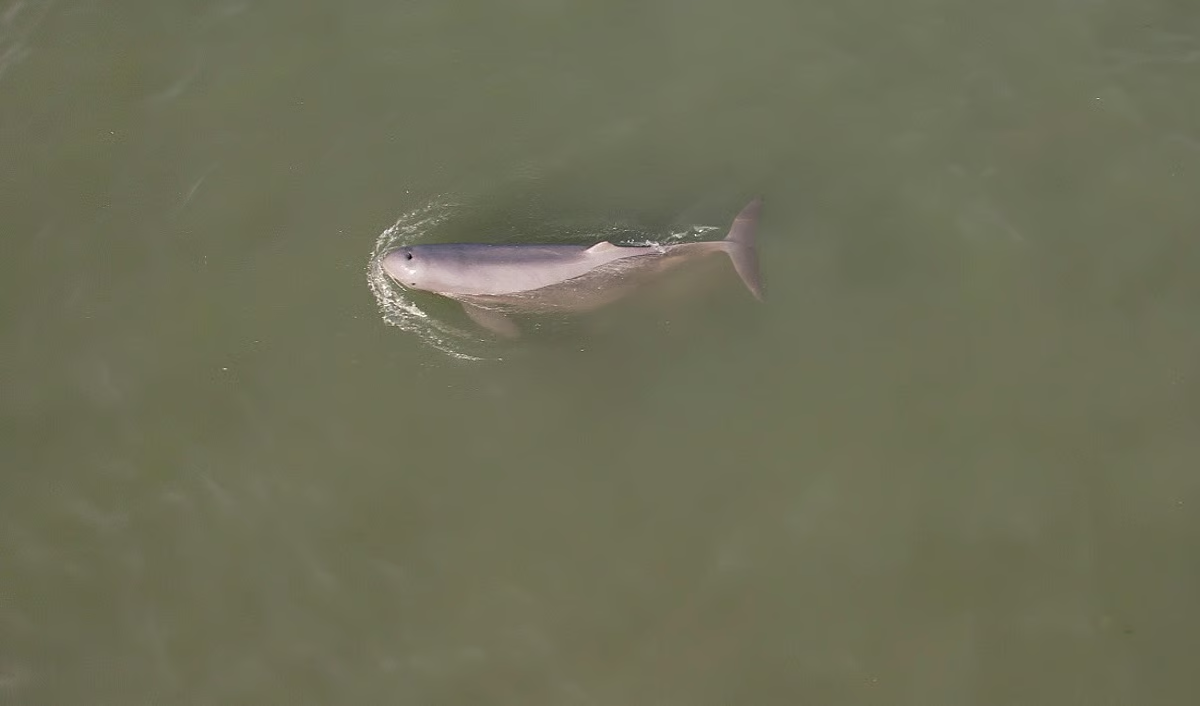
Odisha has recorded the highest marine dolphin numbers in the past five years, and their population is estimated to be at 765 (individuals of different species), according to the latest estimation of dolphins and other cetaceans in the state.
The latest state-wide census was conducted by the Wildlife Wing of the Forest, Environment and Climate Change Department, Government of Odisha, on 20 January 2026. The 765 dolphins included 497 Humpback dolphins, followed by Irrawaddy (208), Bottlenose (55), Spinner dolphin (3) and finless porpoise (2).
The population of dolphins in Odisha was estimated at 544 in 2020-21. This included 209 Irrawaddy dolphins. There were 726 dolphins (208 Irrawaddy) in 2021-22, 733 (69 Irrawaddy) in 2022-23, 743 (181 Irrawaddy) in 2023-24 and 710 (188 Irrawaddy) in 2024-25.
“Strong conservation efforts, habitat protection and community participation drives are some of the causes for the increase of the dolphin population and a major milestone in marine biodiversity conservation in Odisha,” Odisha Principal Chief Conservator of Forests (Wildlife) Prem Kumar Jha said.
He added that despite the pressure on coastal and marine ecosystems globally, Odisha’s annual dolphin estimation stands out as a model initiative, demonstrating how sustained monitoring and informed management can contribute meaningfully to the long-term conservation of charismatic marine species and the fragile ecosystems they inhabit.
The highest number of Irrawaddy dolphins, a critically endangered species, was counted at 159 in Chilika, the biggest brackish water lagoon in Asia. Meanwhile, the Gahirmatha Marine Sanctuary in Kendrapara district has emerged as a major marine conservation stronghold with 474 Humpback dolphins.
The dolphin has been included in Schedule I of the Wildlife (Protection) Act, 1972 and categorised as ‘Endangered’ on the International Union for the Conservation of Nature’s (IUCN) Red List.
Comparative analysis with previous years suggests a largely stable and, in some regions, improving population trend, reinforcing the value of regular monitoring in guiding conservation planning, said a senior wildlife officer.
Beyond numbers, the estimation reflects Odisha’s integrated approach to marine conservation, combining scientific rigour, capacity building of field staff and inter-divisional coordination, while generating valuable baseline data for policy formulation, habitat protection and community awareness, he said.
Chilika stands as a global conservation success, being home to 159 of Odisha’s 208 Irrawaddy dolphins, showcasing the impact of long-term habitat protection, wetland management and community participation, said Jha. The Irrawaddy dolphin has also been sighted in Balasore wildlife division (15), Berhampur (13), Puri wildlife division (12) and mangrove wildlife division, Rajnagar (9), the census results revealed.
The population of this highly critical marine mammal however remained stagnant for the last two years in Chilika, also a Ramsar site. In 2025, the population of Irrawaddy dolphins in Chilika was estimated at 159.
“The Irrawaddy dolphin is a slow breeding species. It has also migrated to some other areas. These are some of the factors for their population remaining stagnant in the lake,” said Sushant Nanda, former principal chief conservator of forests (wildlife) of the state. Despite this, Chilika is credited as having the highest number of Irrawaddy dolphins in a single area globally, he said.
The population of the elusive sea mammal remained stagnant because of much stress on its lake habitat including massive prawn gheries, use of nylon nets for fishing etc, said Biswajit Mohanty, a wildlife activist.
The dolphin estimation was initiated originally in Chilika during 2008 and expanded across all coastal forest divisions since 2015. The annual estimation has evolved into a scientifically robust and logistically co-ordinate exercise that captures the distribution, diversity and population trends of dolphins and other cetaceans inhabiting Odisha’s marine, estuarine and lagoon ecosystems.
The training programme was conducted on species identification, survey methodology and safety protocols, followed by intensive field observations through boat-based and shore-based transects. Forest staff, frontline field personnel, marine experts and officials participated in the exercise.