FILE PHOTO: QatarEnergy’s liquefied natural gas (LNG) production facilities, amid the U.S.-Israeli conflict with Iran, in Ras Laffan Industrial City, Qatar March 2, 2026.
Stringer | Reuters
Oil and gas prices rose sharply on Thursday as strikes on key energy infrastructure in the Middle East exacerbated fears of a global supply crunch.
Qatar said Wednesday that Iranian missile strikes had damaged a key liquefied natural gas (LNG) export facility. The action followed Tehran’s warning about attacking energy facilities in Qatar, Saudi Arabia and the United Arab Emirates in retaliation for Israel’s bombing of a natural gas processing facility in Iran.
The front-month gas price at the Dutch Title Transfer Facility (TTF) hub, a European benchmark for natural gas trading, traded up over 16.5% at 63.7 euros ($73.07) per megawatt-hour.
International benchmark Brent crude futures with May delivery rose more than 1% to $108.78 per barrel, paring gains after briefly climbing above $119 earlier in the session. U.S. West Texas Intermediate futures ticked higher to $96.58.
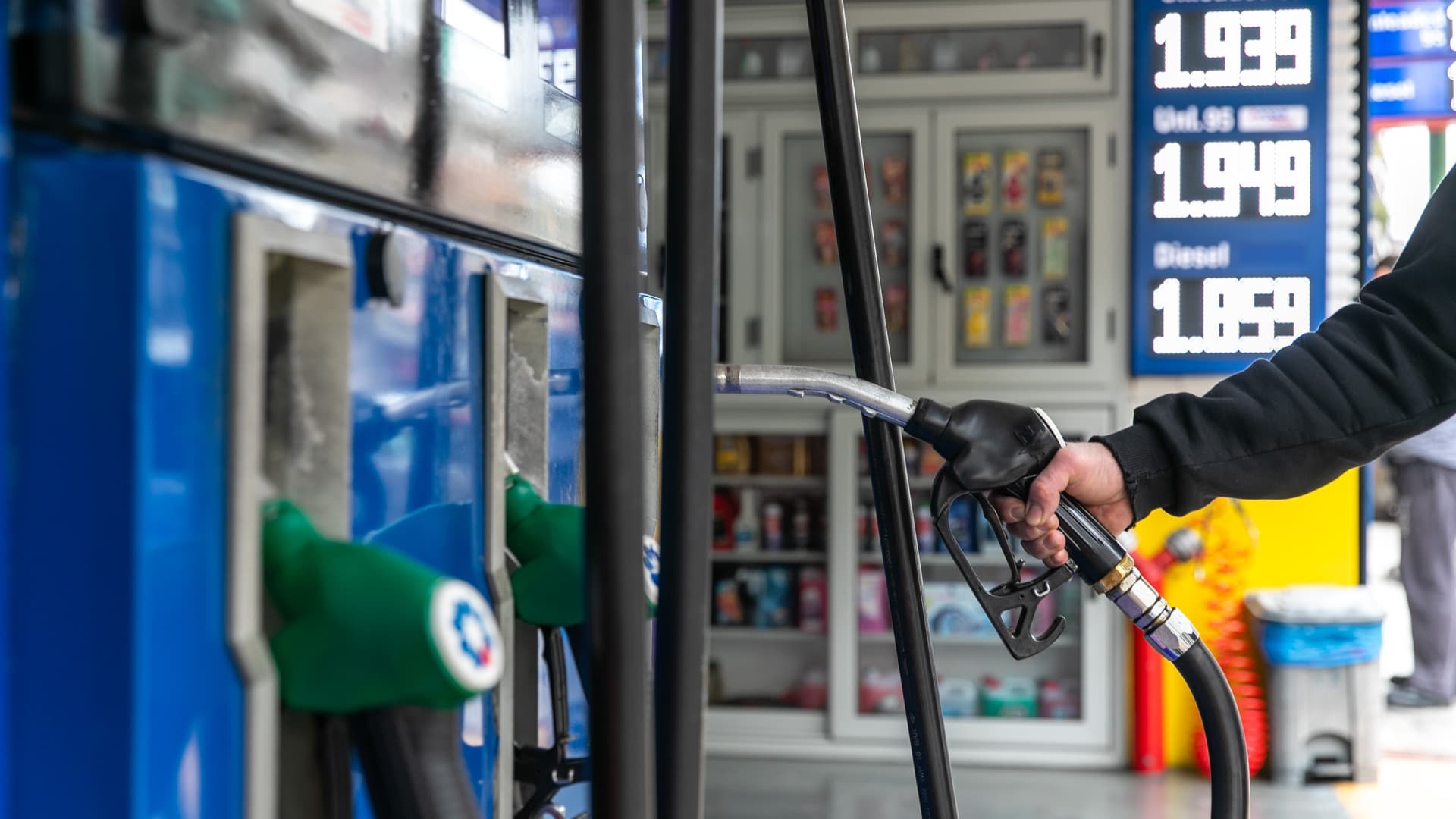
U.S. natural gas prices were last seen 3.8% higher, trading at $3.181 per million British thermal units. Front-month Nymex RBOB gasoline for April delivery, meanwhile, rose 2.6% to $3.18, reaching a near four-year high.
Iranian missile strikes inflicted “extensive damage” on Ras Laffan Industrial City, the world’s largest LNG export facility in the world, Qatar said.
Emergency crews were dispatched to tackle fires at Ras Laffan, QatarEnergy said in a social media post, adding there were no reported casualties. QatarEnergy CEO Saad al-Kaabi said the Iran attack took out 17% of the country’s liquefied natural gas export capacity.
Qatar’s Interior Ministry later said the blaze had been brought under control.
Qatar’s foreign Ministry condemned the attack as a “dangerous escalation” and a “flagrant violation of sovereignty,” warning it threatened national security and regional stability. It added that Qatar reserves the right to respond under international law.
Saudi Arabia and the United Arab Emirates were on alert after Israel struck an Iranian natural gas processing facility.
Qatar had already suspended LNG production on March 2 following Iranian drone attacks on Ras Laffan and Mesaieed Industrial City. The country is the world’s second-largest LNG exporter after the U.S., accounting for nearly a fifth of global shipments, according to Kpler.
The escalating strikes on Middle East energy infrastructure risk deepening the supply shock triggered by the Iran war. Tanker movement through the Strait of Hormuz that was handling about 20% of global oil supplies, is largely blocked.
Randhir Jaiswal, India’s external ministry of affairs, told CNBC on the phone the country was in ongoing discussions with Iran to get 22 ships through the Strait. Two ships have already reached India via the passageway, Jaiswal said.
India continues to increase energy purchases from Russia, Jaiswal said.

Oil prices since the start of the year
Gulf Oil’s senior energy advisor Tom Kloza warned that markets could enter an “all bets are off” scenario if the conflict spills beyond the Gulf and begins targeting energy infrastructure in other regions, such as Europe or the United States.
“Can you imagine the response in the world if [Iran] targeted something outside of the Persian Gulf, a refinery in Rotterdam or a facility somewhere in the United States, that’s when all bets are off and prices could go absolutely apocalyptic,” he said.
A White House official confirmed to CNBC that oil and gas export restrictions are not currently under consideration.
Vice President JD Vance attended a meeting with U.S. oil industry members on Thursday hosted by the American Petroleum Institute. Opening Hormuz is a “top priority” for the Trump administration, Mike Sommers, API’s president and CEO, told CNBC following the meeting.
“We need to get the Strait open,” Sommers said. “There is just no substitute right now.”
Such a shift would mark a break from contained geopolitical risk to a global supply shock, where traditional pricing models and risk assumptions no longer hold. In that environment, fears of widespread disruptions to refining and fuel distribution could trigger extreme volatility, with oil and gas prices surging sharply as traders price in worst-case scenarios and scramble to secure supplies.
“We’re moving from a supply chain problem to potentially a supply problem. There’s a big difference. You fix supply chain problems quickly,” said Dan Pickering, founder and CIO of Pickering Energy Partners.
“If you start changing the ability to produce, whether it’s LNG or oil, and all of a sudden you can’t move the same amount of volumes because the volumes aren’t there … This is an escalation.”
— CNBC’s Spencer Kimball contributed to this report.