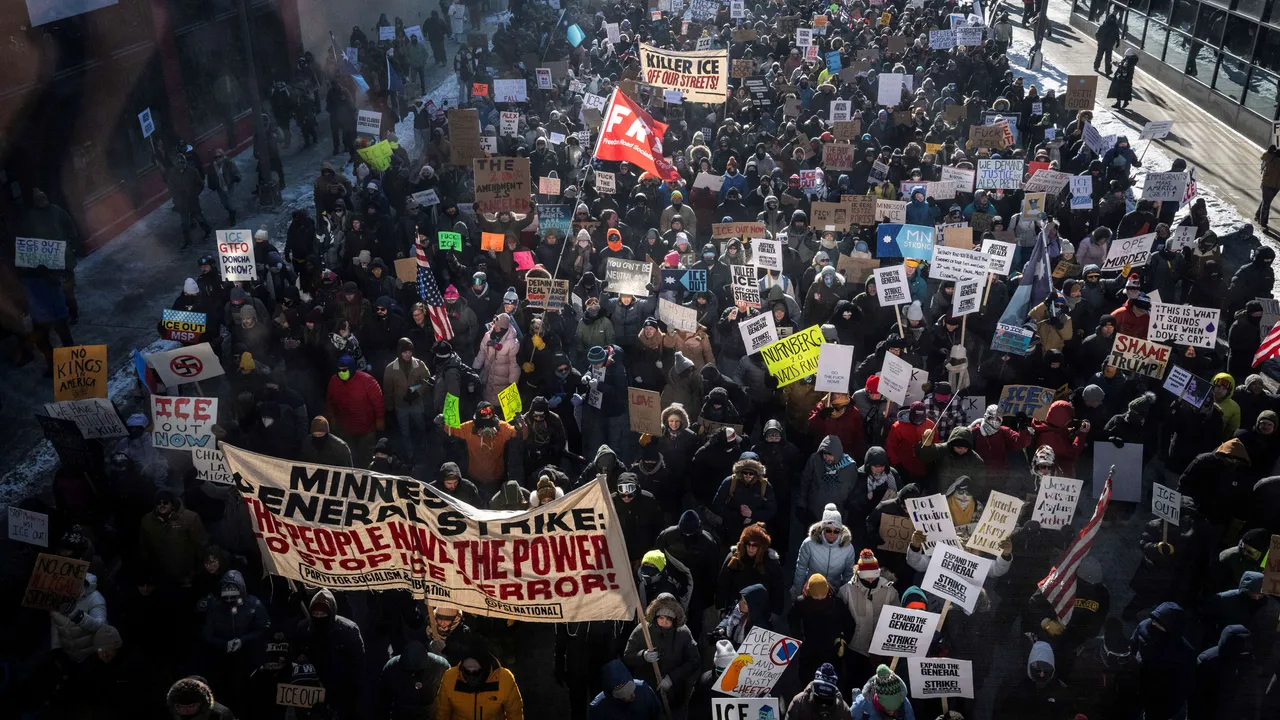
The politics today, I’m sorry to say, do not so far reflect a world in which Trump’s authoritarian overreach in Minneapolis has irrevocably poisoned his Presidency. It’s true that he is a deeply unpopular leader, and that immigration, previously a political advantage for Trump and his party, is now a clear liability. Independents, minority voters, young voters—they are all fleeing in droves from a President whom many of them helped elect a little more than a year ago. And yet, despite the tenor of much political commentary right now, the bottom has not yet fallen out of his Presidency. And maybe it never will. According to CNN’s polling average, Trump’s approval rating is currently thirty-nine per cent and his disapproval rating is fifty-nine per cent, almost exactly what they were in December, before Pretti and Good were killed. This is the case in other surveys as well. A new Fox News poll out this week, for example, had Trump’s approval at forty-four per cent and his disapproval at fifty-six per cent—also unchanged since December.
The point is that Trump’s numbers are bad, but they have been consistently bad, through years of ups and downs and scandals that would have destroyed the careers of any other politician of our lifetime. Americans, by and large, think what they think about Trump, and that’s why history strongly suggests that he can and will muscle his way through this controversy, too. Years from now, long after Trump has forgotten what actually happened in Operation Metro Surge, as his Administration calls the unprecedented surge of immigration agents in Minnesota, will you be shocked if he’s bragging about how he sent in the Feds to knock heads in Minneapolis and what a great job they did cleaning up the place?
There is a Trump playbook for a moment such as this. He’s run it many times before: distraction, disinformation, denial, delay. He’s following it almost to the letter once again. So, before you buy into the idea that the President has been pushed into what Politico on Thursday morning called a “stunning reverse-gear on immigration,” spend a few minutes considering what he and his advisers have actually done and said since Pretti was shot and killed on Saturday.
For starters, Trump himself has stated that he is not pulling back from Minnesota—just making “a little bit of a change” in personnel, by removing the thuggish commander Greg Bovino from the state—and that he neither wants nor needs any restrictions on his national immigration crackdown. “Guardrails would hurt us,” he told Fox News on Tuesday. Despite days of uproar, including from some Republicans, Trump has also stood by the architects of his policy—his deputy chief of staff Stephen Miller and the embattled Homeland Security Secretary, Kristi Noem. Not only has he not fired Noem but, after two Republican senators demanded that he do so, the President called them “losers.” In Minnesota, there is not yet a clear sign of any withdrawal of federal agents, though Homan has floated the possibility of a “redeployment” if state and local officials coöperate with his demands. It’s the tone that’s shifted so far, not the policy. I’m sure they’re breathing sighs of relief in the White House, now that words like “calming” and “de-escalation” are being thrown about in press coverage.
Trump himself has reverted to his favorite role: distractor-in-chief. At a Cabinet meeting on Thursday, it was as if Minnesota did not exist. Instead, Trump talked about Putin, about Venezuela, about Iran, about housing policy and drug prices and why he had the best first year in the history of the American Presidency. Anything but the topic that has consumed the country—and cratered the Administration’s poll numbers on its most reliable issue—throughout this cold, sad week.