
There are marriages that end quietly, leaving behind only private wreckage. And there are marriages that end and become literature.
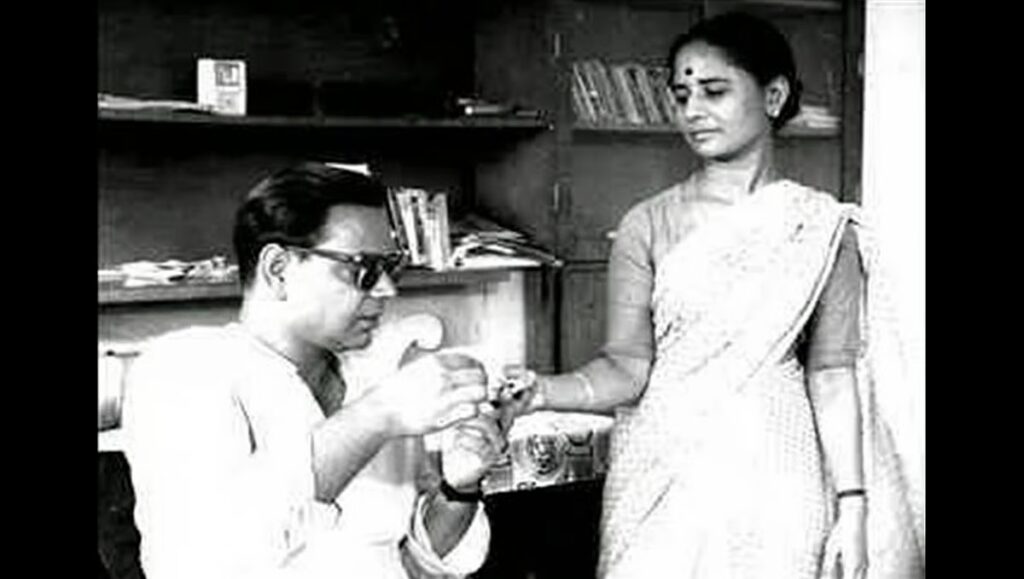
Rajendra Yadav and Mannu Bhandari were once the most luminous literary couple of Hindi letters, partners in life, participants in the New Story movement, inhabitants of the same restless intellectual climate. Their separation, after thirty-five years of marriage, was widely known. What was not known, at least not fully, was how each of them would later write that marriage into memory, into language, into history.
With Echoes of My Past (Mud-Mudke Dekhta Hoon) and This Too Is a Story (Ek Kahani Yeh Bhi), translated into English by Poonam Saxena and published by Penguin Random House, we are offered a rare and unsettling gift: two autobiographical narratives that speak to each other across a broken marriage. Not in dialogue. Not in reconciliation. But in ethical proximity.
These are not merely two memoirs. They are two versions of the same life, told from opposite ends of love.
The dangerous genre of autobiography
Autobiography is a dangerous genre. It announces its allegiance to truth while knowing that memory is selective, self-serving, and quietly governed by the instinct to survive oneself. Every autobiography is, in some measure, a defence brief. Or a confession. Or, more often, an uneasy mixture of the two.
Rajendra Yadav knew this too well. He chose not to write a conventional autobiography. Instead, Echoes of My Past unfolds as a collage of fragments, accidents, friendships, illnesses, separations, literary battles—assembled not to construct a heroic self, but to interrogate a restless one. The book refuses the consolations of chronology. It prefers the unease of conscience.
It is significant that these autobiographical pieces first appeared in the prestigious Hindi literary magazine Tadbhav, at the insistence of its editor, the distinguished fiction writer Akhilesh. Their very mode of publication, serial, episodic, provisional, mirrors Yadav’s distrust of the finished life-narrative. What emerges is not the architecture of a completed self, but the anatomy of a mind in continuous ethical dispute with itself.
In recent decades, Hindi autobiography has steadily expanded its moral and imaginative range, producing a body of work that now constitutes one of the most vibrant traditions of life-writing in Indian languages.
After a brief eclipse, literary memoir has once again moved to the centre of contemporary literary culture. Arundhati Roy’s Mother Mary Comes to Me marks a decisive moment in this renewed attention to life-writing. In turning away from the architecture of the novel to write directly from the wounds of childhood, family, caste, and gender, Roy demonstrates that autobiography, when ethically rigorous, can become a form of political thinking.
In the wake of this turn, memoir has re-emerged not as a secondary genre but as a primary site of literary and moral inquiry, where questions of identity, inheritance, trauma, and responsibility can be examined with an intensity that fiction often evades.
It is within this revived global and Indian context of life-writing that Echoes of My Past and This Too Is a Story must be read, not as isolated personal narratives, but as part of a renewed cultural moment in which the self, once again, becomes the most contested and revealing text.
Rajendra Yadav: Restlessness, guilt, and the public intellectual
From a train accident near Kanpur that he narrowly survives, to childhood memories of illness and disability, to his Calcutta years of intellectual awakening, Yadav builds his life not as a linear ascent, but as a series of moral pressure points. The self that emerges is not stable. It is argumentative, self-justifying, self-accusing, forever in motion.
What gives the book its deepest gravity, however, is not literary history but personal failure. Yadav writes, late in life, of the weight of guilt he carries towards his daughter Rachna, the daughter he barely noticed in childhood, the daughter who now nurses him through illness. “I wonder how much guilt and how many lives’ burdens I will carry with me,” he writes, and the sentence hangs in the air like a verdict he can neither escape nor complete.