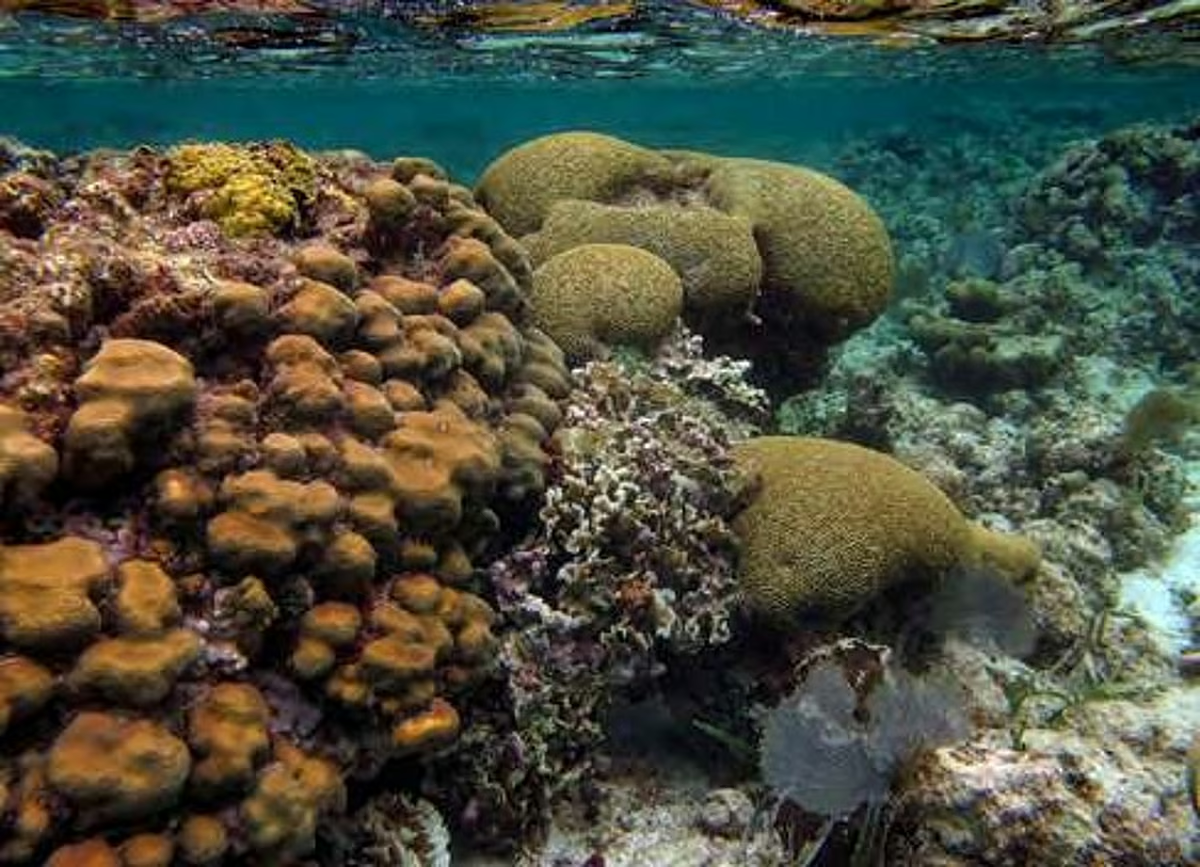
Hard corals across the Caribbean have declined by almost 50 per cent in just over four decades, according to new global monitoring data that point to rising ocean temperatures and fast-spreading diseases as key drivers of the collapse.
A major new assessment by the Global Coral Reef Monitoring Network (GCRMN) has reported a dramatic decline in hard coral populations (48 per cent) between 1980 and 2024, even though coral reefs are home to nearly one-third of all marine species. The network, which brings together scientists, organisations and reef managers worldwide, tracks the status and health of coral ecosystems.
Hard corals, also known as stony corals, are marine animals that build the limestone frameworks upon which reefs form. Composed of thousands of tiny polyps that secrete calcium carbonate, they create the rigid, rock-like structures that underpin entire reef ecosystems. Soft corals, by contrast, lack these skeletons and resemble plants or trees.
Coral reefs across the GCRMN Caribbean region cover 24,230 square kilometre — amounting to 9.7 per cent of the world’s total coral reef area.
“Early monitoring data indicate that hard coral cover across the Caribbean ranged between 29 per cent and 38 per cent before 1983,” the report said. “Between 1983 and 2024, our analyses reveal that hard coral cover has declined by half, from 28.1 per cent in 1980-1985 to 14.6 per cent in 2019-2024.”