- With only 49% of farmland irrigated and a stagnant agricultural growth for three decades, small and marginal farmers, especially the women farmers, remain highly vulnerable to rising climate risks.
- Although women account for nearly half the agricultural labour in India, they operate only 12–13% of farmland as formal landholders. The absence of land titles significantly limits their access to institutional credit, crop insurance and government schemes critical for climate adaptation.
- The authors of this commentary highlight the urgent need for people-centred reforms and suggest blending traditional wisdom with modern innovation and strengthening trust and coordination across all levels of governance for a truly climate-resilient and sustainable agricultural future.
- The views in this commentary are that of the authors.
Climate change is disproportionately affecting developing countries such as India, where the rural sector remains highly vulnerable due to inadequate climate infrastructure and limited adaptive capacity. While developed nations have built sophisticated flood management systems, real-time weather alert mechanisms, and resilient agricultural frameworks over several decades, rural India continues to struggle with minimal infrastructure development. Small and marginal farmers who constitute nearly 86% of all farmers in India, form the backbone of the agricultural workforce and are the most exposed to climate shocks. They often lack access to climate-resilient seeds, bio-fertilisers, modern machinery, and timely information that could help stabilise productivity.
Agriculture in India is not only a livelihood system but also a critical form of natural capital, deeply dependent on soil health, water availability, and ecosystem stability. Building climate resilience in these regions, therefore, requires strong institutional support, improved infrastructure, and enhanced financial inclusion to protect livelihoods and ensure long-term food security.
Despite steady policy attention, agricultural productivity in India has remained largely stagnant over the past three decades. Data from successive Economic Surveys show that agricultural Gross Value Added has grown at only 3–3.3% annually between 1990 and 2023, indicating long-term stagnation even as climate risks, production costs, and population pressures have intensified. Farmers continue to rely on traditional practices, not because of resistance to innovation, but because adopting new technologies involves financial risk in an increasingly uncertain climate.
Irrigation remains a central constraint. At the national level, only 49% of India’s net sown area is under irrigation, leaving more than half of agriculture dependent on erratic monsoon rainfall. In hilly, tribal, and rain-fed regions, canal-based irrigation is often unfeasible, while alternatives such as borewells, lift irrigation, or micro-irrigation systems require capital investments beyond the reach of smallholders. Climate-friendly irrigation technologies such as drip and sprinkler systems are technically suitable but remain financially inaccessible without sustained institutional support.
In the last decade, the Indian government has introduced multiple schemes to strengthen rural livelihoods, including the Pradhan Mantri Kisan Samman Nidhi (PM-KISAN), the Doubling of Farmers’ Income Mission, the PM-KUSUM solar energy scheme, and various seed and fertiliser subsidy programmes. One major intervention has been the Soil Health Card (SHC) Scheme, under which more than 230 million soil health cards were distributed nationwide by 2023. The scheme aims to improve nutrient efficiency and soil management, the key pillars of climate-smart agriculture and natural capital conservation. However, micro-level studies and independent evaluations indicate that many farmers either struggle to interpret the technical recommendations provided in the cards or find the advised nutrient applications economically unviable. This gap between scientific advisories and farmers lived realities highlights a broader challenge: schemes designed without sufficient attention to local contexts often fail to translate into meaningful outcomes. Frequent redesigns and short policy cycles further weaken trust, preventing farmers from fully engaging with institutional support systems.
These governance gaps do not affect all farmers equally, and their consequences are most visible among groups already facing structural disadvantages. In agriculture, climate stress exacerbates long-standing inequalities related to land ownership, access to resources, and decision-making power, the burdens that disproportionately affect women. Although women account for nearly half of agricultural labour in India, they operate only 12–13% of farmland as formal landholders. The absence of land titles significantly limits their access to institutional credit, crop insurance, extension services, and government support schemes that are critical for climate adaptation. As climate variability increases the frequency and intensity of droughts, floods, and pest outbreaks, these structural constraints weaken women’s ability to respond effectively and recover from losses.
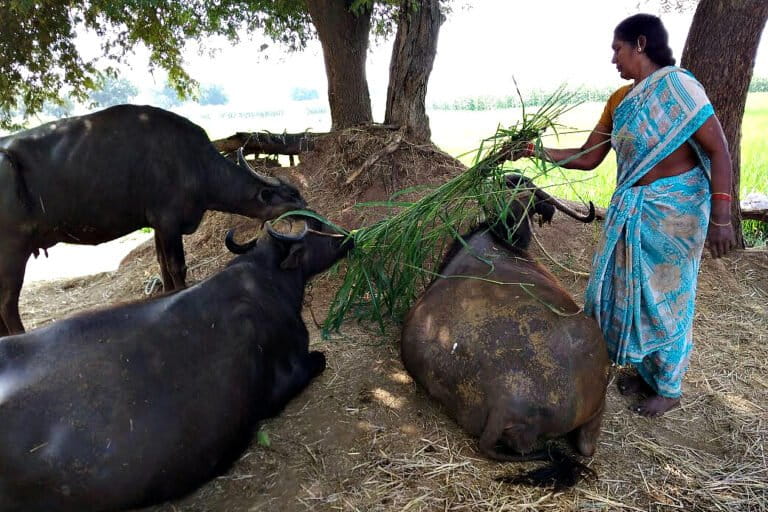
Women’s exposure to climate risk is further shaped by the nature of their work. Alongside agricultural labour, women shoulder primary responsibility for unpaid care work, including collecting water and fuelwood, managing household food security, caring for children and the elderly, and maintaining livestock. Climate-induced water scarcity and environmental degradation increase the time and physical effort required for these tasks. As distances to water sources grow and natural resources become less reliable, women’s workloads intensify, leaving less time to engage in income-generating activities, attend training programmes, or interact with extension services. Extreme heat events and prolonged droughts also heighten health risks, contributing to heat stress, fatigue, and increased caregiving burdens.
Male out-migration, a common response to agrarian distress and climate shocks, further intensifies women’s responsibilities within farming households. As men migrate in search of wage employment, women are often left to manage agricultural operations alongside household duties. However, this shift in responsibility is rarely accompanied by greater control over land, finances, or productive assets. Women frequently make farming decisions without legal ownership, access to mechanisation, or timely climate advisories. This feminisation of agricultural responsibility without empowerment places women at the frontline of climate risk while denying them the tools required for effective adaptation. As a result, women are more likely to rely on informal credit during climate shocks, often at high interest rates, increasing household indebtedness.
Climate stress also restricts women’s access to emerging adaptation opportunities. Digital advisories, climate insurance products, mechanisation support, and market-linked innovations increasingly shape agricultural adaptation, yet often bypass women due to lower mobile phone ownership, limited digital literacy, and weak institutional outreach. In many cases, eligibility for insurance and mechanisation subsidies is linked to land ownership, further excluding women. Consequently, adaptation gains remain unevenly distributed within households and communities.
Evidence from climate-vulnerable regions shows that climate change disrupts women’s off-farm livelihoods, particularly those linked to forests and common property resources. Droughts, ecosystem degradation, and declining biodiversity reduce the availability of non-timber forest products that many rural women depend on for supplementary income. In coastal and flood-prone regions, salinity intrusion, sea-level rise, and inadequate drainage undermine agricultural and livestock-based livelihoods, disproportionately affecting women-headed households.
Despite these challenges, women are not merely passive victims of climate change. They play a central role in sustaining agricultural systems through knowledge of seed diversity, soil management, mixed cropping, and low-input practices. Women are often early adopters of cost-effective techniques such as crop diversification, organic manure use, and water-conserving practices. However, their adaptive potential remains constrained unless supported by inclusive policies that recognise women as farmers in their own right. Strengthening land rights, improving access to credit and extension services, reducing time poverty, and ensuring participation in climate decision-making are therefore essential for building resilient and sustainable agricultural systems.

The challenge in addressing climate change in agriculture, therefore, lies not in the absence of technology but in the lack of structured support, trust, and inclusive governance. Farmers need an enabling environment that promotes continuous learning, credible extension services, and transparent engagement. Training programmes must be delivered in local languages through peer-to-peer networks and field demonstrations, ensuring that information is practical and context-specific. Institutional mechanisms should also recognise the opportunity costs farmers bear when adopting new practices, offering compensation or incentives during transition periods. Evidence from global assessments shows that sustained extension support significantly increases the adoption of climate-smart practices, highlighting the importance of long-term engagement and trust-based systems.
To achieve lasting change, India needs a hybrid approach that combines top-down policy direction with bottom-up feedback mechanisms. At the top, research institutions and government agencies must strengthen the flow of climate-resilient innovations such as improved seed varieties, cost-effective machinery, and sustainable farming practices through a revitalised extension system. Currently, a substantial share of extension officers’ time is absorbed by administrative work, limiting meaningful field engagement. Addressing this requires increased recruitment, better funding, improved mobility, and the use of digital tools, including AI-based advisory platforms, to support real-time farmer interaction.
At the same time, the bottom-up approach must ensure that farmers’ voices especially those of women are systematically collected, analysed, and incorporated into policy decisions. Strengthening data-collection systems can help bridge the gap between policy intent and on-ground realities. Approaches such as Integrated Farming Systems (IFS), Integrated Resource Management (IRM), and Integrated Crop Management (ICM), combined with traditional knowledge and low-cost sustainable techniques like organic manure use, intercropping, tank-silt application, transplanting young seedlings, and pheromone traps, offer a balanced path toward resilience. By blending traditional wisdom with modern innovation and strengthening trust and coordination across all levels of governance, India can move towards a truly climate-resilient and sustainable agricultural future.
Pradyot Ranjan Jena is a professor and Nikitha Ashok is an MBA student, both at the School of Humanities, Social Sciences and Management, National Institute of Technology Karnataka, Mangalore.
Citation:
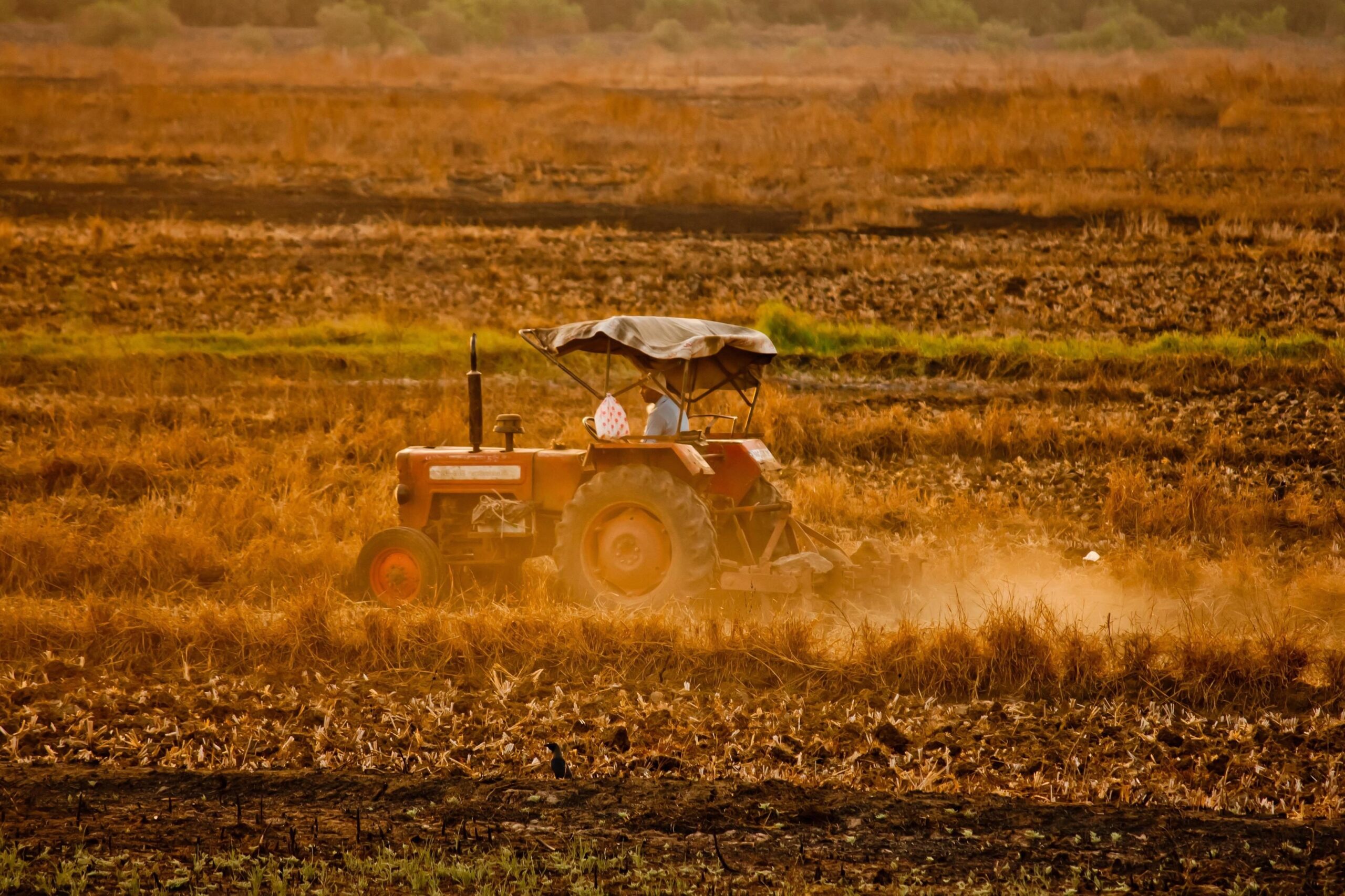
Banner image: A farmer at work. India needs a hybrid approach that combines top-down policy direction with bottom-up feedback mechanisms. Image via Public Domain.