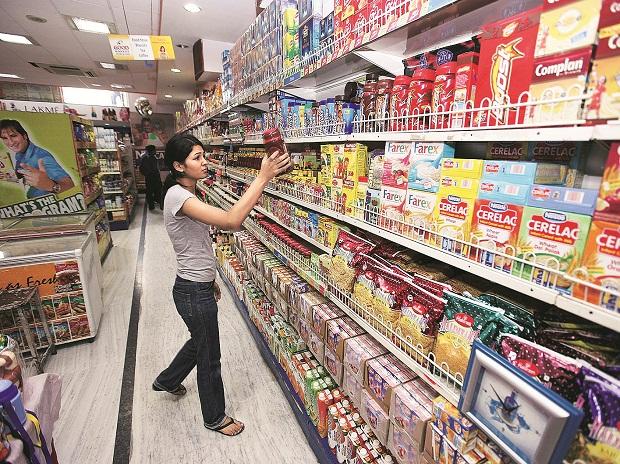
India’s retail sector is sharpening its focus on women workforce as a key talent pool, with retailers across the sector planning to step up female hiring over the next few years. From store floors to mid-management and leadership pipelines, retailers say women’s participation is no longer viewed as a diversity add-on but as a business necessity- shaping customer experience, workforce stability and long-term growth.
Retailers noted that as they scale their physical presence, women are expected to play a bigger role not only in sales and visual merchandising, but also in store operations, people management and brand-building functions.
Yet women’s participation in retail remains uneven, with sharp disparities across categories, roles and regions, reflecting structural barriers.
Staffing firm TeamLease Services highlighted women’s participation varies dramatically depending on the product being sold, even when jobs are similar in skill and pay.
“In lifestyle, fashion, beauty and cosmetics retail, women account for nearly two-thirds of the frontline workforce,” said Balasubramanian A, senior vice president at TeamLease Services. “But in electronics and consumer durables, women make up barely 5-7 per cent, despite the work cards, compensation and store environments being very similar.”
The gender gap is widest in FMCG feet-on-street sales, where demanding travel, tough targets, low pay and poor facilities keep women below 5 per cent.
Rising women’s participation has followed deliberate workplace investments, with electronics manufacturing service ( EMS) and garment manufacturers building women-heavy teams through hostels, safe transport, female-managed housing and paid training.
“It’s harder to attract women initially, but once they come in, retention is significantly higher,” TeamLease said. “Women tend to stay longer if the ecosystem works.”
Some organised retailers are redesigning store leadership, appointing women as HR heads to boost trust, grievance redressal, and female workforce participation.
The female workforce share has surged by 23 per cent, led by flexible schedules, gig formats, and customer-facing roles in fashion, beauty, and e-commerce, according to a report by V5 Global, a part of First Meridian Group.
Further, India’s retail sector is poised to grow from $1.18 trillion in 2025 to nearly $2 trillion by 2030, with organised retail’s share climbing to over 35 per cent from 18 per cent.
Essensai067, a mall based in Bengaluru, maintains an almost equal gender ratio across its retail, F&B, operations and creative teams. Founder and managing director Haresh Mirpuri said this balance emerged organically rather than through quotas.
“Retail is uniquely positioned to support women’s participation by blending human interaction, creativity and leadership,” Mirpuri said. “When the environment is safe, respectful and growth-oriented, women elevate the entire experience.”
As Essensai067 expands, it expects women’s participation to rise further, particularly in mid-level and senior roles spanning community management, hospitality, events and brand storytelling.
At Archies, women account for nearly 50 per cent across its offline retail network, with particularly strong representation in customer-facing roles. Executive director Hanisha Gandhi said the next phase would focus on moving women into supervisory and regional management positions.
“Retail must move beyond viewing women as only frontline staff,” Gandhi said. “The real shift happens when women are trusted with responsibility, continuity and leadership.”
Kolhapur-based Ghodawat Retail, part of the Sanjay Ghodawat Group, said women account for about 30 per cent of its workforce nationally, rising to 42 per cent in Maharashtra. Group CHRO Santosh Rudrawar said it aims to achieve a 40 per cent female workforce at stores within 18-24 months through hyper-local hiring and flexible roles. “The future of retail growth in India depends on transitioning women from participation to leadership,” Rudrawar said.
Kolkata-based EV retailer Motovolt said women currently make up just over 10 per cent of its 350-workforce, with a higher presence in manufacturing among STEM graduates. Founder and CEO Tushar Choudhary said women will play a key role as the company scales operations, R&D and leadership functions.
Ricky Vasandani, CEO and co-founder of Pune-based jewellery retailer Solitario, said the company is working towards a 1:1 gender balance at its head office through targeted hiring and mentorship initiatives.
Satish Kumar Singh, founder and CEO of Delhi-based healthcare retail chain MY LYF CARE, said women form about half its store workforce and could rise to 65-70 per cent in three years.