
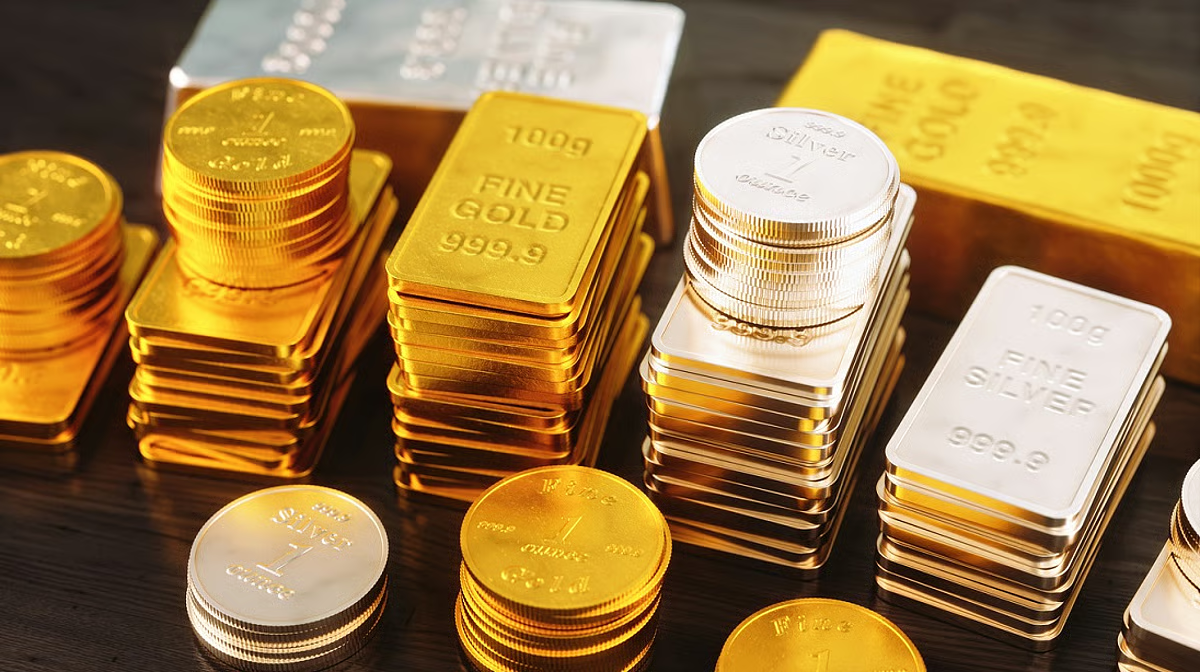
India, being the second-largest consumer of gold and the largest consumer of silver, is facing a significant impact from the global dynamics of precious metals. Gold and silver prices have been exceptionally volatile, with upward momentum in recent times. The record-breaking prices are no longer driven solely by speculation, but by major changes in the global economy. The rising global uncertainty, monetary easing, currency realignments, supply constraints, and industrial transformations have direct impacts on the emerging markets. These factors surge the demand for gold, due to its traditional functions as a safe-haven asset and a store of value. Silver, while sharing some safe-haven characteristics, is increasingly driven by industrial demand. The global energy transition has sharply increased silver consumption in solar photovoltaic panels, electric vehicles, electronics, data centres, and advanced manufacturing. It amplifies price cycles during the periods of substantial industrial expansion. Investment flows also play an important role. Large inflows into exchange-traded funds (ETFs), speculative positioning in futures markets, and central bank accumulation of gold reserves reinforce upward price pressures. India is heavily dependent on imports for both gold and silver. Even if global prices stabilise, a depreciating rupee increases domestic bullion prices, affecting affordability and demand. Gold imports alone account for a significant share of India’s merchandise import bill, contributing to the country’s current account deficit. When global prices rise sharply, the value of imports increases even if physical volumes decline. Silver imports have also risen due to growing industrial demand, particularly from the renewable energy and electronics sectors.
Domestic demand patterns further shape the transmission mechanism. Indian households view gold not merely as jewellery but as a savings instrument, a hedge against inflation, and an intergenerational asset. Silver plays a dual role as a traditional savings metal in rural households and a critical industrial input. Consequently, global price shocks influence consumption behaviour, savings allocation, investment decisions, and production costs across multiple sectors.
Impact on different stakeholders
Households: While higher prices may reduce volume purchases, they also increase the perceived wealth of existing holders, who are increasingly shifting towards gold ETFs, digital gold, and coins as substitutes for traditional jewellery. However, high prices may exacerbate inequality in access to physical assets and discourage first-time buyers.
Retailers: Organised retailers benefit from stronger branding, hedging mechanisms, and financial access, whereas small retailers face greater vulnerability. Volume growth may slow even as nominal revenues rise due to higher ticket prices.
Industrial sectors: Higher input costs may reduce competitiveness, increase final product prices, or slow capacity expansion. It creates a policy tension for India’s clean energy transition: while renewable deployment requires silver-intensive technologies, rising silver prices increase project costs and financing requirements.
Financial sector and investors: Banks and non-bank financial institutions benefit from higher collateral values in gold-backed lending. However, excessive concentration of household savings in bullion can reduce financial intermediation into productive investments.
External sector and macroeconomic stability: Higher bullion imports widen the trade deficit and place pressure on foreign exchange reserves. Persistent import dependence increases vulnerability to global price shocks and currency volatility. At the macro level, inflation in precious metals may spill over into consumer inflation expectations, influencing monetary policy dynamics.
Government and policy institutions: The government faces competing objectives: protecting consumers, maintaining external stability, supporting industrial competitiveness, and managing fiscal revenues from customs duties. Sudden price swings complicate taxation policy and market regulation.
Policy measures and leveraging opportunities
To reduce the economic risk of such dynamics, policies should be moulded in such a manner that they encourage gold monetisation schemes, sovereign gold bonds, and digital trading platforms to channel household savings into productive investments. Additionally, to reduce import dependence, organised recycling of gold and silver should be promoted. Long-term import contracts and sourcing diversification should be encouraged to reduce exposure to global disruptions.
Amidst the distress, the rising prices of gold and silver present several opportunities for the Indian economy. The increasing prices create a positive wealth effect on the households holding these metals, stimulating domestic demand and consumption. It is also promoting financial market deepening through growth in gold loan markets. The increasing industrial demand for silver presents an opportunity to process domestic silver ores, further adding value within the country in terms of sustainability, employment creation, and income generation.