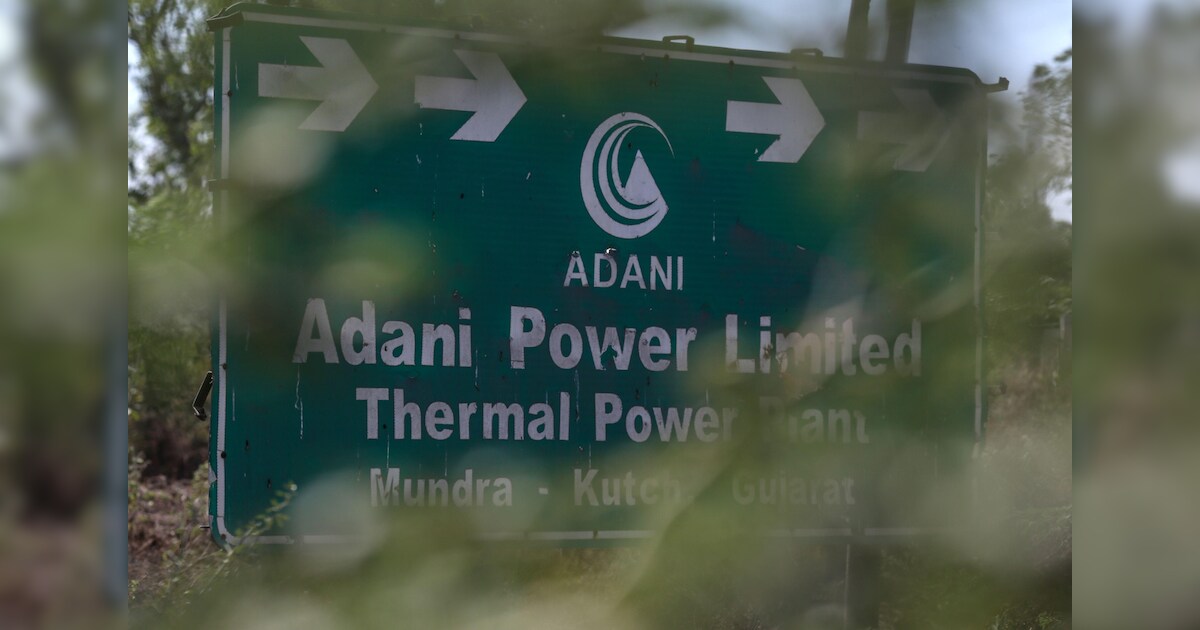
The Supreme Court on Monday held that customs duty cannot be levied on electricity supplied from a Special Economic Zone (SEZ) to the domestic market, upholding Adani Power’s appeal against a 2019 judgment of the Gujarat High Court, which had denied relief to the company on the levy of customs duty on electricity supplied from its Mundra SEZ unit to the domestic tariff area (DTA).
A bench comprising Justices Aravind Kumar and NV Anjaria held that the customs department lacked statutory authority to impose duty on electrical energy cleared from the SEZ to the DTA. While detailed reasons are awaited, the court ruled that the levy had no valid charging event under the Customs Act, 1962, and could not be sustained merely on the basis of executive notifications.
The dispute centred on electricity generated by Adani Power at its coal-based thermal plant within the Mundra SEZ, where the company operates as a co-developer. Power generated at the facility is supplied both within the SEZ and to distribution companies in Gujarat and other states.
The controversy arose after customs authorities sought to levy duty on electricity supplied from the SEZ to the DTA, even though electricity imported into India from abroad attracts no such duty. In an earlier round of litigation, the Gujarat High Court in July 2015 had struck down part of the levy framework and held that Adani Power was entitled to exemption from customs duty on SEZ-to-DTA electricity supplies for a limited period between June 2009 and September 2010.
That ruling was allowed to stand after the Supreme Court declined to interfere.
However, when Adani returned to the High Court seeking similar relief for periods beyond September 2010, the court rejected the plea in June 2019, holding that the benefit could not be extended beyond the earlier time window and that later levy regimes had not been directly challenged.
The Supreme Court has now overturned that approach, holding that the absence of statutory authority could not be cured through procedural limitations.
According to Anshuman Chowdhury, advocate at the Delhi High Court, the Supreme Court has categorically ruled that “in the absence of a taxable event under Section 12 of the Customs Act or Section 30 of the SEZ Act, customs duty cannot be levied by issuing administrative circulars or rate notifications”.
He added that the decision reinforces the constitutional mandate under Article 265 that no tax can be imposed without authority of law, and aligns with the settled principle that fiscal statutes must be strictly construed.
The court found that while the department had relied on executive notifications issued in 2010 to prescribe rates of duty, the parent statute did not contemplate the levy of customs duty on electricity generated within Indian territory and supplied to the domestic market.
Subordinate legislation, the bench held, cannot create a tax liability where the charging provision itself does not apply. On this basis, the court set aside the 2019 Gujarat High Court judgment and ordered a refund of duties collected without authority.
Commenting on the wider significance, Shri Venkatesh, founding partner at SKV Law Offices, said the ruling goes beyond the facts of Adani Power’s case and underscores the discipline expected of constitutional courts in following settled law.
He noted that the 2015 Gujarat High Court judgment was not a time-bound exemption but a declaration that customs duty on electricity cleared from an SEZ to the DTA lacked legal authority altogether.
“Once a declaration of law has been rendered, a subsequent bench cannot narrow it by treating it as discretionary relief tied to specific dates,” Venkatesh said, adding that if doubt existed, the issue ought to have been referred to a larger bench.
By restoring doctrinal continuity, he said, the Supreme Court has reinforced legal certainty, an essential element for commercial decision-making, regulatory compliance and confidence in fiscal adjudication.
Explaining the broader implications, Supreme Court advocate-on-record B Shravanth Shanker said the judgment clarifies that the constitutional infirmity identified in 2015 could not be artificially confined to a limited period. “Section 12 of the Customs Act levies duty only on goods imported into India, a condition not satisfied by electricity generated within an SEZ,” he said, adding that differential taxation between imported electricity and SEZ-generated electricity supplied to the same domestic market would offend Article 14.
Shanker noted that the ruling could expose the government to substantial refund claims for duties collected over more than a decade, along with statutory interest, while prospectively removing a recurring cost from Adani Power’s domestic sales. He added that the decision also signals heightened judicial scrutiny of subordinate tax legislation and limits the executive’s ability to impose fiscal burdens without a clear parliamentary mandate.
Beyond Adani Power, Shanker said the decision is likely to have wider implications for SEZ units supplying goods or services to the domestic market, reinforcing that procedural doctrines cannot dilute substantive constitutional protections in fiscal matters and potentially reshaping the commercial dynamics of the SEZ regime.