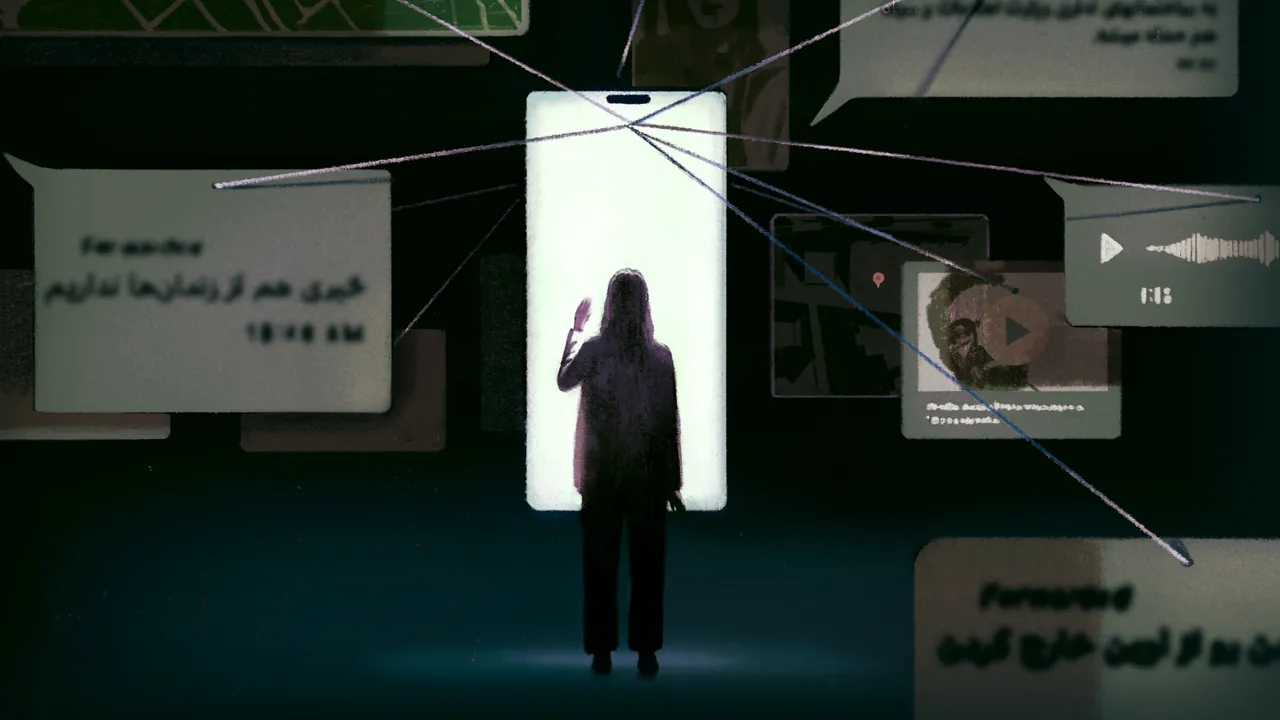
Shailin and her siblings come from a family of dissidents who have long hoped to see the government fall. But she was enraged by the U.S. and Israel’s military campaign, which had wedged her relatives in Iran between autocracy and possible death. If her family left their houses to search for her brother, they risked encountering air strikes that were now “destroying our oil, our water, and our neighborhoods,” Shailin told me. She called Trump and the Israeli Prime Minister Benjamin Netanyahu “manipulators” who have “no interest in changing the regime” in Iran. (In a speech on Wednesday night, Trump said as much, claiming, “regime change was not our goal. We never said regime change,” though he added that regime change was a by-product of his operation in Iran.) “This is not the war we wanted,” Shailin said. “This is just some new hell.”
As Trump threatens to bomb Iran “back to the Stone Age,” many Iranians are still grappling with the human consequences of the protests that occurred before the war, which pushed the Islamic Republic toward a political precipice. The regime ruthlessly cracked down on hundreds of thousands of demonstrators who emerged in the streets in late December and early January. No one knows exactly how many protesters were killed, but estimates range from seven thousand to thirty thousand. Even more were arrested: as many as fifty thousand people are thought to be held in facilities across the country, many after receiving harsh sentences in court proceedings that were closed to the public. Some of those prisoners have since been transferred to new locations, making it harder for their families to find them, let alone advocate for them.
Prisoners have been moved because of staffing, food, and capacity shortages at the facilities where they were being held. There’s also the potential of the jails themselves becoming military targets: last June, during the Twelve-Day War, Israeli air strikes hit Evin Prison, killing roughly eighty people, including detainees, visiting family members, and prison staff. Security officers forced the remaining prisoners to walk, shackled and at gunpoint, through a “tunnel of horror” to an undisclosed location, according to Mehdi Mahmoudian, a screenwriter and activist who was previously imprisoned at Evin, with whom I spoke last month. He later wrote that he felt “caught between the claws of foreign beasts and domestic torturers being passed from one to another.”
Since the bombardment in March, prisoners have been moved to military zones, police facilities, safe houses, and other jails that have been damaged by air strikes, too, according to human-rights groups and relatives of prisoners. Families like the Asadollahis were also fearful that the regime would use the U.S.-Israeli assault as a pretext to abuse or kill their loved ones under the cover of war. “Prisoners are in real danger of being routinely executed in this darkness,” Hadi Ghaemi, the director of the Center for Human Rights in Iran, told me. In March, a group of detainees were shot and killed by guards at a prison in Sistan-Baluchestan, an impoverished province in southeast Iran, after they protested the living conditions in their wards. That same month, in the city of Qom, Iranian authorities hanged three men who were accused of killing police officers during the nationwide protests. These executions “crossed a critical threshold,” according to a statement from the United Nations, which noted that these were the first Iranians to be hanged in connection with the demonstrations. “We are afraid they will not be the last,” the statement read.
The Islamic Republic has also been doubling down on propaganda, and enlisting its supporters—including soldiers, their families, and children as young as twelve years old—to come out and “occupy the enemy within, so that it doesn’t have a chance to mobilize,” Ghaemi said. “They’re telling their base that they are fighting two wars—one is against foreign aggression, and the other at home, against protesters in the streets.” In a recent television interview, Iran’s police chief, Ahmadreza Radan, warned that, “from now on, if someone acts at the enemy’s behest, we will no longer consider them protesters or anything of the sort. We will regard them as the enemy.” Shortly after, the Islamic Revolutionary Guards Corps (I.R.G.C.) said that any future protests would be met with an even “harsher blow” than before. Ghaemi said that this language was reminiscent of the propaganda that helped fuel and justify other historic atrocities, such as the massacres in Myanmar or Rwanda. “The regime is making it clear that any dissident, protester, or anyone else who is not with them will soon get their wrath,” he said. “It is deeply worrying.”