
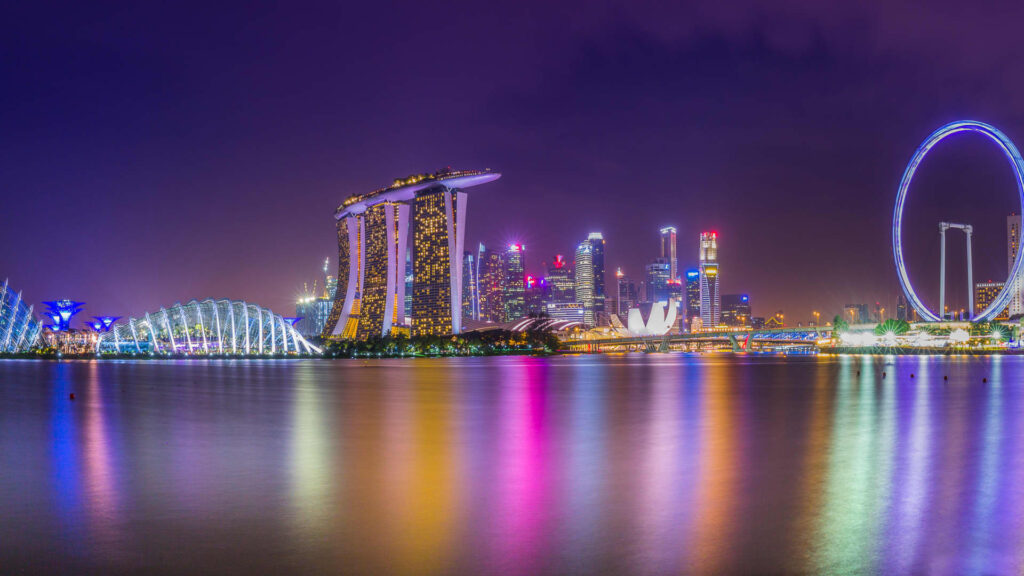
Singapore tops the list in the 2025 Global Talent Competitiveness Index by INSEAD and Portulans Institute.
Calvin Chan Wai Meng | E+ | Getty Images
Singapore’s economy expanded 5.7% year on year for the fourth quarter, the highest since 2021, driven mainly by a sharp increase in manufacturing output during the three months through December.
The Ministry of Trade and Industry said that Singapore’s manufacturing sector posted a 15% expansion, a massive jump compared to the 4.9% growth in the third quarter.
Growth during the quarter was largely driven by the biomedical manufacturing and electronics clusters, the ministry said.
Manufacturing makes up about 20% of the city-state’s GDP.
Most other sectors contracted during the quarter, including construction and services.
The advance estimate was higher than the revised 4.3% growth in the previous quarter, lifting full-year GDP growth to 4.8%, as announced by Prime Minister Lawrence Wong in his New Year’s message.
The 4.8% growth had surpassed the country’s Ministry of Trade and Industry’s upgraded forecast of “around 4%” in November.
“This is a better outcome than we expected, given the circumstances,” Wong said, while warning that sustaining the current pace of growth would be challenging.
Singapore’s MTI had forecast a GDP growth figure of about 1%-3% for 2026.
Selena Ling, Chief Economist & Head of Group Research & Strategy at OCBC, said that Singapore’s GDP performance “showcased economic resilience through broad-based and diversified strengths in manufacturing, services, and construction.”
Ling projected GDP growth of about 2% in 2026, assuming manufacturing growth eases to around 2.2% year on year due to a high base in 2025.
Singapore had earlier cautioned that 2025 would be challenging, citing trade risks after U.S. President Donald Trump’s administration slapped trade tariffs on dozens of countries in his “Liberation Day” on April.
Despite having a free trade agreement with the U.S. since 2004, Singapore was hit with the 10% baseline tariff. Wong said at the time that “these are not actions one does to a friend.”
Singapore is highly dependent on trade, with its trade-to-GDP ratio exceeding 320% in 2024, according to data from the World Bank.
The country also warned in April last year that zero growth was a possibility and eased monetary policy twice in 2025 to prepare for a slowdown.