
The climate fiction movie , released in 2004, popularised the devastating effects of sudden climate change on planet Earth. The plot dramatises the consequences of a shut-down in an ocean current, and features the Northern Hemisphere plunging, within a few weeks, into an ice age.
The lead character, palaeoclimatologist Jack Hall, uncovers the risk by analysing data revealed in deeply drilled polar ice cores. His warnings are ignored by the US vice-president, and climate chaos ensues.
The ocean current in the movie exists in reality. The Atlantic Meridional Overturning Circulation (AMOC) is a powerful ocean circulation system that transports heat and salt between the tropics and the North Atlantic and cold, dense, CO2-rich water southwards through the deep ocean. It influences the climate of both northern and southern hemispheres immensely but in opposite ways. When functioning, the current cools the southern and warms the northern hemisphere. When it slows or fails completely, it .
Twenty years since the blockbuster movie’s release, recent suggests that the rate of AMOC slow-down, which presages a shut-down, is increasing, and could weaken sooner than previously estimated. This challenges the Intergovernmental Panel on Climate Change’s widely adopted assessment of this risk as low.
What are the stakes for Africa?
Research done on the climate of the deep past, using ice-core-derived evidence and simulation modelling, shows that the Atlantic Meridional Overturning Circulation slowed quite suddenly about . This happened when a flood of fresh water from melting North American ice caps entered the North Atlantic and collapsed its salinity. The resulting circulation shutdown caused an abrupt extended cooling of Europe as the heat transport of the Gulf Stream slowed. This trapped heat in the Southern Hemisphere warmed southern Africa by .
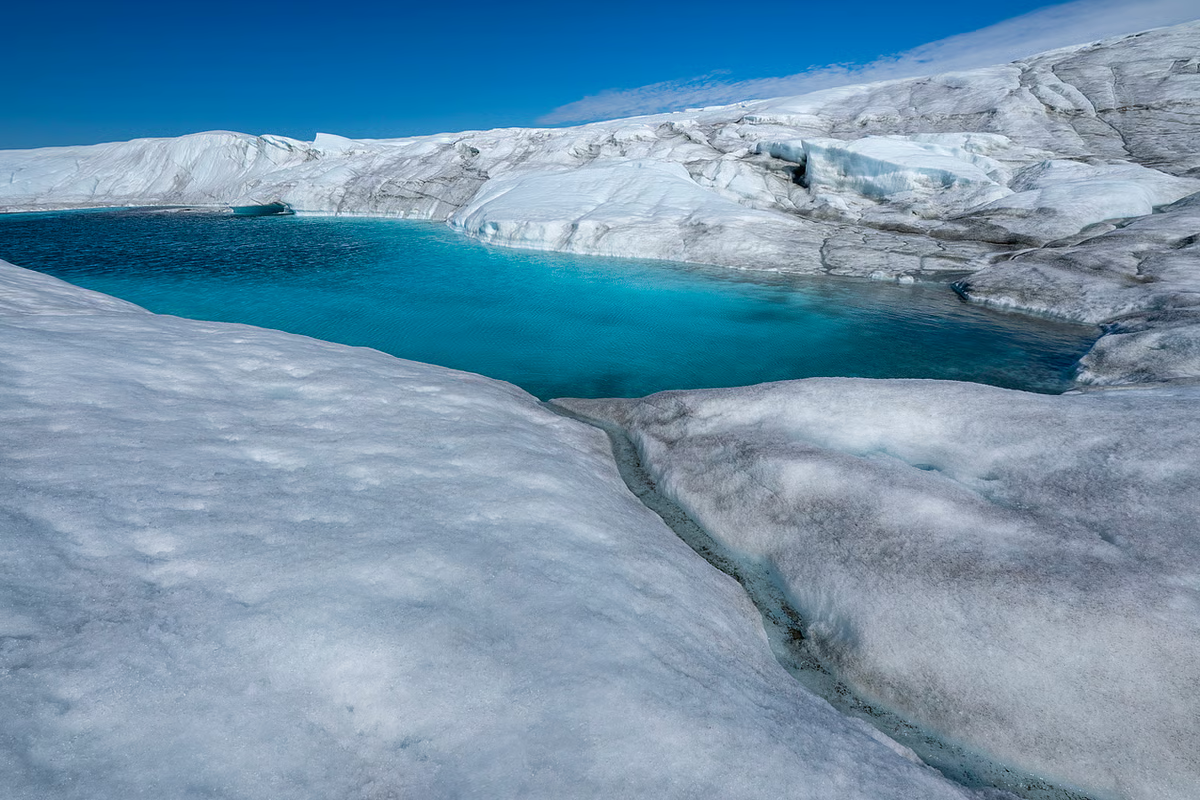
The freshening of the North Atlantic is occurring again, driven by Greenland meltwaters, and the slowing speed of the AMOC .
For southern Africa, this has at least two implications.
One, the stability of the southern African climate is intimately linked to the AMOC. This is because the Agulhas current is a bottleneck of the global ocean heat transport system and has a major influence in regional climate. For South Africa, regional warming will increase; heat, rainfall and storm extremes will intensify; and local to regional ecological and socio-economic tipping points could be triggered. The rich endemic biodiversity of the country’s western and southern Cape would be threatened.
Another implication is that, because of this, South Africa is one of the best global locations to observe, study and predict changes in the system. A South African study programme would strengthen capacity to inform the region and the world about this evolving risk and strengthen the global effects of the country’s science.
In western Europe, shutting down of the circulation system would result in sharp cooling and drying. This would reduce crop yields and disrupt economic activity.
Reliable measurement of this circulation and early warning of weakening, is thus of immense value.
As scientists with a longstanding focus on the role of the ocean and the land in climate change, we are concerned about the potentially damaging consequences of a weakening circulation system for ecosystems and human societies. We think that this is a blind spot in African science strategy and climate policy. We also suggest there is a need for a more responsive process to update regionally relevant climate change panel findings between global assessment cycles (which only take place every seven years).
South African scientists have the capacity, skills and expertise to roll out a research programme with global impact (to monitor key metrics) relating to the AMOC in the Southern Ocean and around south-western African offshore regions. This would help ensure that the most informed science is represented within an updated international consensus and in South African climate mitigation and adaptation planning.
The recent presents evidence that the AMOC may cross a tipping point this century that ensures an ultimate shutdown after 2100, even under the most optimistic emissions scenarios. This challenges the . But the next report will take three years to complete, leaving policy makers largely unaware of any shift in the balance of evidence.
The Organisation for Economic Co-operation and Development has of the risks for tipping points, of which the AMOC is one example, stating that: