
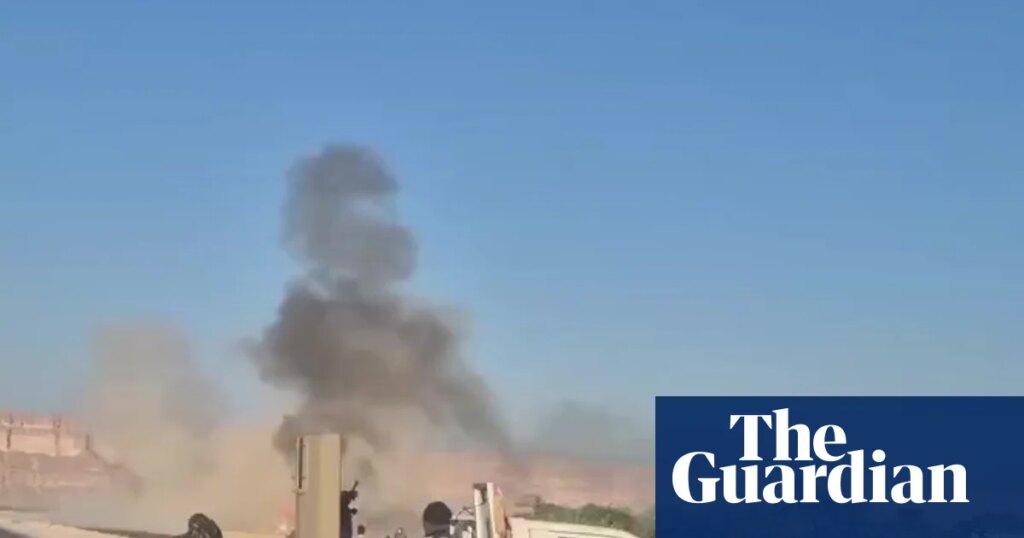
A separatist group in southern Yemen that this month seized two oil-rich provinces has claimed that Saudi Arabia fired warning airstrikes directed at its forces.
Videos issued on Friday by media linked to the United Arab Emirates-backed Southern Transitional Council (STC) showed airstrikes that it said were close to its positions in Wadi Nahab, Hadramaut province.
The strikes – which were not independently confirmed – would be the first military step by Saudi Arabia since it made a diplomatic appeal last Thursday urging the separatist forces to relinquish newly captured Hadramaut and al-Mahra.
Amr al-Bidh, a foreign affairs special representative for the STC, said in a statement to the Associated Press that airstrikes came after its fighters in eastern Hadramaut were involved in ambushes that left two dead. Officials in Saudi Arabia have not so far commented.
Two weeks ago, the STC – a longstanding voice calling for Yemen to return to the pre-1990 settlement of a Yemen divided into north and south – entered the two large, oil-rich provinces in the south not yet under its control.
The capture of the huge governorates of Hadramaut and al-Mahra, the province bordering Oman, occurred without much sign of resistance, as the Hadramaut forces retreated in the face of well-armed STC troops.
Since then, the Saudi-backed and UN-recognised elements in Yemen’s divided southern government have been trying to mount a political and diplomatic counteroffensive against “STC unilateralism”, arguing that there is no support across the south for the STC’s call for separation from the north.
European countries and Gulf states such as Kuwait and Qatar, as well as the Arab League secretary general, Ahmed Aboul Gheit, have called for Yemen to remain a unified country – backing the Saudi position – but the US has said little so far.
Europe has voiced concerns that fractures within the south would divert energy away from the struggle to oust the Houthis, who have run the north of Yemen since 2015, including the former capital, Sana’a.
The STC said the UN-recognised government had done little to take the battle to the Houthis, and that a separated, cohesive south would be a more effective bulwark against the Iranian-backed Houthis, and would be better equipped to protect the ports along Yemen’s southern coast.
There were demonstrations on Thursday in the south-western port city of Aden calling for the STC president, Aidarous al-Zubaidi, to declare independence, a step he is considering.
On Thursday, the Saudi ministry of foreign affairs issued a conciliatory but firm statement calling for the STC to withdraw and to reopen negotiations with the remnants of the UN-recognised government. Riyadh said unilateral acts harmed the integrity of Yemen, and it insisted it “had prioritised preserving unity and making every effort to reach peaceful solutions to resolve the situation in both governorates”.
It added: “The kingdom remains hopeful that the public interest will prevail through ending the escalation by the Southern Transitional Council and the withdrawal of its forces from the two governorates in an urgent and orderly manner. The kingdom stresses the importance of cooperation among all Yemeni factions and components to exercise restraint and avoid any measures that could destabilise security and stability, which may result in undesirable consequences.”
In response, the UAE put out a brief statement commending Saudi Arabia’s role “in serving the interests of the Yemeni people and fulfilling their legitimate aspirations for stability and prosperity”.
It did not endorse the call for the STC to withdraw, but private discussions over the political preconditions necessary for a withdrawal have been held.
Most observers do not believe the STC could survive without UAE military and political endorsement. If the UAE does not, publicly or privately, withdraw its reassurances to back the STC, then the UAE and Saudi Arabia face a major confrontation.