
I love playing video games, but what interests me most as a journalist are the ways in which games intersect with real life. One of the joys of spending 20 years on this beat has been meeting hundreds of people whose lives have been meaningfully enhanced by games, and as their cultural influence has grown, these stories have become more and more plentiful.
There is another side to this, however. A couple of decades ago, video games were mostly either ignored or vilified by governments and mainstream culture, leading to an underdog mentality that has persisted even as games have become a nearly $200bn industry. As their popularity has grown, so have their political and cultural relevance. And the ways in which games intersect with real life are now coloured by the economic and political realities of our times.
When I look back on this year’s happenings in the world of games, I see a lot of positives. A theme of the past few years has been comparatively small-scale games outperforming expensive blockbusters: the best examples this year have been the now multi-award-winning Clair Obscur: Expedition 33, and Hollow Knight: Silksong, which has sold seven million copies. Despite year-long discussions over the finer points of what counts as “indie” and how many people really contribute to games made by “tiny” teams – a lot of them use contractors, who deserve to be acknowledged – the point remains that it is very possible to make brilliant and creative games to extremely high standards without a $100m budget, and that is something to be celebrated.
The Nintendo Switch 2 was also (finally) announced and released this year, and has been very well received despite Trump’s best efforts to scupper its launch with tariff drama. Having a new console to enjoy tends to revive one’s enthusiasm for games, and though the Switch 2 didn’t feel enormously different from the original Switch, when I go back to my old machine now I really feel the difference.
But the broader story of 2025 is of a games industry reckoning with the same late-capitalist, techno-feudalistic forces that are threatening every creative industry. Wealth continues to concentrate at the top, while workers continue to face huge instability: more than 5,000 games industry jobs have been lost this year, and have several studios, including Monolith Productions. AI disruption is everywhere, meanwhile, as companies try to force their workforces to justify immense investments in the as-yet-unprofitable technology. AI-generated artwork and voiceovers have made their way into some of this year’s more successful games, and the pushback has been vociferous.
All this has led to much greater visibility for video game workers’ unions. In March, United Videogame Workers formed in the US and Canada, part of the Communications Workers of America. (They could be found protesting outside the Game Awards earlier this month.) In the UK, the firing of 30 staff from Rockstar Games pushed the UK’s IWGB Game Workers Union into the spotlight. Unionisation is slowly becoming more common even in the US, where there is not a strong culture of workplace organisation.
Another theme of the past few years has been consolidation: when Microsoft acquired Activision in 2023, it made me feel very uneasy about the concentration of economic power. Meanwhile, Saudi Arabia’s Public Investment Fund (PIF) has been buying its way into the games industry for years via esports partnerships and companies such as Savvy Games Group and Scopely, but this year it was kicked into high gear by a $55bn deal for EA. The Saudis also bought Niantic, makers of Pokémon Go, in March. (If you are wondering why the PIF is quite so ethically troubling, and how these video game investments form part of a strategy to whitewash the country’s image and that of its royal family, Eurogamer’s interview with Human Rights Watch from earlier this year is an essential read.)
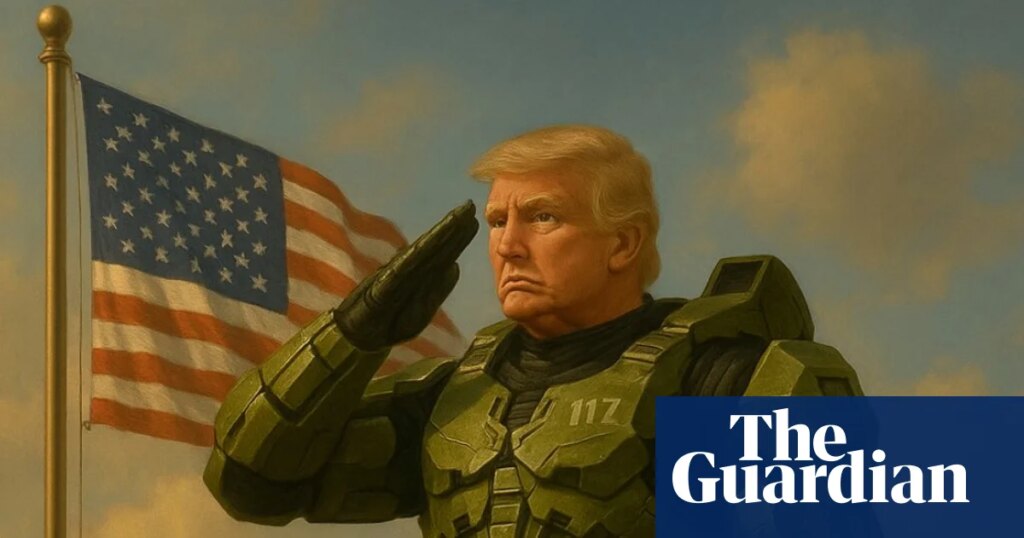
What we see here is money and power concentrating in the video game world in the same way as in the wider world. And games have immense power to influence people’s thoughts and attitudes: the most powerful people in the world have started to realise this. (Even Elon Musk sees the value of appropriating game credibility: he was discovered to be a fake gamer in January after boasting about his Path of Exile 2 character online.) Why else would the Trump administration be tweeting AI-generated images of the president as Halo’s Master Chief? Or using Pokémon and Halo memes to recruit for ICE? Why else would rightwing agitators continue to feed culture war spats over a black samurai in Assassin’s Creed, or a non-binary actor in a PlayStation game?
I don’t pretend to be neutral on any of these things. Earlier this year, after I wrote about the Saudi acquisition of EA, I got an email from a reader asking if “some of this stuff is more editorial opinion rather than fact/news”. The answer to that is: it’s both. I will never report anything here that isn’t true, but I also won’t shy away from delivering my informed opinion on the things that go on in the gaming world. Unsurprisingly for a Guardian journalist, my values are inclusive, left-leaning and somewhat sceptical of corporate power, and of course that informs what I write in Pushing Buttons. I think that those values are vital context in these times.
Playing games is something a lot of us do for escapism, and a lot of people still react defensively if you talk about their relevance to real-world politics. Don’t we play games to get away from this stuff? Can’t we just concentrate on the hundreds of fantastic games that come out every single year, from creatively fired-up developers and artists all over the world? But games are inextricable from what’s happening in the real world. All art is. As if to symbolise this, this year’s Summer Game Fest – a showcase of forthcoming games held in LA in June – was interrupted by city-wide LA protests against ICE.
It matters, who has power. Games feel so exciting because they often give so much power to their players, to carve their own paths though their worlds. As players we leave an impression on games, and they leave an impression on us. In an ideal world, players and developers would be the people who held the power in the video games industry, too. If we enjoy video games, it is worth keeping an eye on the biggest players.