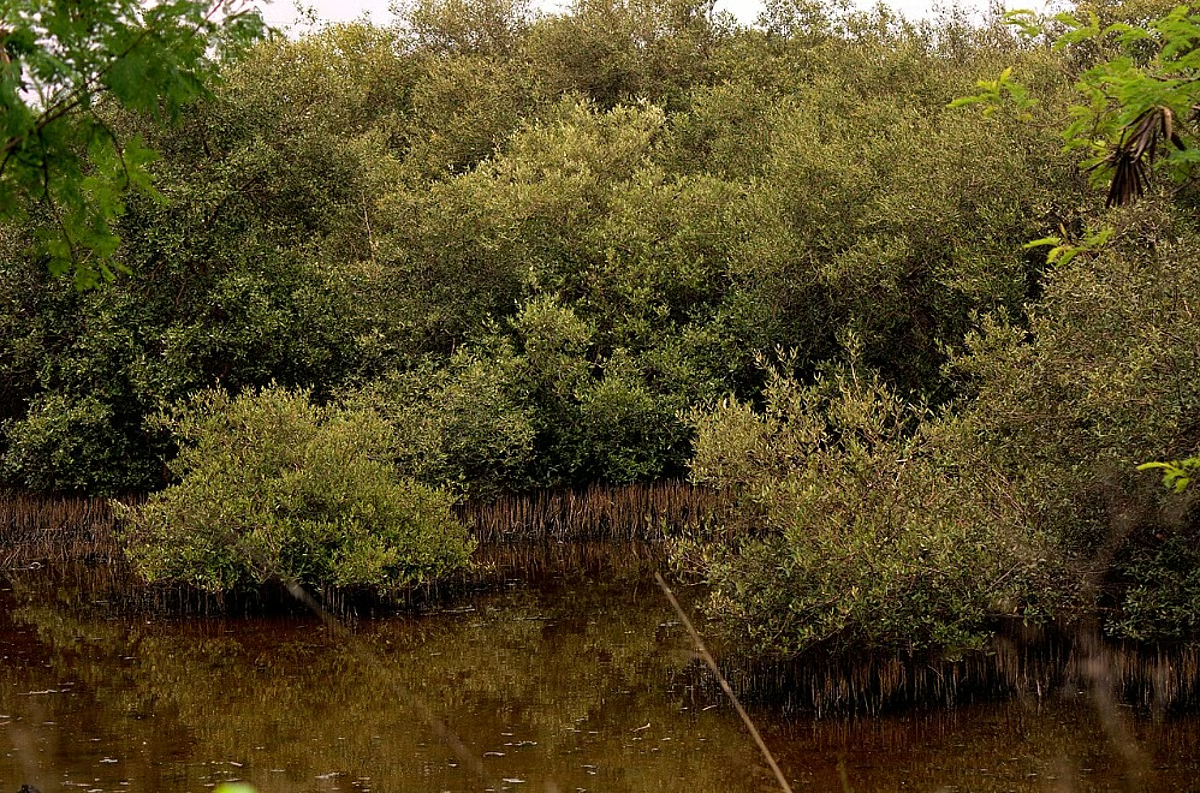
Debi Goenka, often termed ‘Mumbai’s mangrove man’, has expressed disappointment at the March 20 decision of the Supreme Court to allow Mumbai’s civic body to cut thousands of mangroves for a key road project in the north of the city.
“I am disappointed by the approach of the High Court, Supreme Court and the petitioners in the Supreme Court,” Goenka told Down To Earth on the phone from Mumbai. “There were many other issues that should have been raised and can still be raised,” he added.
The question, said Goenka, was would it have been possible to minimise the damage to the mangroves by choosing another alignment. Could a coastal road have been substituted by a tunnel or an elevated road (like the Eastern Expressway in Mumbai)? “None of these options have been explored,” said Goenka.
The long-time crusader, who has successfully fought a three-decade legal battle to protect Maharashtra’s mangrove forests, added that while the project has been projected as one that would reduce traffic congestion in Mumbai, it would do nothing of the sort.
March 20 decision
On March 20, the apex court in the national capital gave the go-ahead to Mumbai’s civic body, the Brihanmumbai Municipal Corporation (BMC), to cut thousands of mangroves for the proposed Rs 18,263-crore Versova-Bhayandar coastal road project in north Mumbai.
The proposed project seeks to extend the coastal road from Nariman Point to Bandra and the under-construction sea link between Bandra and Versova.
According to the BMC, once completed, the Versova-Bhayandar coastal road will reduce travel time between Versova and Mira Bhayandar from nearly two hours to less than 20 minutes. It will also cut the distance by 10 km to 23.2 km from 33.6 km, a report by the Economic Times noted.
The apex court, while taking the decision, dismissed an appeal by non-government organisation Vanashakti against the Bombay High Court’s December 12 order clearing the project.
The SC bench of Chief Justice of India Surya Kant and justices Joymalya Bagchi and Vipul M Pancholi said the road would have a ‘significant and beneficial impact’ on by easing congestion on the western highway in northern Mumbai.
It added that there will be other significant advantages for the residents of Mumbai due to the construction of the road,” it said.
The apex court also directed the civic body to submit annual reports to the high court about the extent of compensatory afforestation and the restoration of mangroves.
According to media reports, over 45,000 mangroves will be cut as part of the project to build the road.