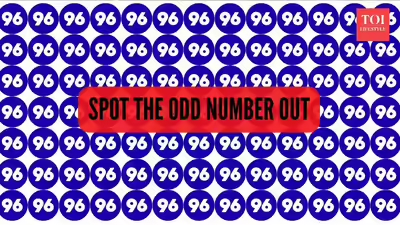
Ready to challenge your brain and your eyes at the same time? This optical illusion and IQ-style test is designed to check how sharp your observation skills really are. It looks easy at first, but many people miss the answer within seconds. That is what makes this challenge so interesting.The task is simple. A group of numbers is placed together in a neat pattern. Almost all of them are “96.” Hidden among them is one odd number: an inverted “98.” The twist is that you only get 5 seconds to spot it. Sounds easy? Most people think so too, until the timer starts.At first, “96” and “98” look almost the same. The shapes of the numbers are very similar, and that is where the illusion works its magic. The brain tends to scan patterns quickly and assumes everything looks the same. Because of this, small changes often go unnoticed.
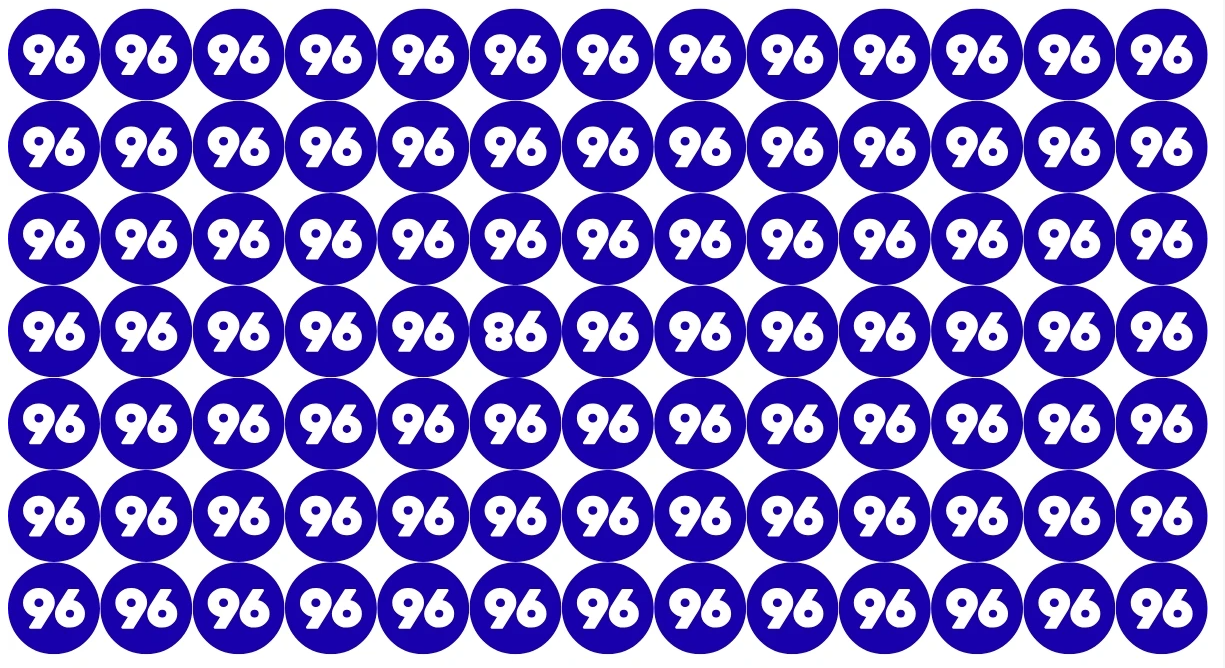
So what makes this puzzle tricky? The odd number is not just different. It is flipped upside down. That inversion confuses the eyes and slows down the brain. Instead of reading the number clearly, the brain fills in gaps and tells you that everything looks normal.This type of illusion is a fun way to test visual sharpness. People with strong eyesight and quick focus often spot the difference faster. But eyesight alone is not the only factor. Attention to detail and mental speed also play a big role.Why do such puzzles matter? They give a quick workout to the brain. Optical illusions like this one help improve visual perception. They train the eyes to notice small differences. They also push the brain to slow down and actually process what it sees, instead of rushing through patterns.Did you find the inverted “98” within 5 seconds? If yes, that is impressive. It suggests strong observation skills and quick visual processing. If not, there is no need to worry. Many people miss it on their first try. The brain simply loves shortcuts, and this puzzle takes advantage of that habit.You can try the test again by looking at the image from a different angle. Sometimes stepping back from the screen or squinting slightly helps. Another useful trick is to scan the image row by row instead of looking at it as a whole.
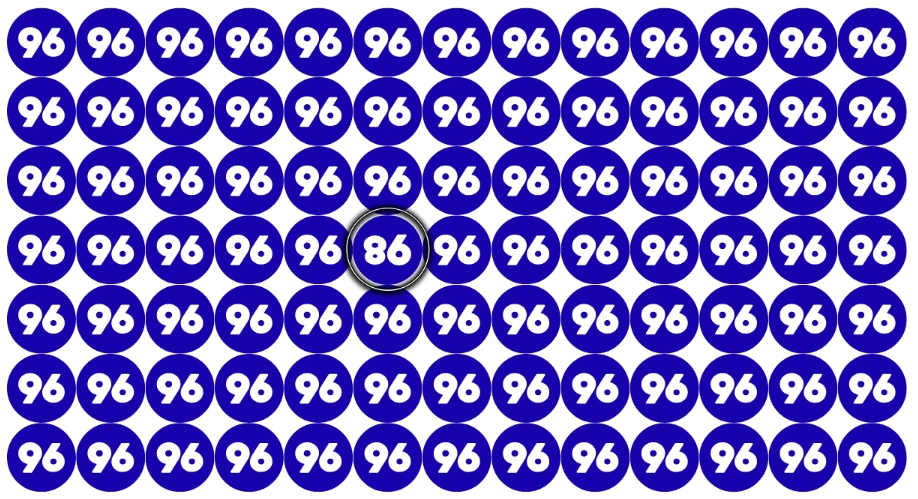
These optical illusion tests are not medical eyesight exams. They are meant for fun and mental exercise. Still, they offer insight into how the brain and eyes work together. The more such puzzles you try, the better you become at spotting hidden details.So, did your eyes pass the test? Whether you spotted the odd number instantly or needed more time, one thing is clear. A simple set of numbers can turn into a powerful brain teaser. Keep challenging your mind, because sometimes the smallest details make the biggest difference.