
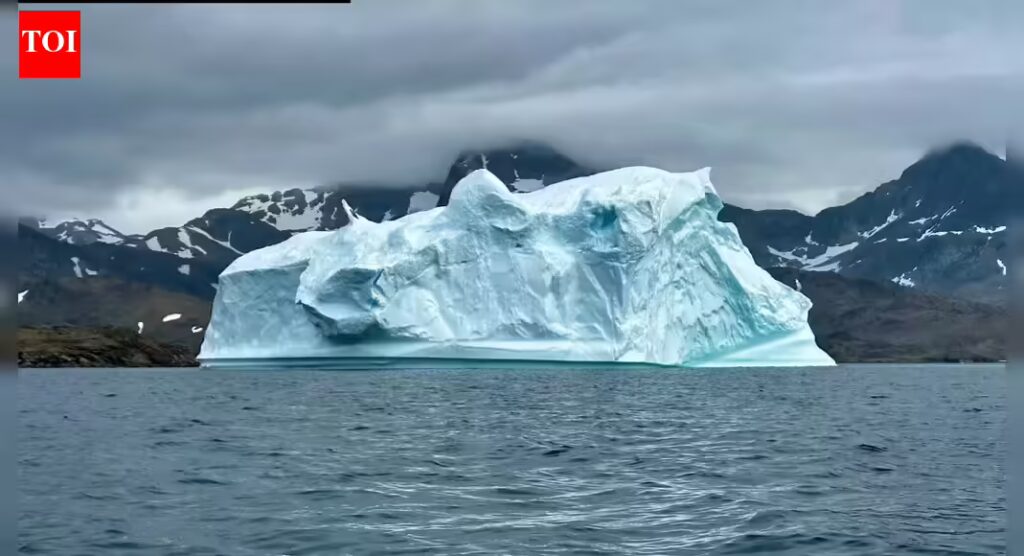
There is a moment each year when the Arctic stops reflecting light and starts holding it. It does not announce itself. Satellites notice first. Then, researchers begin to compare notes. By late summer, the ice that once covered much of the Arctic Ocean has thinned and retreated again, but this time the loss feels sharper. What disappears is not just frozen water. It is a surface that once pushed sunlight back into space. Without it, the ocean warms quietly. Scientists are watching this happen now, and many are uneasy about what it could mean for the coming winter. The concern is not limited to the Arctic. Changes there have a habit of travelling south, reshaping the weather far from the ice itself.
How much Arctic ice has already melted, and what will it lead to
This year’s melt has moved quickly. Satellite records from early summer showed sea ice extent well below recent averages. In some regions, the drop was already hundreds of thousands of square kilometres lower than last year. That matters because the melt season does not end until September. What is left by then is the ice that must survive into winter. When there is less of it, the Arctic enters the colder months at a disadvantage.Scientists are tracking not only the area but also the thickness. Much of today’s ice is younger and thinner than it once was. It breaks more easily and melts faster, even during cooler spells.
Why does ice loss warm the ocean
The National Snow and Ice Centre says sea ice acts like a pale shield. It reflects a large share of sunlight into space. Open water does the opposite. Dark ocean surfaces absorb most of the sun’s energy, storing heat near the surface.Once ice melts, that absorbed heat makes it harder for new ice to form later in the year. This creates a loop that feeds itself. Less ice leads to warmer water. Warmer water leads to even less ice. Researchers call this the albedo effect, but the idea is simple enough to see in the data.
Is the Arctic Ocean holding more heat
Yes, and not just at the surface. The upper layers of the ocean are warming steadily. Most of the excess heat from greenhouse gases ends up in the sea, not the air. In the Arctic, this stored warmth sits close to where ice forms.Even as air temperatures begin to fall in autumn, heat rising from the ocean can delay freeze-up. That delay matters. Late-forming ice tends to be thinner and weaker by spring.
What happens to the polar vortex
Above the Arctic, high in the atmosphere, a ring of fast-moving winds usually keeps cold air locked near the pole during winter. This is the polar vortex. When the Arctic is colder, the vortex tends to be stronger and more stable.As the region warms, that balance shifts. With less ice and more heat released into the atmosphere, the temperature difference between the Arctic and lower latitudes weakens. This can disrupt the vortex, causing it to stretch or wobble.
Can Arctic changes affect winter weather further south
They can, and sometimes they do. A disturbed polar vortex can bend the jet stream into deeper waves. When that happens, cold Arctic air can spill south while warmer air moves north elsewhere.Past winters offer examples. Severe cold events in Europe and North America have followed periods of low Arctic ice, especially when sudden stratospheric warming events weaken the vortex. Not every low ice year leads to extreme winter weather, but the risk appears higher.
Why are scientists watching this winter closely
Because several warning signs are lining up at once. Sea ice is low. Ocean heat is high. Atmospheric patterns look unsettled. None of these factors guarantees a harsh winter, but together they raise concern.Researchers are careful with their language. The weather is complex. Many influences compete. Still, when long-standing Arctic patterns shift quickly, the effects often show up later in the season.
What is disappearing along with the ice
What is being lost is stability. Ice once acted as a buffer between the ocean and the air. It slowed heat exchange and helped anchor weather patterns. As it vanishes, the Arctic becomes more responsive, more changeable.That change does not stay in the far north. It leaks outward, slowly and unevenly. By the time winter arrives, the consequences may already be set in motion, even if they only become obvious when the cold finally settles in.