
- Traditions that once protected sacred groves in Kerala are, in some cases, contributing to their decline.
- Sacred groves risk becoming symbolic spaces rather than functioning ecological systems.
- Reconnecting ritual practice with ecological understanding is therefore not simply a cultural concern, it is a conservation necessity.
- The views in the commentary are that of the author.
Sacred groves in Kerala are often held up as examples of how tradition can protect biodiversity. For generations, these sarpa kaavus or the traditional sacred groves, survived precisely because they were considered sacred. They were left undisturbed, protected not by law but by belief.
But that relationship is beginning to shift.
In many parts of the state, sacred groves are now being altered, reduced or lost,not only because of external pressures such as urbanisation and land-use change, but also because the very rituals meant to sustain them are increasingly being practiced without their ecological context.
At the centre of this transformation lies a difficult contradiction: traditions that once protected these landscapes are, in some cases, contributing to their decline.
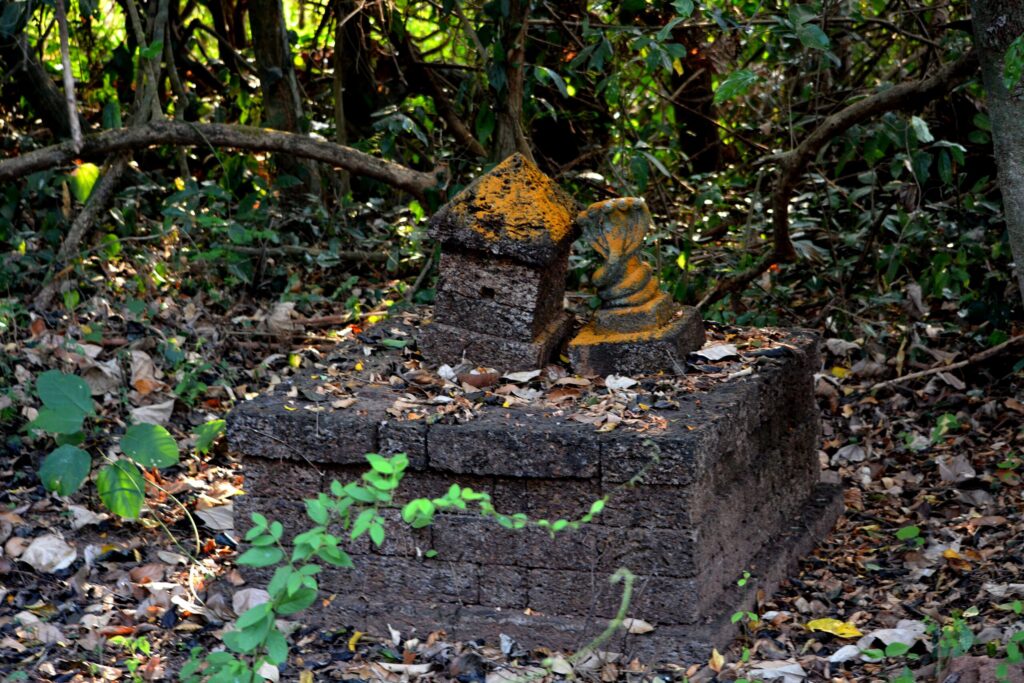
Traditionally associated with serpent worship, sarpa kaavus functioned as informal conservation spaces, preserving native vegetation, water systems and wildlife within otherwise altered landscapes. Protected by belief systems that discouraged disturbance, these groves survived for generations without formal regulation.
Yet this protection is now uneven.
One such contradiction can be seen in the practice of the ritual kaavu avahana, in which the chaitanya, or sacred essence of a grove, is ritually transferred elsewhere by a tantri (priest). Within the tradition, this is understood as a legitimate continuation of worship. However, in practice, it has often been followed by the clearing of the original grove.
Over the past few decades, this practice has increasingly intersected with changing social and economic realities. As families move away from ancestral homes, maintaining sacred groves becomes difficult. Land pressures — for agriculture, housing or land sale — further complicate the situation. In this context, avahana is sometimes used to relocate sacredness while freeing land for other uses.
This pattern is not confined to individual households. Across Kerala, many groves have been reduced, fragmented or lost under similar circumstances.
At the same time, even as the kaavu avahana ritual has taken a backseat in some communities and is increasingly discouraged by certain tantris, a parallel trend is emerging. New kaavus or groves are being established — either at the sites of older groves or in entirely new locations.
However, many of these newly created spaces are largely symbolic. Constructed with concrete and stone, they often lack the dense vegetation, water bodies and layered habitats that defined traditional groves. In ecological terms, they function more as ritual enclosures than living ecosystems.
This represents a significant missed opportunity.
The creation of new kaavus could instead be used to restore degraded landscapes, protect native plant species and recreate microhabitats that support biodiversity. Even small, well-designed groves can function as ecological refuges within increasingly urbanised or altered environments. Yet this potential remains largely unrealised.
Estimates suggest that Kerala once had thousands of sacred groves, though a significant number have declined over time due to land-use change and shifting cultural practices. The sacred groves that remain today often function as isolated ecological pockets within increasingly modified landscapes.


From an ecological perspective, their loss has wider implications. Even small groves can support disproportionately high biodiversity, including plant species, amphibians, reptiles and birds that are no longer found in surrounding areas. Their dense vegetation contributes to groundwater recharge and helps regulate local microclimates.
Snakes, central to the belief systems associated with these groves, also play a critical ecological role. By regulating rodent populations, they help maintain agricultural balance and reduce disease risks. They are also part of larger food webs, supporting predators such as raptors. Their presence signals ecological stability; their absence often indicates imbalance.
At the same time, sacred groves today exist within systems that are no longer insulated from external pressures. Increased footfall, infrastructure development, and the gradual loss of older trees are altering their structure and biodiversity.
In my husband’s ancestral home at Pathirikunnath Mana near Shornur in Palakkad district, the grove once resembled a dense, shaded ecosystem rich in birdlife and wildlife. Over time, it has become more open, reflecting a broader pattern seen across many such groves.
In 2014, our family made the decision to stop performing kaavu avahana, recognising that preserving the physical grove was more meaningful than relocating its symbolic essence. This shift reflects a growing awareness among some custodians that ritual continuity cannot come at the cost of ecological loss.
However, such decisions are not always straightforward. Like many traditional households, choices around sacred spaces are shaped not only by ritual authority but also by internal hierarchies, social expectations and economic considerations.
The question, then, is not simply whether traditions protect sacred groves, but how they are being interpreted and adapted in the present.
If sacred groves are to survive as ecological systems, their protection cannot rely on belief alone. It requires a conscious re-engagement with the meaning and function of the rituals themselves.
This is where the role of custodians becomes critical.

Tantris, astrologers and spiritual leaders continue to influence how communities understand and practice these traditions. Their interpretations shape decisions — whether to preserve a grove, to perform avahana, or to establish new kaavus.
This influence carries significant responsibility.
When rituals are practiced without reference to their ecological context, they risk becoming symbolic acts that no longer protect the systems they were once embedded in. When interpreted with awareness, however, these same practices can reinforce conservation values and guide behaviour toward protection rather than extraction.
Reconnecting ritual practice with ecological understanding is therefore not simply a cultural concern — it is a conservation necessity.
At the same time, sacred groves offer an important starting point. They demonstrate that cultural frameworks can enable long-term ecological protection — something that modern environmental governance often struggles to achieve.
The challenge lies in extending this principle into contemporary contexts.
This includes strengthening community-led conservation efforts, protecting even small patches of native vegetation, and reinterpreting ritual practices in ways that prioritise ecological continuity. It also requires conscious decisions on the part of custodians — tantris and landowners — to exercise restraint, and to actively integrate ecological restoration into the creation and management of sacred spaces.
Without such shifts, sacred groves risk becoming symbolic spaces rather than functioning ecological systems.
Ultimately, the idea of the sacred cannot remain abstract. It must translate into practice — into decisions not to clear, not to expand, and not to alter spaces that continue to sustain life.
Sacred groves in Kerala now stand at a critical intersection of belief, ecology and changing social realities.
Their future will depend not only on what they have represented in the past, but on how their meaning is understood and acted upon today.
Banner image: A sarpa kaavu in Kannur district, Kerala. Image by Manoj Karingamadathil via Wikimedia Commons (CC BY-SA 3.0).
The author is a conservation enthusiast and activist with more than 20 years of hands-on experience in initiating and preserving practices for environmental sustainability, wildlife conservation, and animal welfare causes.

