What is missing from Fidesz’s campaign is much mention of the state of Hungary. This is because the conservative Eden that Orbán claims to have created, supposedly envied by Europeans who seek its destruction, is in reality a spectacular kleptocracy cloaked by lofty sermons on “tradition.” The philosopher András Lánczi, an erstwhile adviser to Fidesz, once argued that what detractors considered corruption was “the most important policy goal of Fidesz” because it spawned “a domestic entrepreneurial class.” Now, at the end of Orban’s fourth successive term, ordinary Hungarians are being battered by a severe cost-of-living crisis. The country’s inflation rate has recently been among the highest in Europe. Young, educated Hungarians are leaving for opportunities abroad. The state of Hungary’s under-resourced health-care system is so dire that, since 2020, more than seven hundred wards have been subject to closure owing to such problems as lack of equipment and bedbug infestation. I met a coder in Budapest who told me that he was working two extra jobs—one as a taxi-driver, one as an online tutor—to save up enough money so that his pregnant wife could deliver their baby at a nonpublic hospital. “We cannot afford private health care, but I cannot risk my wife’s life to an infection,” he said. “We cannot risk our unborn child’s life.” Hungarians living near the southern frontier, where Orbán made a show of building a border fence during the refugee crisis, are travelling to Croatia to buy cheap groceries. Orbán’s Hungary is, by most credible international indices, the most corrupt, least free, and poorest member of the E.U.
Hungary under Orbán has become a haven for conservative ideologues from the United States who share its preoccupations with national identity, demographic homogeneity, and cultural conformity. Some, in exchange for gigs at the Fidesz-run enterprises, supply Orbánism its pseudo-intellectual gloss. Where will all these sciolistic refugees from woke America go if that largesse dries up? What will become of “Christian values,” national purity, and “Western civilization” once their protector has fallen?
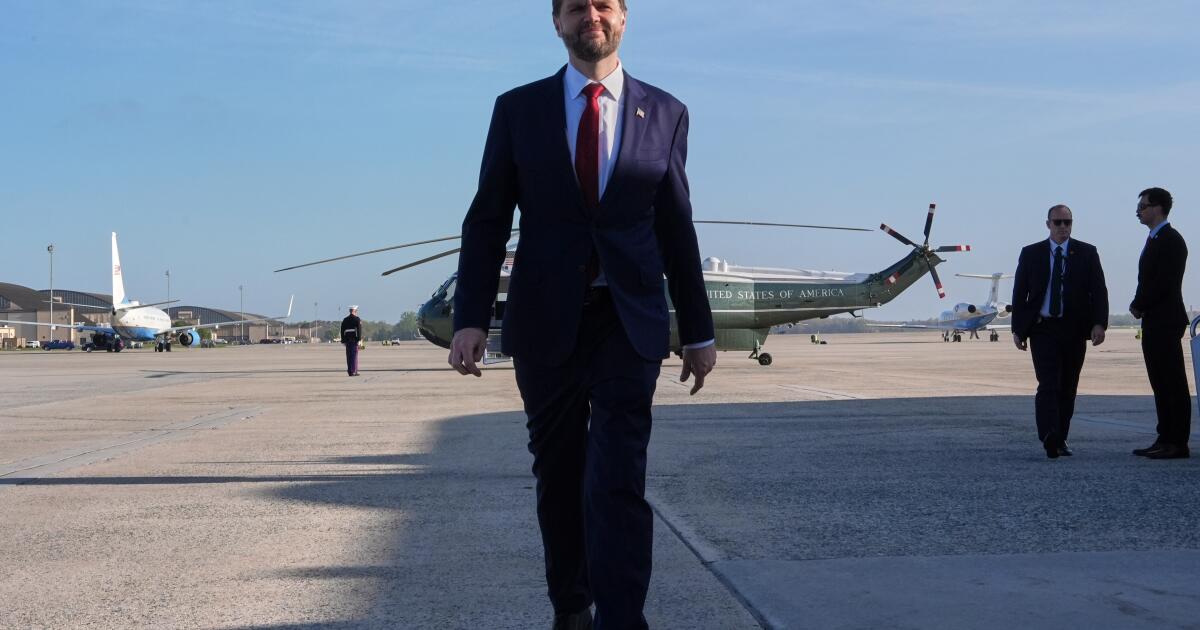
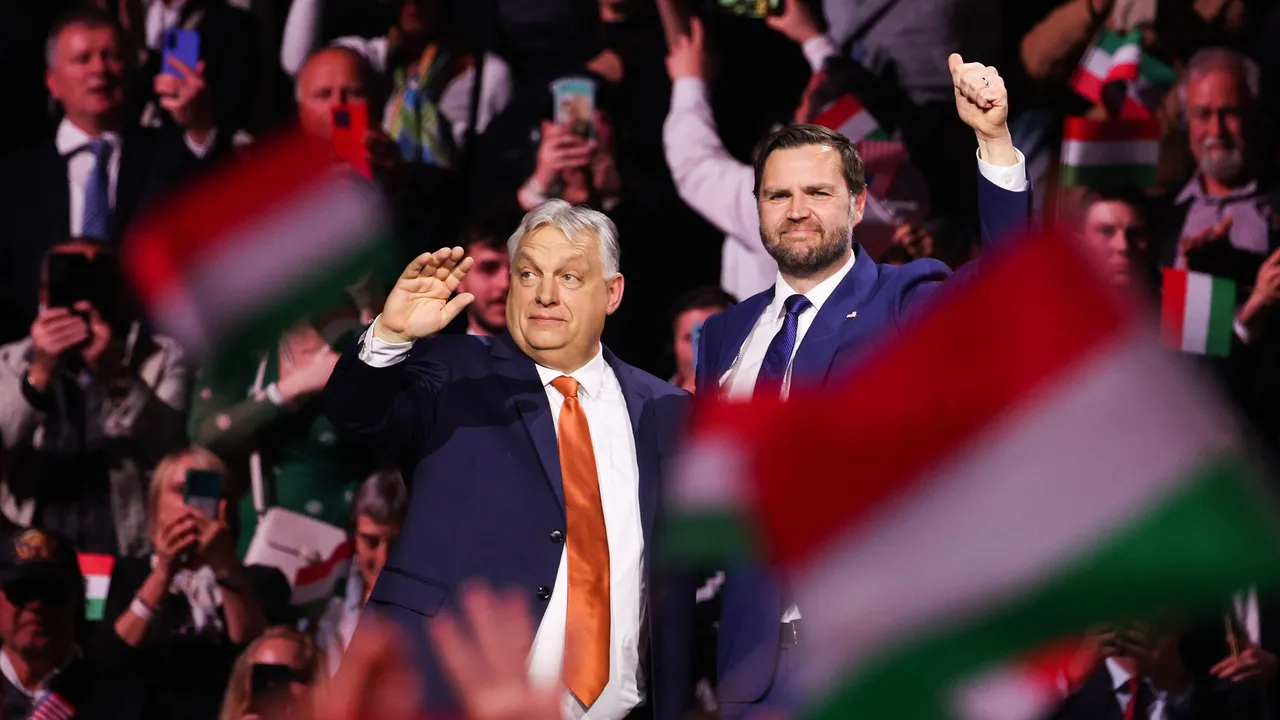
It was to avert this tragedy that, in March, at the Hungarian edition of the Conservative Political Action Conference, a contingent of transcontinental MAGA luminaries and culture-war grifters lined up to exalt Orbán. Marco Rubio, the Secretary of State, had already flown to Budapest to tell him, in front of cameras, that “President Trump is deeply committed to your success.” Trump, having blessed Orbán via a video message at CPAC, this week dispatched Vice-President J. D. Vance to Hungary to shore up the Prime Minister’s chances. On Tuesday, Vance arrived in the capital and extolled Orbán’s leadership as a “model for the Continent.” At an election rally that evening, he told voters that his country and theirs were both “shaped, above all and beyond all, by the sacrificial love of Jesus Christ.” The Trump Administration’s loud support notwithstanding, Hungarians have grown measurably less enamored of their leader. Independent opinion polls show support for Fidesz has dropped to its lowest level in years.
A few weeks ago, I travelled to Székesfehérvár, southwest of Budapest, to see Magyar at a rally. This is deep Orbán country. The house in which Orbán was born, in Felcsut, is only a short drive away. It was a miserable evening—cold, drizzly, windswept—but more than a thousand people, young and old, had gathered in the town square to listen to Magyar. He spoke for close to an hour, introducing the local candidates, promising reform—he has, for instance, pledged to audit every government contract ever awarded by Orbán. “Step by step, brick by brick, we are taking back our homeland,” he shouted, to a wave of applause. What stood out for me, however, was his total submission to the grating demands of retail politics. For another hour after his speech, his sixth that day, Magyar smiled for photos with members of the throng. By my count, he took more than six hundred selfies. It is candidate-to-voter outreach of this kind that has helped him break through in an electoral battleground of fewer than eight million voters, dominated by a cutthroat political machine.