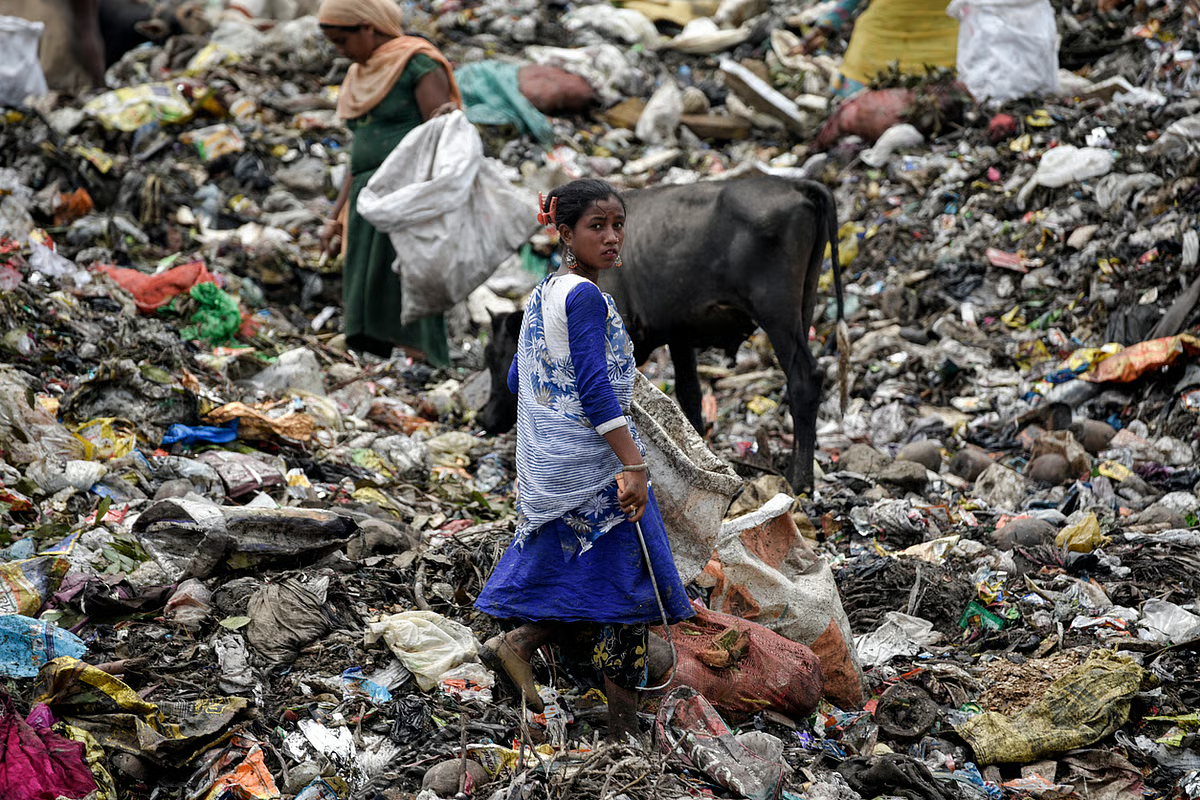
This is where the country’s unrecognised environmentalists — the waste pickers — step in. Informal, underpaid and largely invisible, they recover an estimated 40 per cent of recyclable waste in Indian cities. PET bottles are recycled not because of cutting-edge systems, but because waste pickers are paid a few rupees for them. And yet, these workers remain absent from the sustainability narrative.
Surat offers a cautionary tale. When the city pioneered the door-to-door waste collection, it was home to nearly 3,500 waste pickers who recovered recyclables from community containers, streets and landfill sites. A dissertation study conducted in 2023 highlighted how waste pickers got left out as the city pioneered modernisation and privatisation of its solid waste management systems or abide by the central policy guidelines.
Waste pickers reported a sharp decline in earnings, ranging from 50-70 per cent. One waste picker recalled earning Rs 1,000–1,200 a day when community bins existed. Now, Rs 500 is considered a good day.
The study also found that nearly 70 per cent of waste pickers transitioned into housekeeping, domestic work or, in a few cases, contractual waste collection. The unintended consequences of modernisation were borne disproportionately by the marginalised waste pickers.