
- The book Miniature Giants zooms in on the fascinating lives of insects.
- From inspiring cockroach-like robots that look for survivors trapped under rubble to moth wingscales inspiring noise-cancelling headphones, insect inspirations abound for humans.
- Using precise detail and a loving, poetic prose, the author invites readers to look closer at creatures far ahead of us in the evolutionary race.
- The views in this book review are that of the author.
The smallest QR code has been designed by studying the bodies of leaf hoppers coated with tiny, granular brochosomes, and the use of fire beetles may help us get an early warning of forest fires. These stories of insects in Geetha Iyer’s Miniature Giants are as fascinating as it is unusual. She looks at insects as “nature’s prized creations both in numbers and their diversity.” Their dazzling body colours, the bizarre and outlandish forms, odd and unusual lifestyles are rarely noticed or appreciated. There is geometry in their wing structures and mathematics in their flight. They don’t require a flute or a guitar to create music; nor brushes or paints for arts; their bodies take care of it all.”
Mary Jane West-Eberhard, a theoretical biologist known for her work on the behaviour and evolution of social wasps, has said, “Insects are the silent storytellers of the natural world, narrating tales of survival, adaptation and co-existence.”
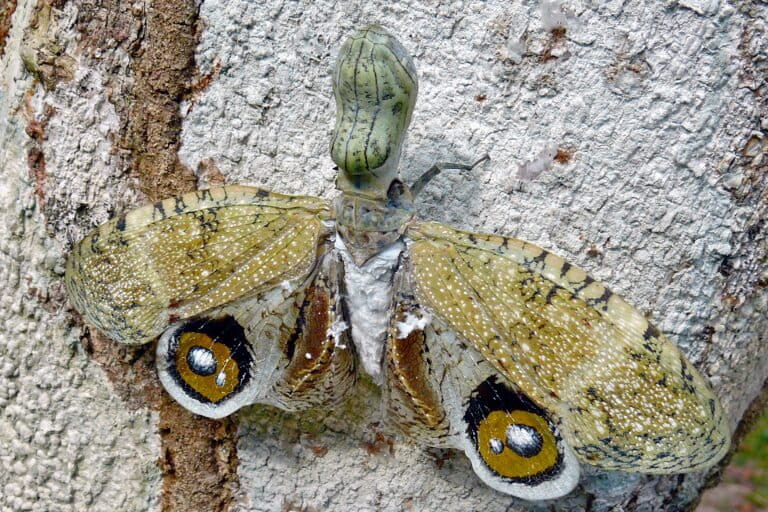
Each of the 10 chapters of the book reveals different facets of the insect world, whether it is Earwigs, The Original Origamists, The Hounds of Warfare, The Enchanting World of Insect Sex, The Longest Insect Migration, Lanternflies or The Shy Scorpionfly.
But the chapter I found most fascinating and relevant to our times is the one on insect-inspired technology.
The author, who has previously written a book on insect weavers, tells you in graphic detail how these “critters” have long mastered survival tactics when humans are only just beginning to do so. At the forefront of research today, scientists are studying them to design prosthetics, invisible cloaks, drones, noise-cancelling headphones and many other things. But insects are fast disappearing from the earth and there is understandable concern that they may not be around when humans need them most for their survival.
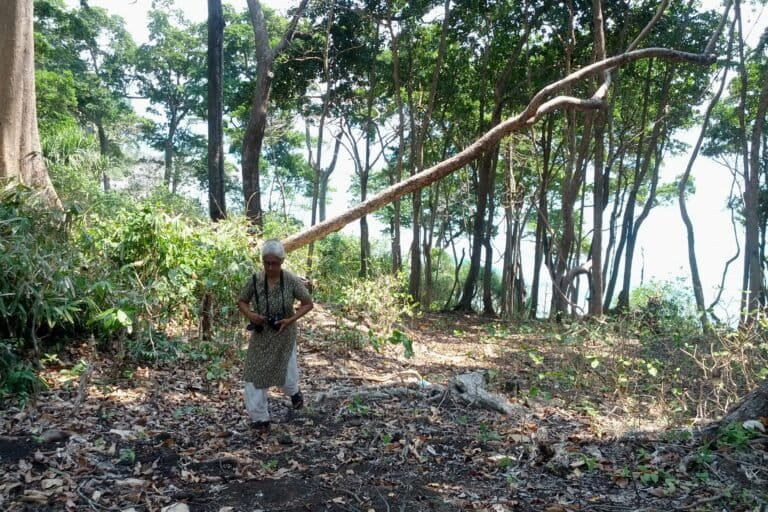
As Mahesh Rangarajan, professor of environmental studies and history at Ashoka University says in his testimonial of the book, “Miniature Giants acts as a wake-up call and everyone’s primer on India’s wealth of insect lives.” It is well written, weaving in science, culture and history of the insect world with Iyer’s own fieldwork as she sets up light screens in forest areas and spends endless nights watching moths, praying mantises and earwigs fight for food, sex and survival.
Humans have looked to nature’s creatures to evolve technologies that can make life more comfortable for them. The deaf moths’ ability to absorb sound has inspired those developing technology to apply the acoustic behaviour of moth scales for noise reduction. Researchers at Bristol University have discovered natural metamaterials in the wings of moths that absorb sounds. Attempts are on to mimic the moth wing scales to produce structures that function as efficient ultrasonic acoustic absorbers, to produce noise-cancelling headphones, whose acoustic camouflage can confer a distinct advantage in military operations. The compound eyes of the nocturnal moths are made of numerous individual units, each called ommatidium. These enable the moths to navigate in dim light. This technique was used to enable us to see mobile screens without squinting in bright light.
Learning skills from cockroaches
The world has about 7,000 species of cockroaches. This huge group of insects has characteristics that enable engineers to build robots that can be used in search and rescue operations and in locating landmines. Some have designed cockroach-like robots, others have mounted robots on them to create cyborgs. Their ability to disappear into tiny holes and not get squashed even by weights 900 times their body weight has enabled roboticist Kaushik Jayaram to build a squishable robot, called CRAM (compressible robot with articulated mechanisms), the size of an adult human palm, that can splay its legs sideways to navigate into tiny spaces. Jayaram and his colleagues also created another tiny cockroach-inspired robot called Harvard Ambulatory MicroRobot (HAMR) Jr, with a body length of 2.25 cm, weighing 0.3 g. It can carry loads ten times its own weight and turn left and right, move backwards and run at a pace of one foot per second, a speed comparable to a cheetah’s.
Robert Full, a professor of integrative biology at UC Berkeley, points out that in the event of an earthquake these robots can help locate survivors or find safe entry points for first responders. Jayaram, now with the University of Colorado, hopes to make even smaller robots that can be used by the medical profession and the defence services in surgeries and for detecting bombs and landmines.

Insects as missiles of warfare
The use of stinging insects and toxins produced by insects in battles of yore make interesting reading. They were among the early munitions for biological warfare. Insects could inflict pain, destroy food and transmit diseases. Ants, bees, hornets and wasps that build colonies are more aggressive than solitary insects. They have to protect their colonies from invaders, much like humans, and have developed their own concoction of chemicals and strategies for protection. The nests of wasps, hornets and bees were flung into enemy camps like missiles causing chaos, terror and injury. In Europe, stinging insects, especially bees in their hives, some weighing 45 kg, were used to drive away invaders.
Entomological warfare got a boost with development of machinery that could launch insect grenades further into enemy ranks. The process was called bombard by the Greek and later became bombe in French. Even during the Vietnam War, the American and Vietnamese soldiers used wasp and hornet nests as artillery. Vietnamese soldiers relocated colonies of the wild honeybees along the trail used by the American soldiers and set off small explosions near their nest to induce attacks.
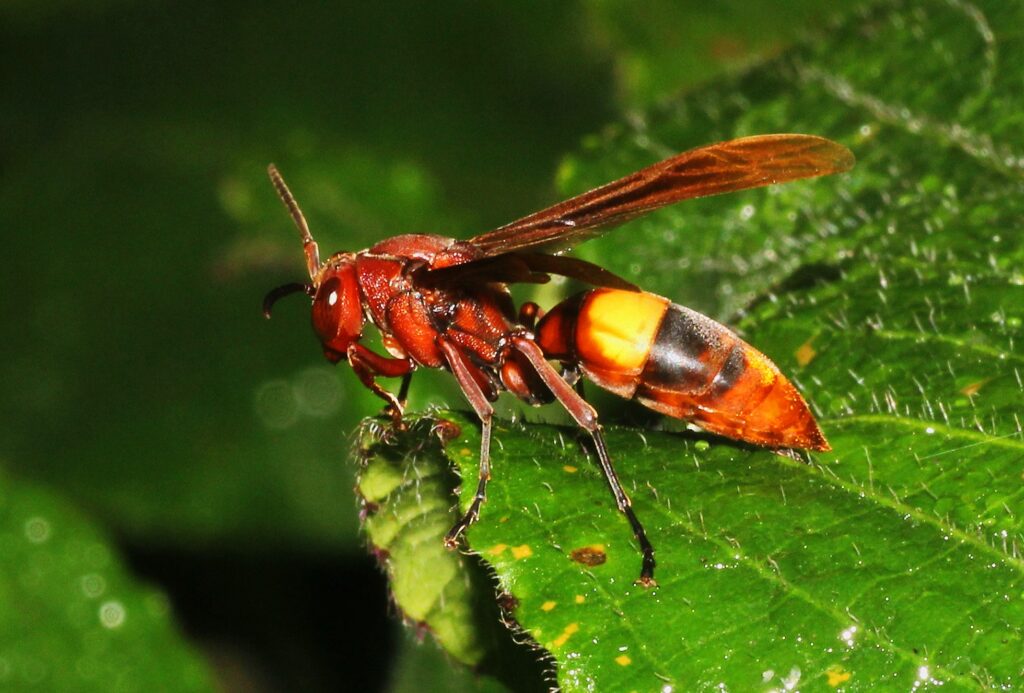
Nomadic tribes used insect toxins for poisoning arrows to hunt animals. The most excruciating pain was caused by spiders and wasps — especially the paper wasp and the bullet ant. “The pain was like walking over flaming charcoal with a three-inch nail embedded in your heel,” says an entomologist. Another entomologist found that the honeybee stings were most painful on the nose, upper lip and the penis shaft and least painful on the skull, tip of the middle toe and upper arm.
The rove beetle (family Staphylinidae) commonly found in marshes, paddy fields and moist environments of India, is a predator of insects and nematodes and serves as a biological control agent of major crop pests. However, they are known to cause dermatitis in humans and proof of this was found in students living in hostels near paddy fields in Kerala. If crushed, the beetles release a substance called pederin which causes blisters and inflammation. Ironically, even a minuscule amount of the pederin, it was found, could inhibit the growth of malignant cells in humans. Recent research has revealed that the pederin is not secreted by the beetle but by symbiotic bacteria living within the beetle.
Love and mating
Miniature Giants is extremely readable not just because of the wealth of information on insects but because of the poetic descriptions from the writer’s field notes. The chapter, The Enchanting World of Insect Sex begins with a description of the ‘night show’ of the insects as twilight deepened and insect chirping rose to a crescendo near Mudumalai Tiger Reserve in Tamil Nadu.
“At first there was a lone twinkle. Soon a couple more joined in. Within seconds there was a luminescent glitter whirling across the ballroom of the night as if to some hidden music. The fireflies were emerging, invisible except for the flickering lights on their posteriors. Like nineteenth-century socialites who sent secret messages to their beaus across the room with a wave of their fans, the fireflies’ mysterious flashings encoded an invitation to interested ladies resting in the grass below.
The swirling dance of the fireflies, vibrant and energetic, was a joy to watch. But, for the fireflies, their lights would not be joyful till seen by their lady love — the glow worm or female firefly. I looked around to see whether the worm-like plump and wingless missus was anywhere around. If she was, I should see her light too. There were so many fireflies, would they all find their mates? How many would mate with a single glow worm? Questions twirled as I looked about in search of a lady in love. I finally found her, but she did not seem interested in the fireworks above her. Then squatting closer, I was overjoyed to be proved wrong. Her light was faint, but it had begun. She was ready to meet her boyfriend!”

Fireflies are beetles and India is home to some 50 species of fireflies. Globally 2,200 firefly species have been found. They have a short life span, ranging from 10 days to a year or two. They have one goal, to find a mate, copulate and lay eggs to continue their lineage. Except for a few species, luminescence is their way to find a mate. While some glow, others flash. The returning flashes and the intervals between them signal the female’s acceptance. Sarah Lewis, Professor Emeritus at Tufts University in the U.S. points out in the book, the females can be quite picky. The male then entices her with nuptial gifts that could be protein rich secretions that nourish and help the female make more eggs. However, studies in India show that due to habitat destruction and artificial lights, firefly numbers are decreasing.
The book also rightly looks at the ethics of experimenting on and with insects to create cyborgs and biorobots. Squashable or not, biters or stingers, insects are living beings and deserve to be treated in the same way as vertebrates and humans during experiments on and with them, says Iyer — and nature lovers would agree.
There are several other interesting tidbits of information in the book, on insect migration and the hoverflies competing with honeybees to be the best pollinators. It is not possible to do justice to such an elaborate and extensively researched book in a few hundred words. You need to read and savour every chapter to understand the importance of insects in our lives and the need to preserve them.
Read more: The commonly seen but rarely understood crane fly [Commentary]
Banner image: A paper wasp. Nomadic tribes once used its toxins for poisoning arrows to hunt animals. Image by Satish Nikam via Flickr (CC BY-NC 2.0).

