Species File: Exploring India’s biodiversity, one species at a time.
Last month, 53 gharials were released into the river at Kuno National Park in Madhya Pradesh, as part of the state’s efforts to conserve the species. Previously, captive-bred gharial juveniles have been released into Ganga and Chambal rivers, to restore its historic range and strengthen wild populations.
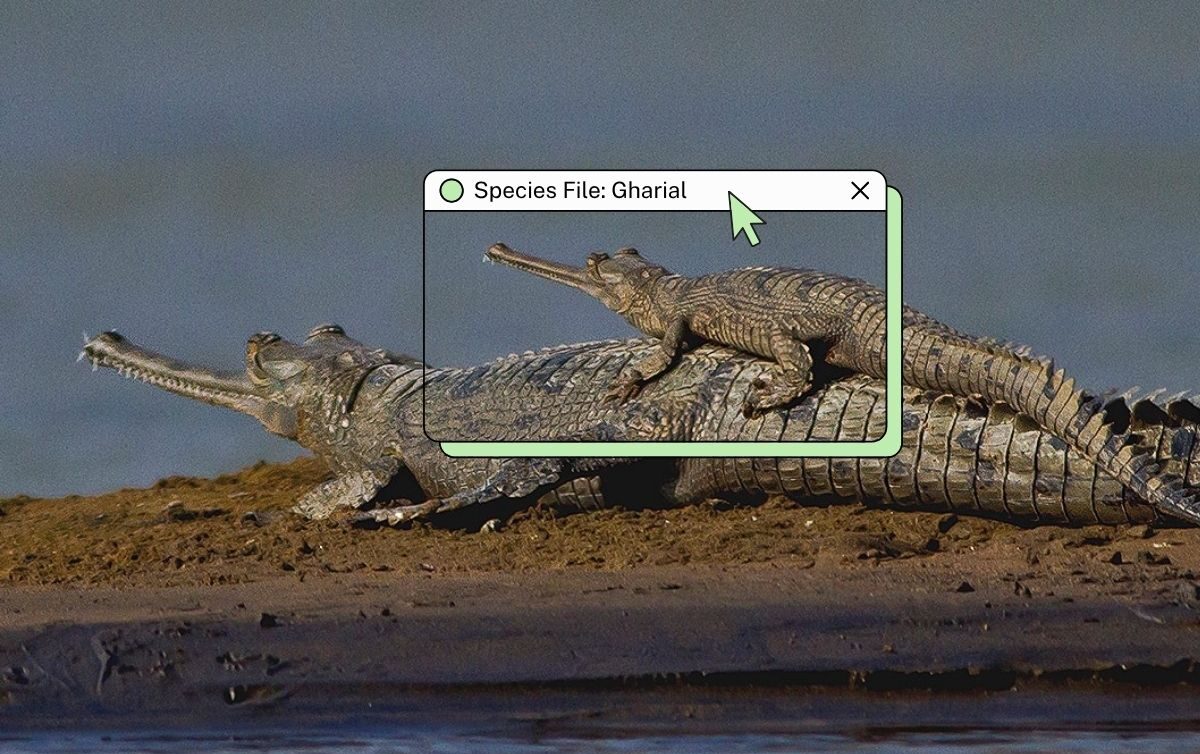
The gharial (Gavialis gangeticus) is a reptile found primarily in deep, fast-flowing rivers. It is known for its slender snout containing sensory cells that help detect vibrations in water, an adaptation for catching fish.
Gharials play a crucial role in keeping the river ecosystem healthy and conserving its biodiversity. In India, the species is typically found in the Chambal, Girwa, Son, and Ganga river systems, while outside India, it is also found in Bangladesh and Nepal.
Globally, the gharial population has declined by more than 94% since the 1950s, placing the species in the critically endangered category in the International Union for Conservation of Nature (IUCN) Red List. A survey, conducted by the Wildlife Institute of India, between November 2020 and March 2023, recorded 3,037 gharials across the Ganga river basin, with the most numbers in Chambal.
In India, the species is protected under Schedule I of the Wildlife Protection Act, 1972. However, it faces pressures such as sand mining and hunting. Intense river modification, unsustainable fishing practices, and human disturbance continue to threaten its long-term survival in the wild.
In a story that Mongabay-India published in January 2026, Tarun Nair, a member of the IUCN Crocodile Specialist Group, said, “One disease outbreak or major infrastructure project could threaten most of the [gharial] species.”
Read more about the gharial in our stories on how rising temperatures could change the species’ future and why its conservation efforts should extend to unprotected rivers.
Banner image: A gharial and its offspring on the Chambal river. Image by Goodfriend19 via Wikimedia Commons (CC BY-SA 4.0).